Last updated October 31, 2026
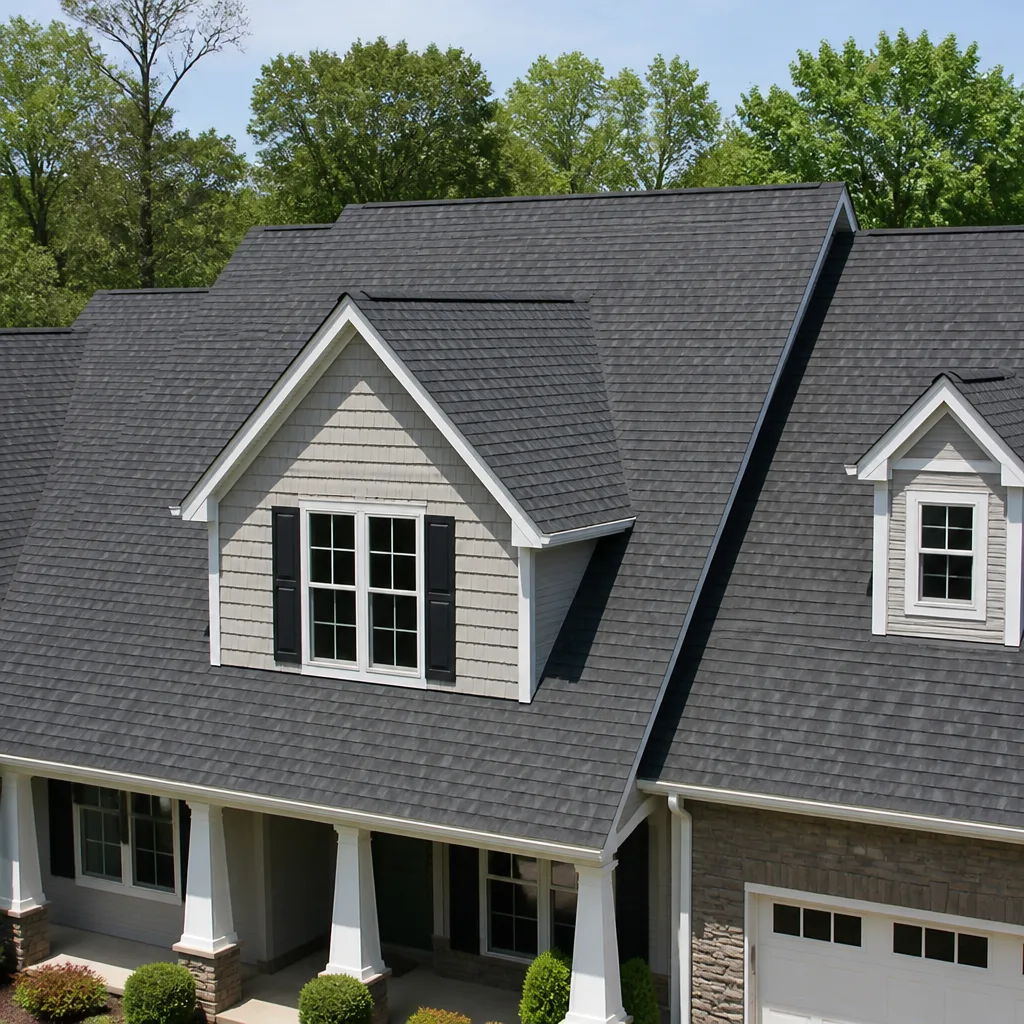 Architectural shingles
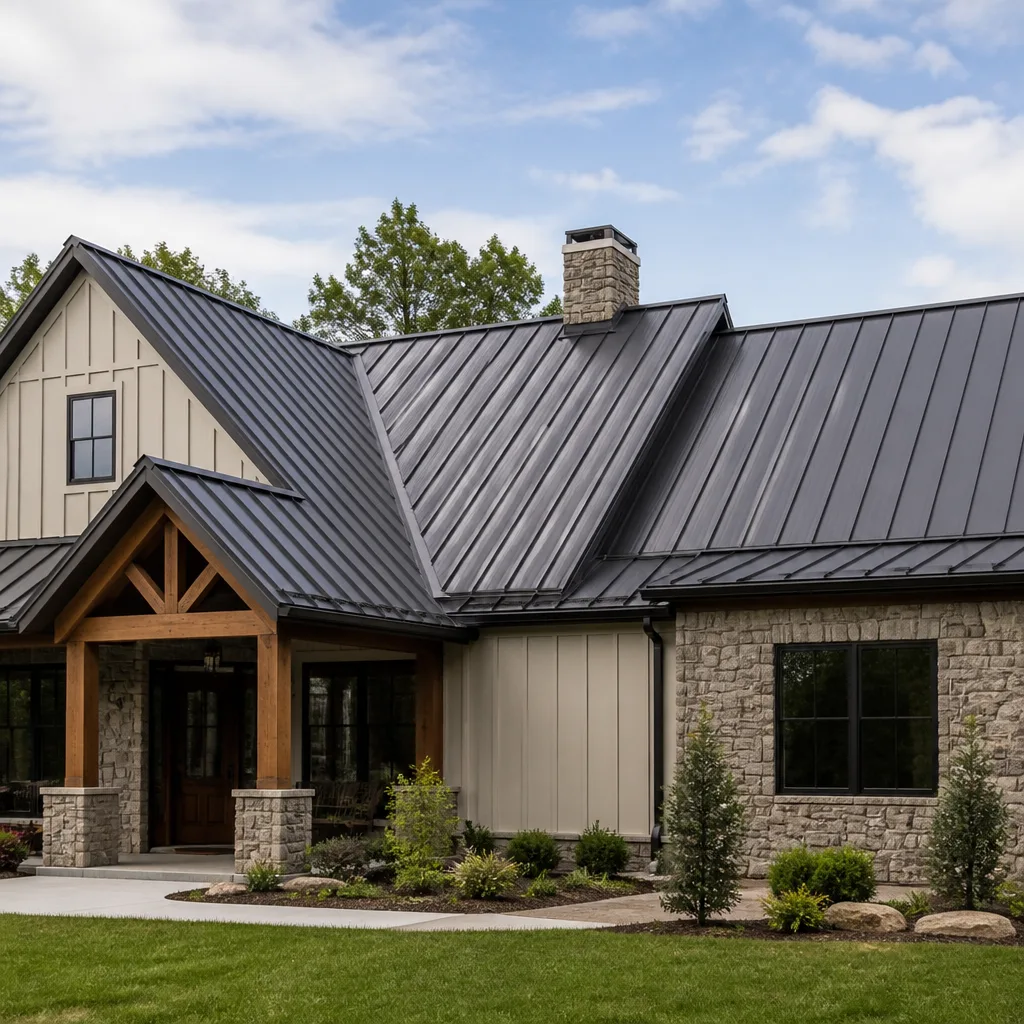 Metal roofing
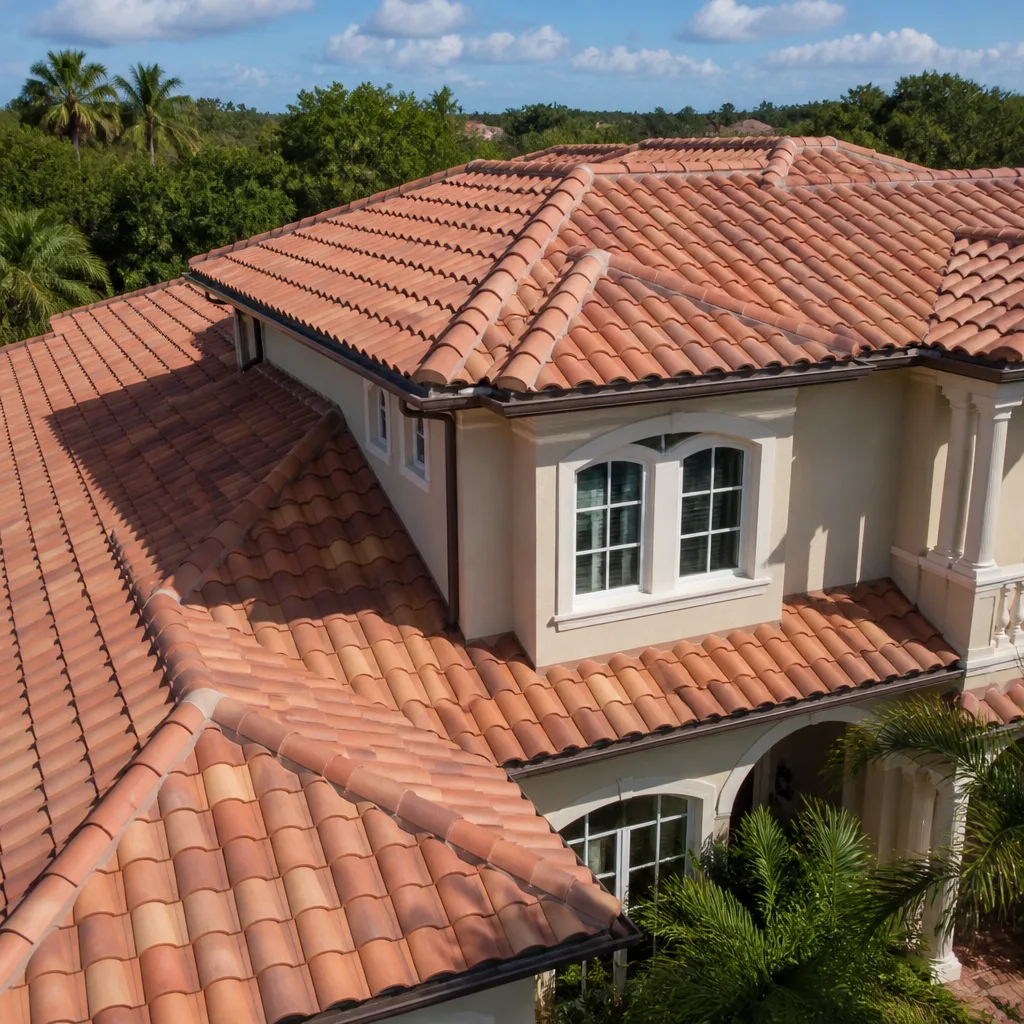 Tile roofing
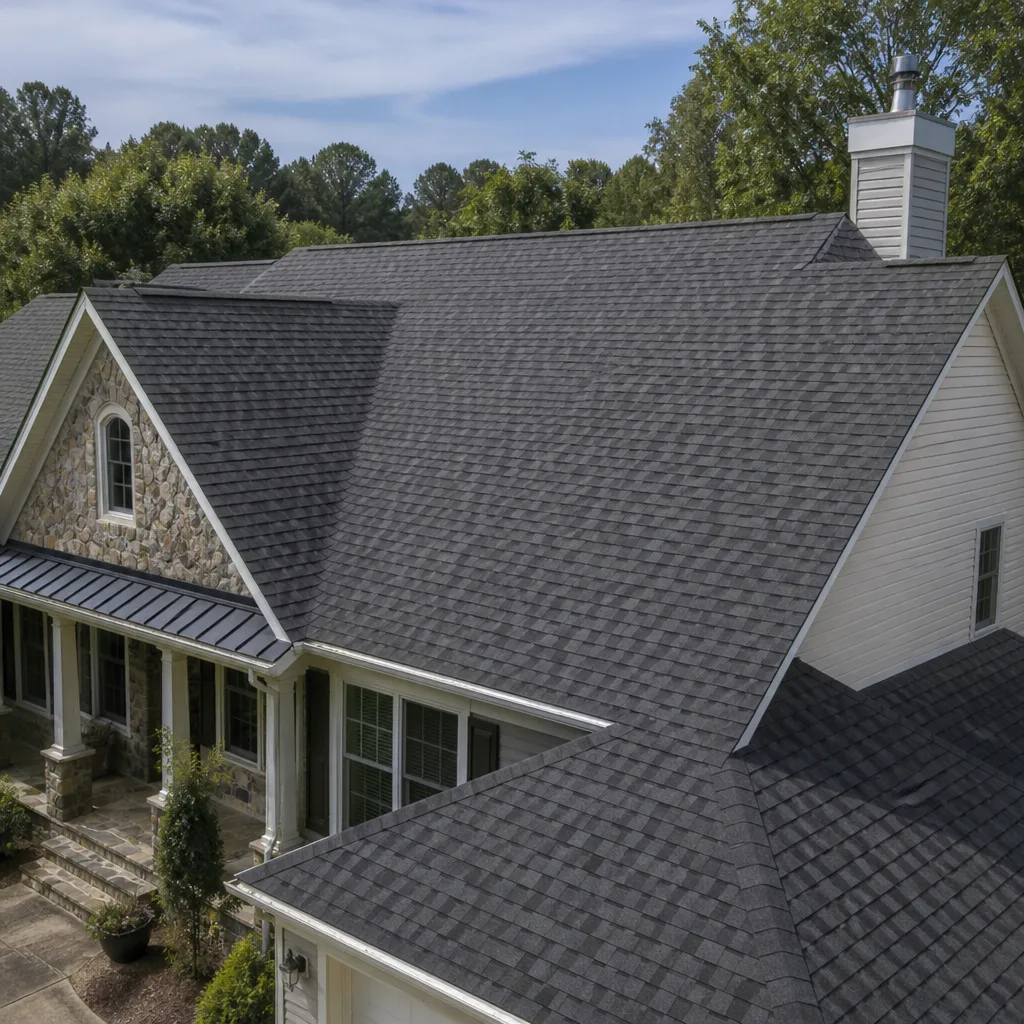 GAF
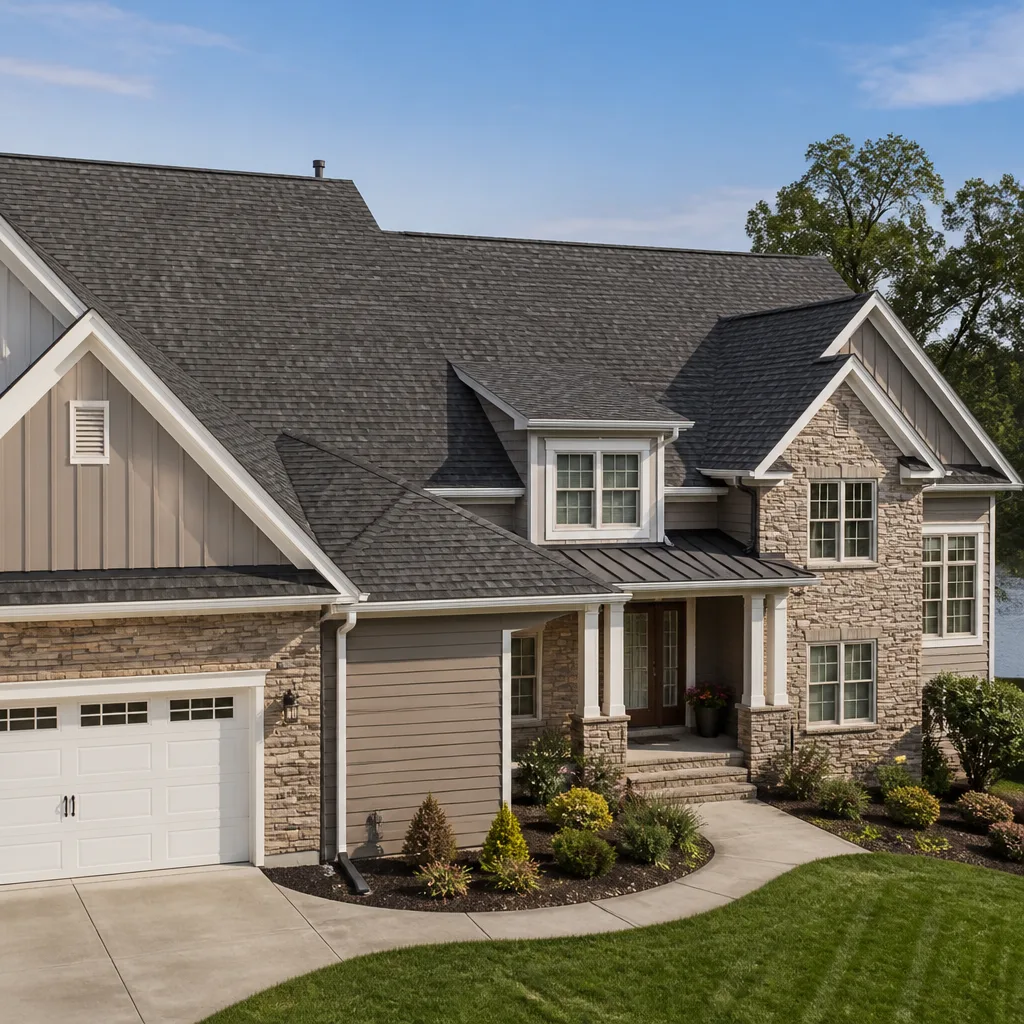 Owens Corning
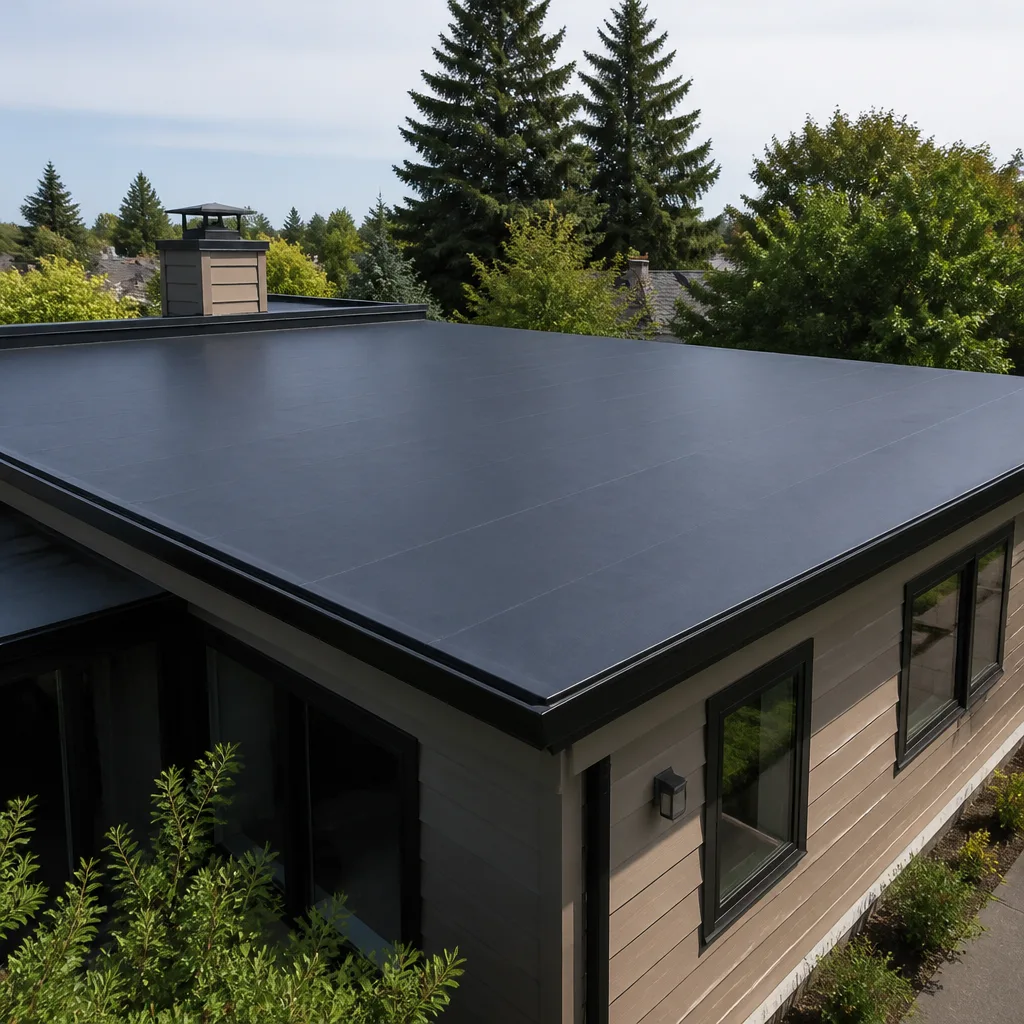 Flat & low-slope
Free roof inspection with deck photos before we talk money - GAF and Owens Corning certified installation
The Complete Roof Repair Guide for Corona Homeowners
Most roof repair guides read like they were written for Seattle or Miami. Corona gets 287 sunny days a year, but it also sits in a wind corridor where Santa Ana gusts regularly exceed 60 mph, and summer heat pushes roof surface temperatures past 160°F. Those conditions create a specific failure pattern that generic guides never address. This guide maps every repair decision to Corona’s actual weather, so you stop fixing the wrong thing first and start making decisions that hold up.
Quick Answer
Roof repair in Corona most commonly means fixing wind-lifted ridge caps and rake edges after Santa Ana events, addressing UV-accelerated shingle granule loss before leaks start, and resealing penetrations around vents and flashing that summer heat has dried and cracked. Our Roof Repair services cover all of these common issues. A typical repair costs between $350 and $1,200 depending on scope, and most Corona homes can go 3 to 5 years between repairs when inspections catch problems early.
Roof Repair in Corona from Orange County Roofing Co covers everything from a single damaged shingle to full wind-event recovery.
Styles & brands we work with
Table of Contents
- What Santa Ana Winds Actually Do to Corona Roofs
- UV Degradation: Corona’s Summer Heat and Granule Loss
- Repair vs. Replace: The Decision Tree with Real Thresholds
- Permit Rules in Riverside County: What Needs a Permit and What Doesn’t
- Documenting Repairs So Insurance Claims Don’t Get Denied
- Choosing Repair Materials That Survive Corona’s Climate
- DIY Repairs That Are Safe (and Ones That Aren’t)
- What Roof Repairs Cost in Corona
- Common Mistakes to Avoid
- When to Call a Professional
- Frequently Asked Questions
What Santa Ana Winds Actually Do to Corona Roofs
The most common roof repair call we get in Corona isn’t for leaks. It’s for wind damage that hasn’t leaked yet. Santa Ana winds don’t blow like a steady gust. They come in bursts, changing direction quickly, and they attack the edges of your roof where shingles are most exposed.
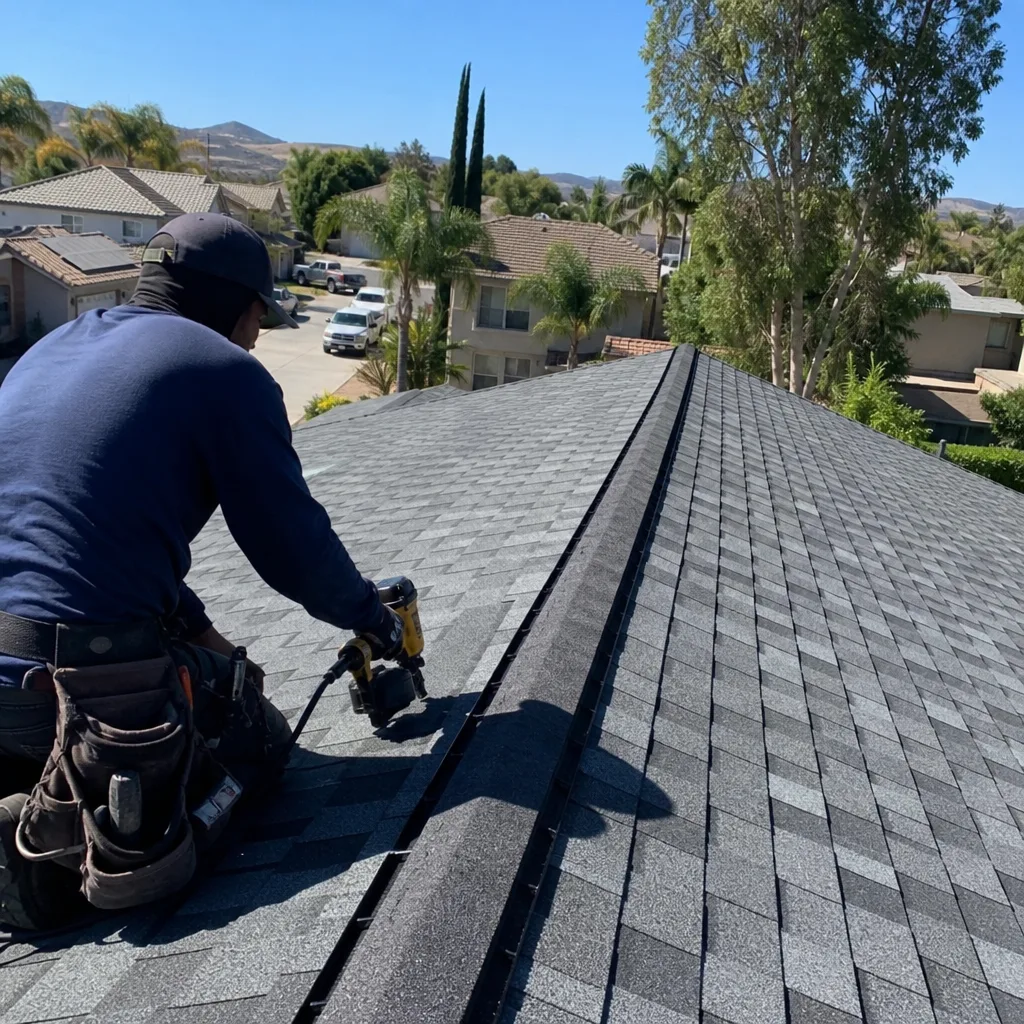
Ridge caps sit at the peak of your roof, and they take the full brunt of Santa Ana gusts. Each ridge cap shingle is nailed through the one beneath it, and when wind gets under the exposed edge at just the right angle, it can lift the shingle, bend it backward, and eventually break the seal or tear the nail free. Once one ridge cap goes, the next one in line becomes more vulnerable. A single missing ridge cap exposes the seam beneath to direct water entry.
Rake edges are the sloped edges of your roof that face the street or your neighbors. Corona homes with east-facing rakes get hammered during Santa Ana events because the wind hits them at an angle that standard installation wasn’t designed for. Shingles along rake edges are more likely to lift, crack, or blow off entirely.
Here’s what to check after any sustained wind event over 40 mph:
- Walk your roof line and look at the peak. Missing or lifted ridge caps are obvious from the ground with binoculars.
- Check the rake edges on the windward side of the house. If your neighbor’s yard is on the east and you see loose shingles there, that’s the windward side.
- Look for shingles in your yard, especially after a night of strong gusts. A shingle that blew off may have been cracked for weeks before the wind finished it.
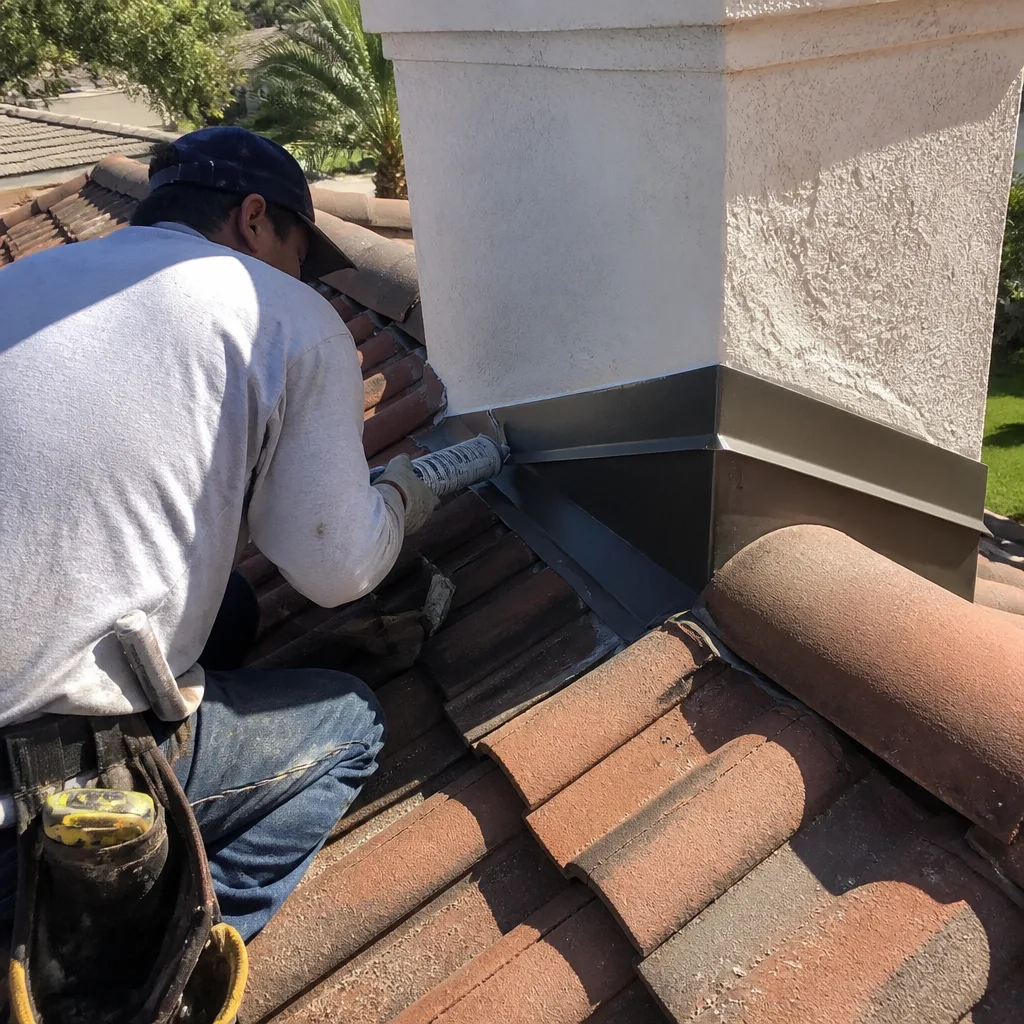
- Inspect the flashing around chimneys and vents where wind-driven debris can scratch or dent metal.
In our experience, Corona homeowners who inspect after every major Santa Ana event catch failures at $400 that would have become $2,000 leak repairs six months later. Roof Inspection in Corona is a standalone service we offer for exactly this reason.
UV Degradation: Corona’s Summer Heat and Granule Loss
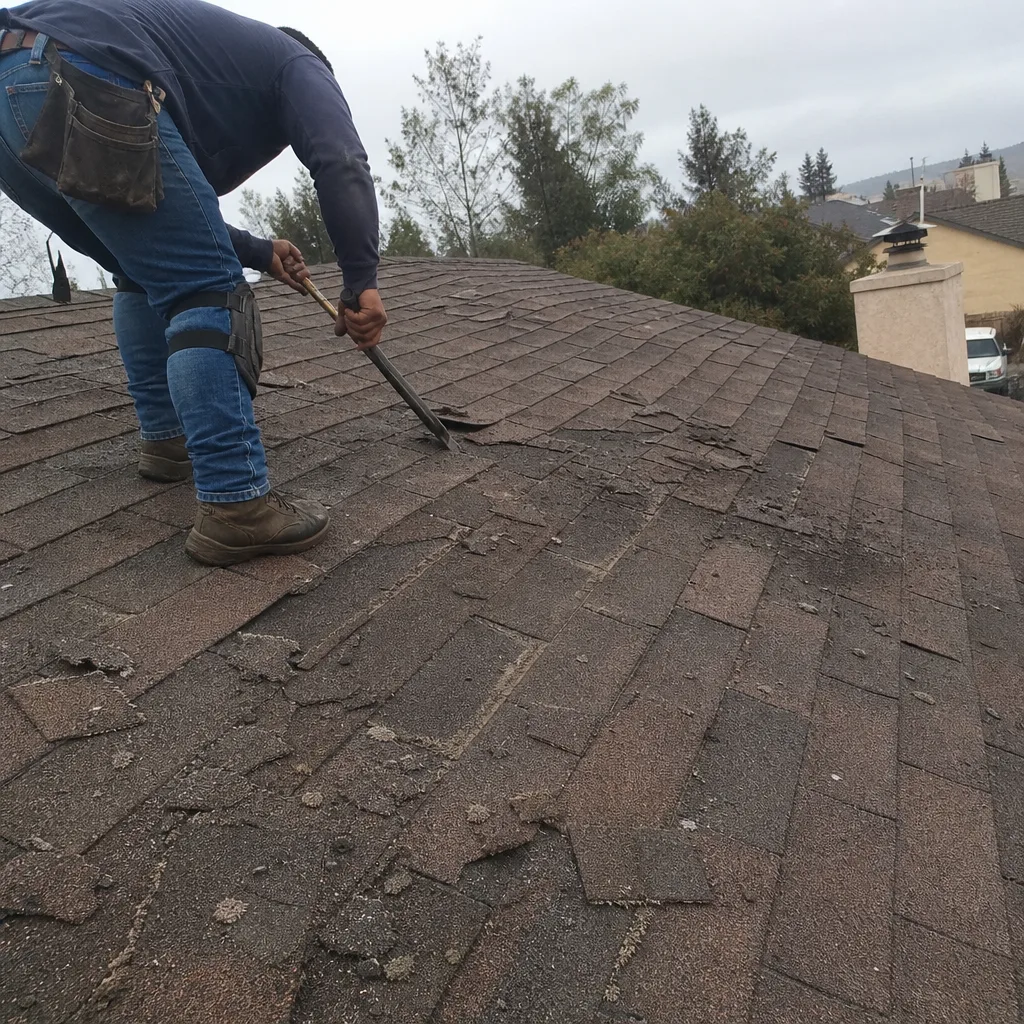
High heat doesn’t just make your air conditioner work harder. It cooks your shingles. On a 105°F day in Corona, your roof surface can reach 165°F or more, and that sustained heat breaks down the asphalt in shingles, causing the protective granules to release. Granules are what reflect UV rays and give shingles their fire rating. When they’re gone, the asphalt underneath oxidizes, becomes brittle, and starts to crack.
You’ll notice granule loss first in your gutters. After a summer rain, or even just from accumulated debris washing down, you’ll see what looks like coarse black or dark-colored sand. That’s not dirt from the street. It’s your roof shedding its protective layer.
Here’s how to check for UV damage on a Corona roof:
- Gutter check: After a dry spell, run a hose over a section of the roof for two minutes and check what comes out of the downspout. Heavy granule accumulation is a warning sign.
- Color check: Uneven coloration across the roof, especially where the sun hits hardest, means granules are thinning. South-facing slopes in Corona degrade fastest.
- Touch test: If you’re comfortable on a ladder and can reach a shingle safely, gentle pressure should leave a slight indentation that recovers. Brittle shingles crack or feel stiff. Sandpaper texture is oil loss.
- Indoor clue: Ceiling stains that appear in the attic or on upper-floor ceilings during winter rains often trace back to UV-damaged shingles from prior summers.
UV damage is progressive. A roof at 12 years in Corona’s climate can look like a 20-year roof in a coastal city. That matters when you’re deciding whether to repair individual shingles or plan for replacement. Since we install products from multiple manufacturers including Owens Corning and CertainTeed, we can show you which product lines hold up better under inland sun than others. Explore our more guides & resources for additional help with these decisions.
Repair vs. Replace: The Decision Tree with Real Thresholds
The honest answer to “should I repair or replace?” depends on three numbers: roof age, material type, and the percentage of damaged squares. Here’s how we think about it in Corona specifically.
Roof age: Asphalt shingle roofs in Corona typically last 15 to 25 years, and the heat shortens that window. If your roof is under 10 years old and damage is isolated, repair almost always makes sense. If it’s over 18 years old and you’re seeing repeated repairs in different areas, replacement planning should start now, even if you patch for one more season.
Material type: Tile roofs common in Corona handle UV far better than asphalt but are more brittle. A cracked tile can be replaced individually. Concrete tiles last longer than clay in high-heat conditions. Flat roofs with membrane systems have completely different repair economics. We carry IKO and Atlas products for asphalt, and we work with tile systems as well.
Percentage of damaged squares: A roofing square is 100 square feet. The threshold that matters:
- Under 5% damaged: Repair. No question.
- 5-15% damaged: Repair the damage, but schedule a full inspection. Multiple isolated failures often mean systemic aging.
- 15-30% damaged: Replacement becomes the more cost-effective option if the roof is over 12 years old. Repeated repairs on old shingles usually cost more per square over three years than a new roof.
- Over 30% damaged: Replace, unless the damage is from a single storm event and the roof is young. Insurance may cover wind claims at this level.
The key Corona-specific factor: if UV degradation has thinned the entire roof surface, replacing one section creates a mismatch where the new section performs well and the old section continues to fail. That’s not a repair problem. It’s a timing problem. Roof Replacement in Corona becomes the right conversation when the repair threshold gets crossed repeatedly within a single year.
Permit Rules in Riverside County: What Needs a Permit and What Doesn’t
Riverside County building codes distinguish between minor repair and structural work. The line matters because unpermitted structural changes can cause problems when you sell the house or file an insurance claim.
Repairs that usually don’t require a permit in Corona:
- Replacing individual shingles or tiles (up to a limited area, typically less than 100 square feet)
- Re-sealing flashing and vents
- Small sections of underlayment repair where the decking is intact
- Gutter repair or replacement
- Replacing ridge caps where the underlying structure is sound
Work that typically requires a permit:
- Any repair that involves replacing roof decking or structural framing
- Re-sheathing more than a certain square footage
- Changing the roof profile or adding penetrations like new skylights
- Full tear-off and re-roof
- Any work that alters drainage or adds significant weight to the structure
We handle permits as part of the job when they’re required. The important thing for Corona homeowners is that doing structural work without a permit can trigger title issues at sale and gives your insurance company a reason to deny a future claim. If you’re not sure whether your repair needs a permit, ask before the work starts, not after. For guidance on vetting contractors, read How to Hire a Roofing Contractor in Corona: A Step-by-Step Guide. A contractor who dismisses the question is telling you something about how they’ll handle the rest of the job.
Documenting Repairs So Insurance Claims Don’t Get Denied
Insurance companies look for any technicality to limit payouts on roof claims. We’ve seen wind-damage claims denied because the homeowner patched the damage before the adjuster could see it, or because the contractor didn’t document materials properly. Here’s how to protect yourself.
Before calling anyone:
- Photograph every visible sign of damage from multiple angles. Get shots from the ground, from a ladder if safe, and close-ups of specific failures.
- Note the date and approximate time of the weather event that caused the damage. Adjusters cross-reference wind records.
- If water entered the house, photograph the interior damage too, including the ceiling stain, before you dry it or paint it.
- Do not start repairs until the adjuster has inspected, unless the damage is actively leaking and creating more interior damage. In that case, do emergency mitigation only (tarp, bucket, remove wet insulation) and document what you did.
During the repair:
- Keep material receipts showing brand, model, and quantity. Insurance companies want to know matching materials were used.
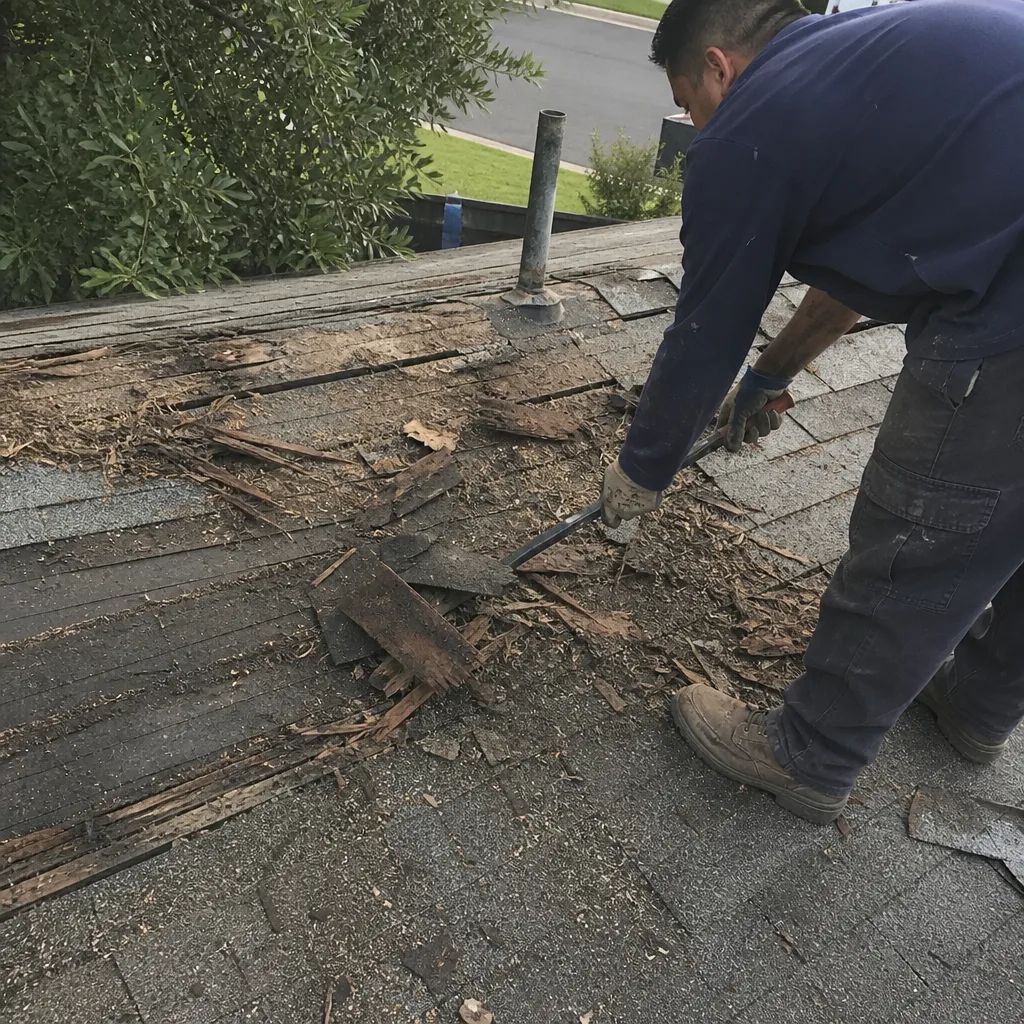
- Have the contractor photo-document the entire repair process, including open decking before replacement.
- Request a written scope of work that distinguishes storm damage from pre-existing wear. This matters because most policies exclude wear and tear but cover wind and hail.
- Get a completion report that ties each repaired section to the specific damage documented before work began.
The easier you make it for the adjuster to see causation, the harder it is for the claim to be denied. We prepare Corona homeowners for this process because we’ve seen the difference it makes.
Choosing Repair Materials That Survive Corona’s Climate
Not all repair materials are equal, and what works in a coastal city may fail in Corona’s heat and wind. We carry seven major brands including CertainTeed, Owens Corning, IKO, and Atlas, because the right choice depends on your specific roof and budget.
Asphalt shingles: Look for shingles with a higher granule adhesion rating and resistance to wind uplift. CertainTeed’s heavier lines and Atlas products with High-Grade Polymer Modified Asphalt hold up better in UV exposure than economy lines from any brand. When repairing an existing roof, match the shingle spec as closely as possible. Mismatched thickness causes visible ridges and water-channeling problems.
Ridge cap shingles: This is where wind-resistance matters most. Upgrading to a reinforced ridge cap product during a repair can protect the entire peak from the next Santa Ana event. The cost difference is small, usually $2 to $4 per linear foot, and the benefit in Corona is real.
Underlayment: If a repair exposes decking, upgrading the underlayment in that section to a synthetic peel-and-stick product adds water protection that standard felt can’t match. Corona’s occasional El Niño downpours test underlayment and we’ve seen old felt fail far more often than it should.
Flashing and sealants: Summer heat cycles expand and contract metal flashing, and cheap sealant dries out in two seasons. We recommend high-temperature-rated sealants and galvanized or aluminum flashing that won’t corrode from roof runoff. The material cost difference is minor, but the repair lifespan doubles.
Since we install products from multiple manufacturers, our recommendations aren’t tied to a single brand. The right material for your roof is the one that matches your exposure, age, and budget, backed by the manufacturer’s own warranty.
DIY Repairs That Are Safe (and Ones That Aren’t)
Corona homeowners can handle some roof maintenance themselves, but the line between safe DIY and risky work is worth understanding clearly. For help drawing that line, see our DIY vs Professional Roofing: The Corona Homeowner’s Decision Guide.
Safe DIY tasks:
- Cleaning gutters and downspouts (from a stable ladder, with a spotter)
- Removing debris from valleys and around vents
- Visual inspections from the ground with binoculars
- Applying gutter sealant at leaky joints
- Trimming tree branches that touch or overhang the roof
Tasks to leave to professionals:
- Replacing shingles on a steep slope (any roof pitch over 6/12)
- Work near the ridge or rake edge where fall risk is highest
- Any repair involving flashing removal or re-seating
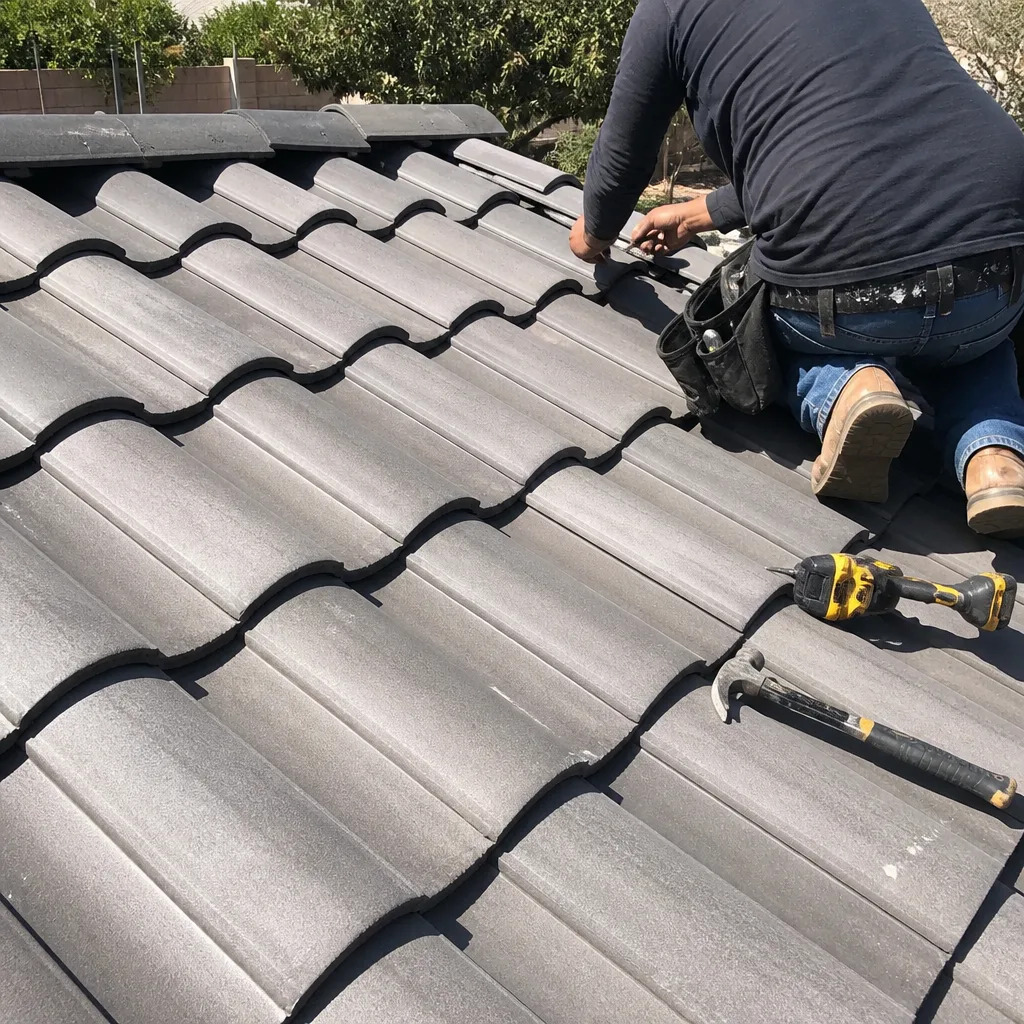
- Tile roof repair, because broken tiles shatter under foot pressure if you don’t know how to walk the roof
- Anything requiring a power nailer on a roof surface where stability is compromised
Your roof is not a patio. Falls from even single-story roofs cause serious injuries, and the medical costs dwarf any savings from skipping a professional repair. We’ve been called to Corona homes where a homeowner got halfway through a repair and realized they couldn’t safely finish it. The fix was more expensive than the original quote would have been.
What Roof Repairs Cost in Corona
Corona pricing reflects the local market, and here’s what homeowners should expect in 2025.
| Repair Type | Typical Range | Notes |
|---|---|---|
| Replace 3-5 shingles | $250 – $450 | Includes sealant and disposal |
| Replace ridge caps (linear foot) | $8 – $14 | Reinforced caps cost more but last longer |
| Flashing repair around chimney | $400 – $800 | Depends on chimney size and access |
| Vent re-sealing | $150 – $300 | Per vent; most homes need 2-3 done |
| Underlayment patch (small area) | $500 – $1,000 | Includes partial shingle removal |
| Leak repair (locate and fix) | $350 – $900 | Depends on whether interior access is needed |
| Soffit and fascia repair | $300 – $1,200 | Per section; price swings with material |
These are ranges, not quotes. The specific cost for your roof depends on pitch, height, material type, and whether we find secondary damage during the repair. We give written line-item estimates before work starts, and the number we quote is the number you pay.
Call (866) 942-4187 for a free estimate on any roof repair in Corona. You’ll get a specific number for your roof, not a vague range.
Common Mistakes to Avoid
- Ignoring ridge caps after a wind event because there’s no leak. Lifted ridge caps are the precursor to leaks. Fix them before water entry, and you pay $300 instead of $3,000 for interior damage.
- Patching a leak from the inside. Ceiling patches, tarps in the attic, and buckets don’t stop roof degradation. The water is still entering the decking and causing rot. Fix the source first.
- Using mismatched shingles on repair. A visible patch in the middle of your roof looks bad, but worse, it signals to future buyers that repairs were done cheaply. Match the shingle line or replace the entire visible plane.
- Waiting until rain season to inspect. Corona’s dry months are the best time to inspect and repair. Contractors book up fast in November, and prices are higher when demand spikes.
- Choosing repair materials based on price alone. The cheapest sealant and the thinnest underlayment fail in two seasons under Corona’s UV load. Spend the extra money on materials that survive inland sun.
- Not checking ventilation during a repair. Heat damage is amplified when attic ventilation is inadequate. If a repair exposes the ridge, check baffle and vent condition at the same time.
- Filing an insurance claim for minor repairs. Small claims can raise your premiums or trigger non-renewal. For any repair under your deductible, paying out of pocket is usually the smarter long-term move.
When to Call a Professional
Any roof issue involving water entry, structural movement, or height work deserves a professional look. If you see daylight through your attic boards, water stains spreading across ceilings, shingles lifting in multiple areas, or granule accumulation in gutters after every summer, don’t wait. Corona’s dry season is the best window for repairs, and the longer damage sits, the more the scope expands.
Orange County Roofing Co offers free estimates in Corona. Call (866) 942-4187 and we’ll send someone to look at your roof, give you an honest assessment, and quote the repair at a fixed price. No obligation, and no pressure to replace what can be repaired.
Frequently Asked Questions
Most roof repairs in Corona run between $350 and $1,200 depending on the scope. Small shingle replacements start around $250, while flashing replacement, underlayment patches, and leak repairs run higher. Call (866) 942-4187 for a free estimate and we’ll quote your specific repair.
Wind damage caused by Santa Ana winds is typically covered under homeowners insurance if the damage exceeds your deductible and the wind event is documented. Your policy likely covers wind as a named peril, but pre-existing wear and tear is excluded. Document the damage with photos and note the date of the wind event before filing.
We recommend an inspection every two years for roofs under 15 years old, and annually once the roof passes 15 years. Corona’s UV exposure and Santa Ana wind events mean roofs degrade faster here than in coastal Southern California cities.
Replacing individual roof tiles is possible as a DIY job if you have the right matching tiles and can access the area safely. But walking on tile roofs without knowing how to distribute your weight cracks more tiles. Most homeowners are better off calling a professional for tile repair.
Our policy is that the line-item estimate you approve is the price you pay. We don’t issue change orders for hidden damage without a conversation and your written approval first. If we open a section and find rotted decking, we’ll stop, show you what we found, and quote the additional work before proceeding.
We pull permits whenever Riverside County code requires them. Most minor repairs don’t need permits, but any structural work, decking replacement beyond a small section, or re-roofing does. We handle the paperwork as part of the job and close out the permit after inspection passes.
Heavier asphalt shingle lines with high granule adhesion ratings and polymer-modified asphalt hold up best under Corona’s UV load. Concrete tile also performs extremely well in high heat, though it’s heavier and pricier. We install products from multiple manufacturers including CertainTeed, Owens Corning, IKO, and Atlas, so we can recommend honestly based on your roof and budget.
The Bottom Line
Corona’s weather doesn’t damage roofs generically. Santa Ana winds attack edges, summer heat bakes shingles from the top down, and when the rain comes, the damage that was waiting becomes a leak. The fix is simple: inspect after wind events, watch for granule loss every summer, repair before water enters, and document everything. Roofs in this city need more attention than roofs in milder climates, and the homeowners who give it save thousands. Orange County Roofing Co home services all of Corona with repair, replacement, and inspection from a single team. Call (866) 942-4187 for your free estimate.
Written by the team at Orange County Roofing Co, serving Corona since 2015.
See the difference
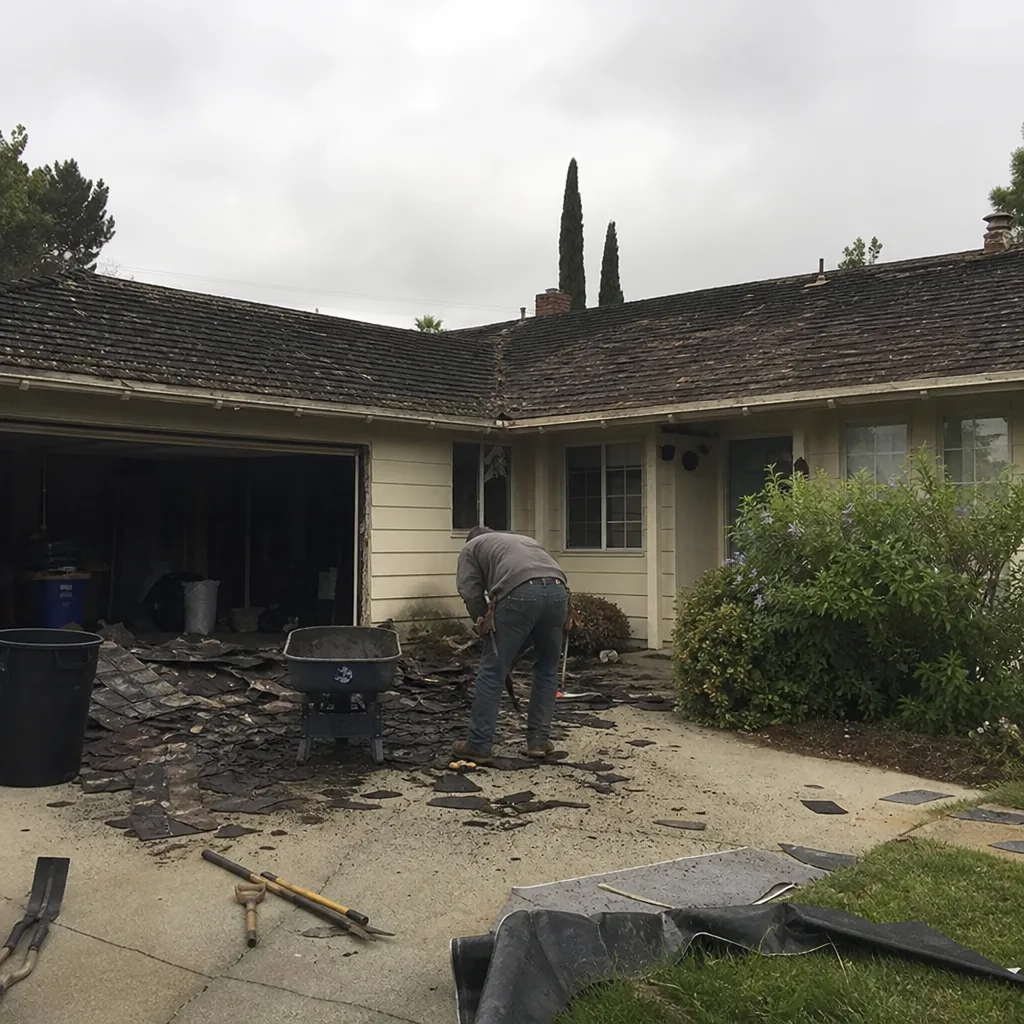 Before
 After
 Before
 After
 Before
 After