
Last updated October 31, 2026
 Architectural shingles
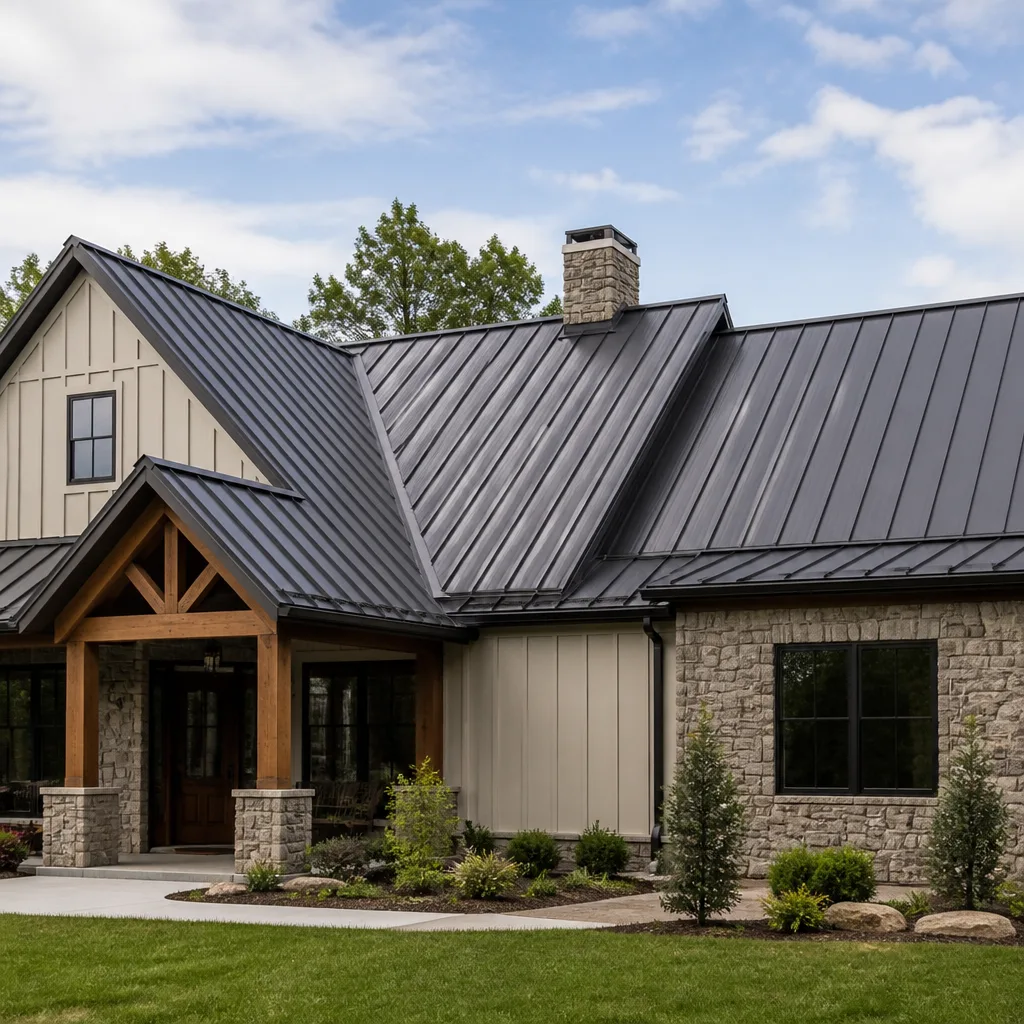 Metal roofing
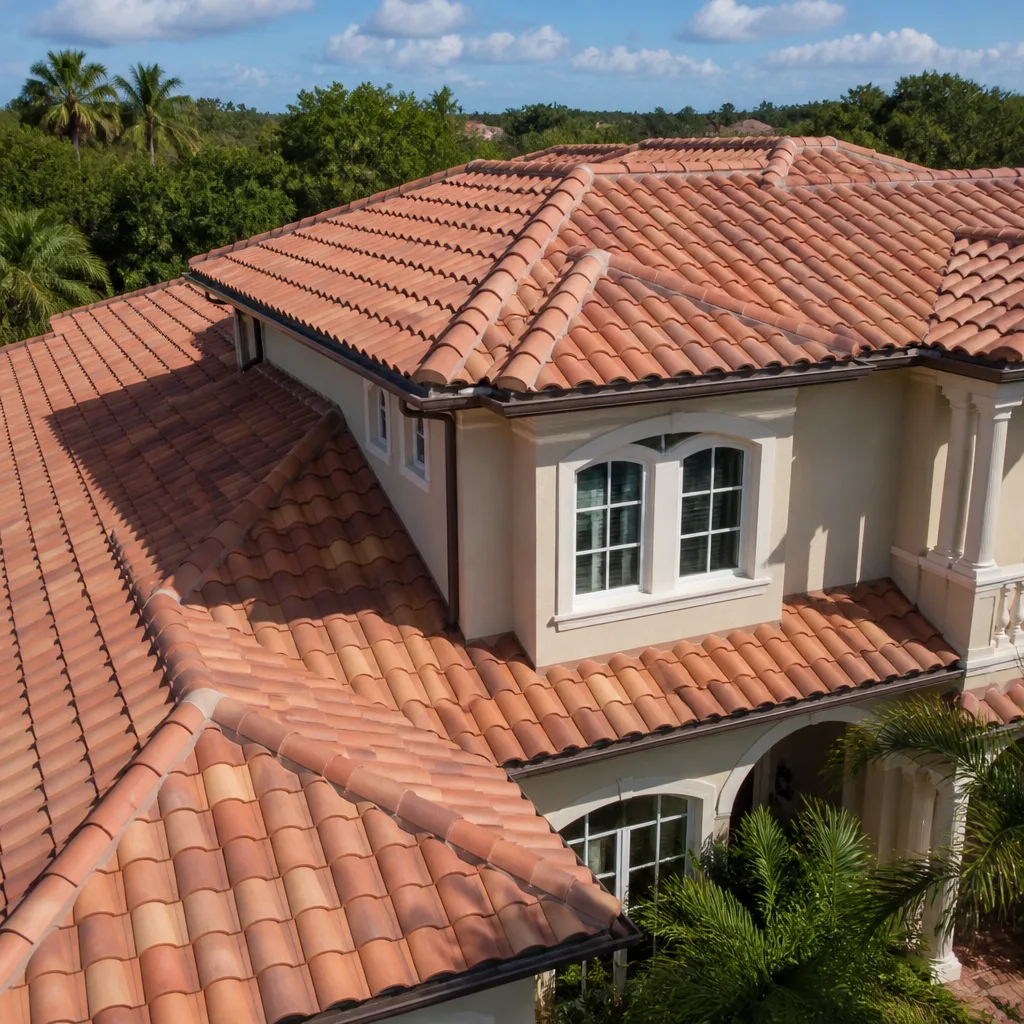 Tile roofing
 GAF
 Owens Corning
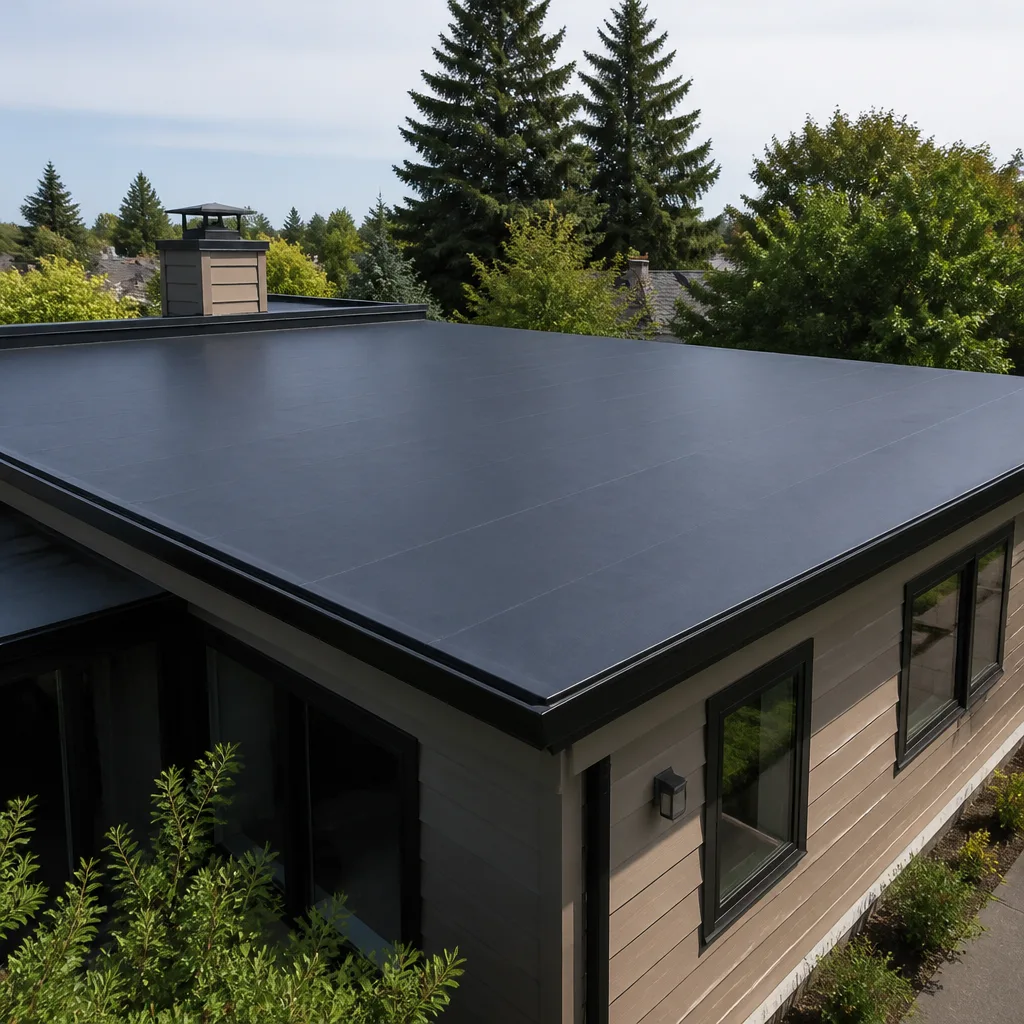 Flat & low-slope
Free roof inspection with deck photos before we talk money - GAF and Owens Corning certified installation
Roof Repair Maintenance Checklist for Corona Homeowners
Here’s a number that should get your attention: a Corona roof exposed to our summer heat can shed granules at nearly twice the rate of a roof in a coastal climate. That’s not a dramatic estimate, it’s what we observe when we inspect homes across Riverside County after each hot season. The relentless Inland Empire sun, combined with daily temperature swings that can exceed 40 degrees, forces roofing materials to expand and contract in ways that slowly tear them apart. Most homeowners don’t notice until a leak appears or an insurance adjuster flags the damage during a claim. This guide is built around those two threats: UV degradation and thermal cycling. You’ll learn exactly what to check, when to check it, and what to write down so you have a documented history of your roof’s condition in Corona.
Quick Answer
A Corona homeowner should inspect their roof four times a year: after summer, after the first significant rain, after any Santa Ana wind event over 40 mph, and before the rainy season begins. The two conditions that matter most in this climate are granule loss on asphalt shingles and thermal cracking at ridge caps and flashings. Document every inspection with photos and notes because an insurance claim or manufacturer warranty dispute is far easier to win with a dated maintenance log.
Styles & brands we work with
Table of Contents
- The Granule Loss Inspection Protocol for High-UV Roofs
- What Your Gutters Are Actually Telling You
- Thermal Cracking at Ridge Caps and Flashings
- Post-Santa Ana Wind Event Checklist
- The Rare Winter Rain: Pre-Season and Post-Storm Checks
- Maintenance Tasks That Preserve Your Warranty (and Those That Void It)
- A Month-by-Month Documentation Log for Insurance
- Common Mistakes to Avoid
- When to Call a Professional
- Frequently Asked Questions
The Granule Loss Inspection Protocol for High-UV Roofs
Granules are the ceramic-coated mineral particles embedded in asphalt shingles. They’re not decorative. They block UV radiation from breaking down the asphalt underneath. When granules fall off, the asphalt is exposed, and in Corona’s sun, exposed asphalt degrades fast. A shingle that loses its granule layer in September can be cracked and brittle by March.
Our Roof Inspection in Corona service starts with this protocol because it’s the single most telling sign of a roof aging ahead of schedule in our climate.
Here’s the step-by-step sequence we use and recommend to homeowners:
- Walk the perimeter at ground level first. Look at the shingle edges along the eaves. Are they curling upward slightly? That’s the first sign of heat-related stress.
- Check the downspout outlets. After a dry spell, sweep the area where water exits the downspouts. If you find dark, sand-like particles, those are granules. A small amount scattered across a season is normal. A visible pile the size of a tablespoon or more at any single downspout indicates abnormal shedding.
- Inspect the valleys. In Corona homes with a composition shingle roof, valleys concentrate water flow. Granule loss shows up here first. Look for bare patches where the matting or fiberglass shows through.
- Examine the south and west-facing slopes. These planes take the hardest UV hit in Corona. Compare them to the north-facing slope. If the south slope looks noticeably lighter or older, that’s a sign of accelerated granule loss.
- Look at the shingle surface at a low angle. If you can safely view from a ladder or an upstairs window, look for a “bald” appearance where granules are thin but the shingle hasn’t cracked yet. This is the pre-failure stage.
We recommend doing this full sequence twice a year in Corona: once in late September after the peak heat season, and once in March after winter rains. Between those, a quick downspout check after any heavy wind event takes five minutes.
If you see bare patches anywhere, don’t wait. Exposed asphalt in Corona’s sun fails within a single season. Roof Repair in Corona done at the first sign of granule loss is dramatically cheaper than replacing entire slopes later.
What Your Gutters Are Actually Telling You
Gutters are the most underrated diagnostic tool on a Corona home. They capture evidence of what’s happening on the roof surface and deliver it to one place where you can inspect it safely from the ground.
Here’s how to read what you find:
- Dark, fine granules in the gutter trough. This is normal shedding. Asphalt shingles lose some granules from day one. The question is volume. A thin, consistent dusting is fine. Heavy accumulation that forms small drifts at the low points of the gutter is not.
- Granules with visible asphalt flecks. If the debris in your gutters includes small black or brown bits that look like tar, that’s not granule loss alone. That’s shingle material itself disintegrating. This is an advanced stage of UV degradation and usually means replacement is near for that slope.
- Granules collecting at the downspout elbow. This is the most useful spot to check because it’s the choke point where heavier particles settle. After any extended dry spell, run a finger through the debris at the downspout opening. If it feels like sand from the beach, you have active granule shedding.
- Clear gutters with no granules at all. That doesn’t mean your roof is fine. It means water flow is moving debris through quickly. This is a good reason to check the downspout outlet at ground level instead.
- Organic material mixed with granules. In Corona’s inland climate, we don’t get heavy leaf fall like other regions, but we do get wind-blown debris from the Santa Ana winds. When that debris sits in gutters and holds moisture against the roof edge, it accelerates shingle degradation at the eaves. Clean gutters aren’t just about drainage; they’re about keeping the roof edge dry.
We tell Corona homeowners to check gutters every two months, even during the dry season. Santa Ana winds can deposit surprising amounts of material in a single afternoon.
Thermal Cracking at Ridge Caps and Flashings
Corona’s temperature swing between a summer afternoon and the following pre-dawn hour can exceed 35 degrees. Roofing materials expand when hot and contract when cool. Over hundreds of these cycles every year, materials that can’t flex enough will crack. The two places we see this most often in Corona are ridge caps and flashing points.
Ridge caps are the shingles that bend over the peak of the roof. They’re under constant tension because they’re bent at an angle. Heat makes them soft and pliable. Sudden cooling makes them brittle and rigid. The combination creates hairline cracks right at the bend point that widens over time. In our experience, ridge caps on Corona homes fail two to three years before field shingles on the main slopes.
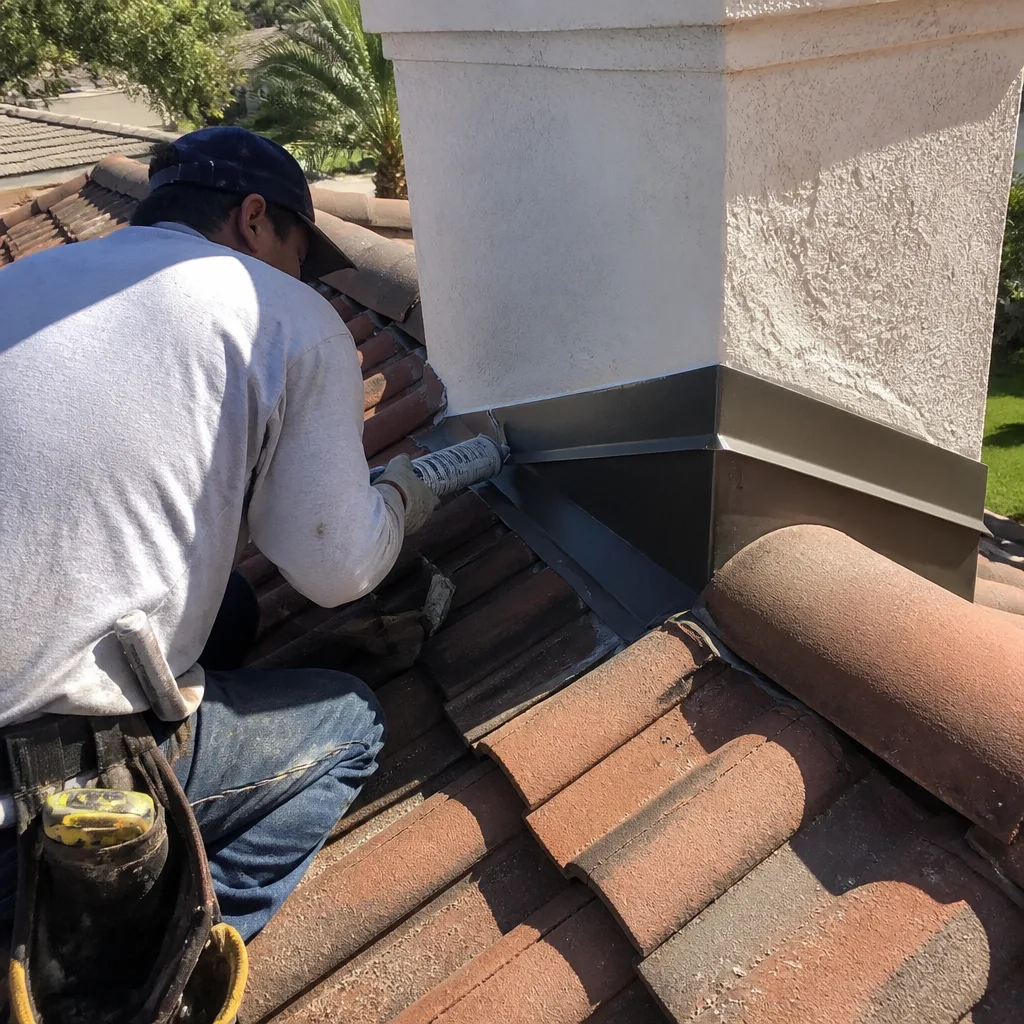
Flashings are the metal or rubberized materials at roof penetrations: vents, chimneys, skylights, and pipe boots. The failure point here is the sealant and the thermal expansion rate of metal against shingle. Metal expands more than asphalt. The sealant that bridges that gap eventually tears or pulls away.
Here’s what to check, in order of priority:
- Ridge cap shingles. From ground level or from a safe ladder position, look along the peak. Do any shingles look cracked down the center line? If you can see a shadow along the bend, that’s a crack opening.
- Pipe boot flashings. These are the rubber collars around plumbing vents. UV makes the rubber harden and crack. The face of a pipe boot on the south side of a Corona roof can be destroyed in five to seven years, while the north side still looks new.
- Chimney flashing. Look at the sealant line where flashing meets the chimney brick or stucco. Hairline gaps or pulled-away caulk are direct entry points for the winter rain we do get.
- Skylight curbs. If your home has skylights, check the sealant around the frame. Thermal expansion against the glass and frame material breaks these seals repeatedly.
Fix cracked ridge caps and failed flashing seals before the winter season. Even a small gap lets water in during a sustained rain, and by the time you see a ceiling stain inside, the water has already damaged decking and insulation.
Post-Santa Ana Wind Event Checklist
Santa Ana winds are a defining feature of living in Corona. They arrive with gusts that can hit 60 to 80 mph in the foothill neighborhoods near the Santa Ana Mountains. These events do a very specific kind of damage that’s different from rain damage, and your inspection should look for different things.
After any wind event with gusts above 40 mph, run through this list:
- Lifted shingle edges. Wind doesn’t usually tear shingles off cleanly. It lifts the edge and folds the shingle back. Sometimes the shingle settles back down and looks fine from the ground, but the seal strip underneath has broken. Walk the perimeter and look for shingles sitting at a slightly different angle than their neighbors.
- Creased shingles. When wind catches a shingle and folds it over, the shingle often develops a permanent crease at the fold line. If you can see a vertical line across a shingle from the ground, that shingle’s structural integrity is compromised.
- Debris strikes. Corona’s wind moves more than dust. Tree branches, palm fronds, and even roof tiles from neighboring homes become projectiles. Any point of impact needs a close inspection, even if there’s no visible puncture.
- Displaced ridge caps. The ridge line takes the strongest wind load because it’s the highest point with open exposure. After a strong wind, look along the ridge for any cap shingle that’s out of alignment or missing.
- Fastener exposure. On tile roofs, wind can shift tiles enough to expose the nail heads underneath. Once fasteners are exposed, they rust, and the tile loses its hold.
- Loose flashing. Wind-driven vibration can loosen flashing over time. Listen for rattling during the next wind event, and check sealant lines after each major one.
If you find lifted or creased shingles, don’t ignore them. The next Santa Ana event will finish the job the first one started.
For a deeper diagnostic after wind damage, our roof inspection service in Corona is available as a standalone appointment. You don’t need to be planning a replacement to schedule one.
The Rare Winter Rain: Pre-Season and Post-Storm Checks
Corona gets about 12 to 14 inches of rain a year, and most of it falls between December and March. That’s a fraction of what coastal or northern California roofs deal with, but the rarity of rain here is part of the problem. Roofs in Corona spend eight months a year baking dry. When the rain does arrive, any small gap, crack, or failed seal becomes an active leak. There’s no gradual wear-in period. The roof goes from fully dry to fully wet overnight.
Pre-season checks (October or November, before the first significant rain):
- Clear all gutters and downspouts of accumulated debris from summer winds.
- Check all flashing sealant lines. This is the single most common leak point on Corona homes.
- Inspect pipe boots for UV cracking and replace any that show visible splits.
- Look for any shingles that have lifted during summer thermal cycling. Heat doesn’t just dry things out; it can curl edges that then present a wind and water entry point.
- Check for popped nails. Thermal expansion can push nails up out of the decking. If you see small bumps or lifted shingle spots, those are often the cause.
Post-storm checks (after any rain event over half an inch):
- Check the attic or upper crawl space for any signs of water staining on the underside of the roof decking.
- Walk the interior ceiling line, especially at corners and around vent penetrations, with a flashlight.
- Look at exterior walls below roof valleys for water staining or efflorescence on stucco.
- Check gutters for new granule deposits. Rain tends to wash granules downhill, so heavy accumulation after rain is a signal that granule loss is active.
If you catch a leak within the first rain of the season, the repair is usually small. If you wait through the season, the same leak can rot decking and require structural repair. The sequence matters.
Maintenance Tasks That Preserve Your Warranty (and Those That Void It)
Here’s something many Corona homeowners don’t realize until it’s too late: roof maintenance isn’t just about preventing leaks. It’s about protecting the warranty on the materials you paid for. Manufacturer warranties from brands like GAF, CertainTeed, and Owens Corning contain specific language about homeowner obligations. Fail those obligations, and the warranty is void.
Tasks that preserve warranty validity:
- Regular documented inspections. Most manufacturer warranties require the roof to be inspected at regular intervals. A roof that’s never inspected after installation is a warranty claim waiting to be denied.
- Prompt repair of identified issues. If an inspection finds a problem and you don’t fix it, subsequent damage caused by the unresolved issue is usually excluded from coverage.
- Keeping gutters and drains clear. Many warranties explicitly require proper drainage. Clogged gutters that cause water to back up under the shingles are considered homeowner negligence, not a manufacturing defect.
- Keeping documentation. Photos, inspection reports, repair receipts. If you file a claim, the manufacturer will ask for proof that you maintained the roof. No documentation, no claim.
- Using compatible repair materials. If you patch a roof with materials from a different manufacturer or a lower-grade product, the original manufacturer can void the warranty on the entire roof system.
Actions that void warranty coverage:
- Walking on the roof improperly. In Corona’s summer heat, asphalt shingles are soft and more susceptible to damage from foot traffic. Walking on a hot roof can crack shingles and push granules into the asphalt. If you do walk on your roof, do it in the early morning or on a cool day, and only in areas you must access.
- Pressure washing the roof. This is the most common warranty-voiding mistake we see. A pressure washer strips granules off shingles instantly and can force water under the shingle courses. Never pressure wash an asphalt shingle roof. For tile roofs, pressure washing can crack tiles and blast out mortar at hips and ridges.
- Applying sealants or coatings not specified by the manufacturer. Some homeowners try to extend roof life with spray-on “roof repair” products sold at big box stores. These products can trap moisture, interfere with the shingle’s natural drainage, and void the warranty entirely.
- Adding a second layer of shingles over an existing roof. Some manufacturers prohibit overlay installations. Even when allowed, an overlay usually reduces the warranty period on the new shingles. We strongly recommend a full tear-off in Corona because the underlying decking needs to be inspected after years of heat cycling.
- Neglecting documented repairs. If a repair is recommended and you delay it for months, and then a leak occurs in that area, the manufacturer will consider the damage consequential and excluded.
Our position at Orange County Roofing Co is simple: we install products from seven major manufacturers, including GAF, CertainTeed, Owens Corning, and IKO. That range means we’re not tied to a single brand’s warranty terms. We recommend the material and warranty tier that matches your situation in Corona, not the one with the most margin for us. Which brings up the most important point: always read your specific warranty document. Every brand writes theirs differently.
A Month-by-Month Documentation Log for Insurance
If you ever file a roof-related insurance claim in Corona, the first question the adjuster will ask is: “When was the last time the roof was inspected?” If your answer is “I don’t remember” or “a few years ago,” the claim has already started on weak footing.
A simple monthly log changes that dynamic. It doesn’t need to be elaborate. It just needs to exist and be consistent.
Here’s a practical monthly rhythm for Corona homeowners:
- January: Post-rain inspection. Check attic, ceilings, and gutters after the first major rain of the season. Document any findings with photos.
- February: Gutter check. Clear any debris from January rains. Look for new granule deposits at downspout outlets.
- March: Spring inspection. Full granule loss check. Compare south-facing slope to north-facing slope. Note any visible changes.
- April: Flashing check. Inspect all pipe boots, chimney flashing, and vent seals. Note any cracking or separation in your log.
- May: Ridge cap inspection. Look along the ridge line for cracking or misalignment. Document with photos.
- June: First heat check. Walk the perimeter at ground level. Note any curling shingle edges starting to appear.
- July: Mid-summer granule check. Sweep downspout outlets. Record granule volume compared to previous month.
- August: Peak heat inspection. This is when thermal stress is highest. Check for new cracks, lifted shingles, or popped nails.
- September: Post-summer full inspection. Run the complete granule loss protocol. This is the most important inspection of the year in Corona.
- October: Pre-rain preparation. Clear gutters, check sealant lines, verify all flashing is intact before the first storm.
- November: Santa Ana wind check. After any wind event, inspect for lifted shingles and debris strikes. Log any findings.
- December: First rain response. Check for leaks during and after the first significant rainfall. Document any water intrusion immediately.
Take three photos each month minimum: one of the overall roof from the street, one of the south-facing slope, and one of the ridge line. Store them in a folder organized by date. If you ever need to file an insurance claim in Corona, you’ll have a photographic record that demonstrates consistent maintenance. That record is worth its weight in claim denials avoided.
If any month’s inspection reveals something concerning, don’t wait for the next month to act. Schedule a professional roof inspection in Corona to confirm what you’re seeing. A $300 inspection today is cheaper than a $3,000 repair next season.
Common Mistakes to Avoid
- Only inspecting the roof from the ground. Most damage on Corona roofs is visible only at close range or from the roof surface. Ground-level checks catch the big stuff but miss granule loss, hairline cracks, and lifted shingles that are just starting to fail.
- Ignoring the south and west slopes because they’re “hard to see.” The south-facing slope carries the heaviest UV load in Corona. If you only inspect what’s easy to see, you’re inspecting the wrong part of the roof.
- Assuming a newer roof doesn’t need maintenance. Even a roof installed two years ago can develop problems in Corona’s heat. In fact, the first three years are when installation defects show up. A new roof needs inspection more, not less.
- Pressure washing the roof to “clean it up.” This destroys shingle granules and voids your warranty. We can’t say this one often enough.
- Putting off a repair because it’s “not leaking yet.” By the time a leak shows up inside your Corona home, the water has already been working through the decking for weeks or months. The repair cost multiplies when structural wood is involved.
- Not documenting anything. An insurance claim or warranty dispute without documentation is a losing battle. Your phone camera and a simple monthly note take five minutes. Do it.
- Assuming all roofing contractors understand Corona’s specific climate. A roofer from the coast may not understand how thermal cycling affects materials here. Choose a contractor who works in Riverside County regularly and can speak to these local failure patterns.
When to Call a Professional
Some maintenance tasks are genuinely DIY. Checking gutters, sweeping downspout outlets, photographing the roof from the ground, and monitoring for interior stains are all within a homeowner’s reach. But there’s a line where professional inspection becomes the right call.
Call a professional if you see bare patches on shingles, cracked ridge caps, separated flashing, or any active water intrusion. Also call after a major wind event that visibly damaged nearby homes, or before buying or selling a home in Corona where the roof history is unknown.
We offer honest material advice by carrying Orange County Roofing Co home standards through every inspection and repair, and we serve all of Corona with the same diagnostic-first approach. If you’re not sure whether what you’re seeing is normal or concerning, schedule an inspection. It’s a standalone service, not a sales pitch. Call (866) 942-4187 for a free estimate in Corona.
Frequently Asked Questions
Twice a year at minimum: once after summer, once after the winter rain season. Corona’s heat exposure makes the post-summer inspection the most important one of the year.
Granule loss looks like dark, sand-like particles collecting in gutters and at downspout outlets. On the roof surface, it appears as lighter patches where the darker asphalt underneath starts to show through. Call (866) 942-4187 if you see bare patches forming.
Walking on an asphalt shingle roof is possible but risky, especially in summer when Corona heat makes shingles soft and more vulnerable to damage. If you must walk on the roof, do it in the early morning before heat builds, and stay on the lower slopes. For most homeowners, a professional inspection is safer and more thorough.
Weather event damage tends to be localized and sudden: lifted shingles, creased shingles, impact marks. Age-related damage is more uniform: consistent granule loss, gradual curling, widespread cracking. A professional can distinguish between the two, which matters for insurance claims. If you’re in Corona and need a Roof Replacement in Corona assessment, we can help you determine whether a full replacement is needed or a repair will do.
No. Insurance covers sudden, accidental damage from covered events like wind or hail. It does not cover maintenance, wear and tear, or negligence. That’s exactly why regular maintenance matters: it keeps small issues from becoming claimable events and keeps your documentation strong if a covered event does occur.
The answer depends heavily on material and maintenance. A well-maintained asphalt shingle roof in Corona can last 15 to 20 years, though UV exposure pushes some roofs to the lower end. Tile roofs can last 40 to 50 years with proper underlayment maintenance. Regular inspection and prompt repair extend any roof’s life meaningfully. Call (866) 942-4187 for an exact assessment of your roof’s remaining service life.
The Bottom Line
Your roof in Corona is fighting two battles every single day: UV degradation from intense sun exposure and structural stress from extreme thermal cycling. A maintenance routine built around those threats will catch problems before they become expensive failures. The protocol is simple: check granule loss regularly, inspect ridge caps and flashings twice a year, respond quickly after wind events, and document everything. Pair that with gutters kept clear and fast action on any finding, and you’ll get the maximum service life from whatever roofing material you have. Miss the routine, and you’ll pay in premature replacement and failed insurance claims. The five minutes a month it takes to photograph and log your roof is the cheapest insurance you’ll ever buy in Corona.
Written by the team at Orange County Roofing Co, serving Corona since 2015.
See the difference
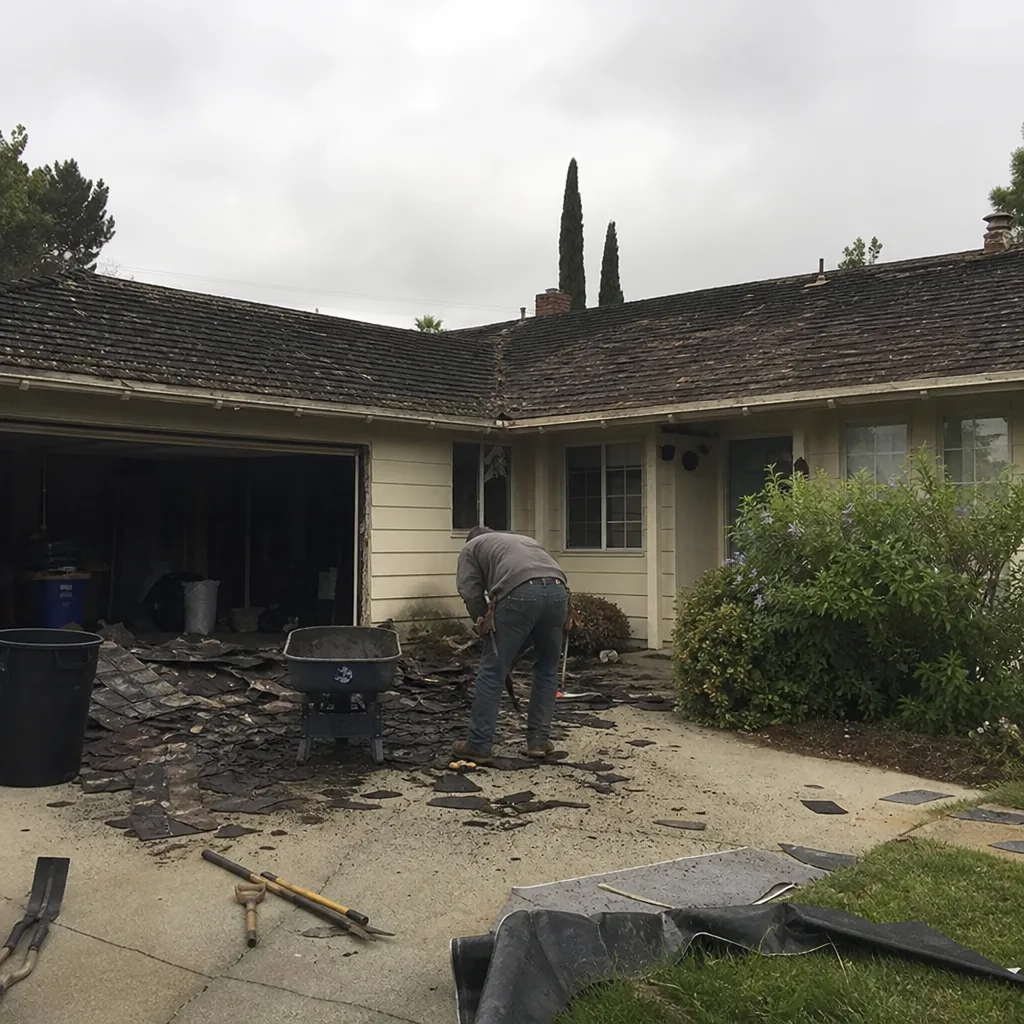 Before
 After
 Before
 After
 Before
 After