Last updated October 31, 2026
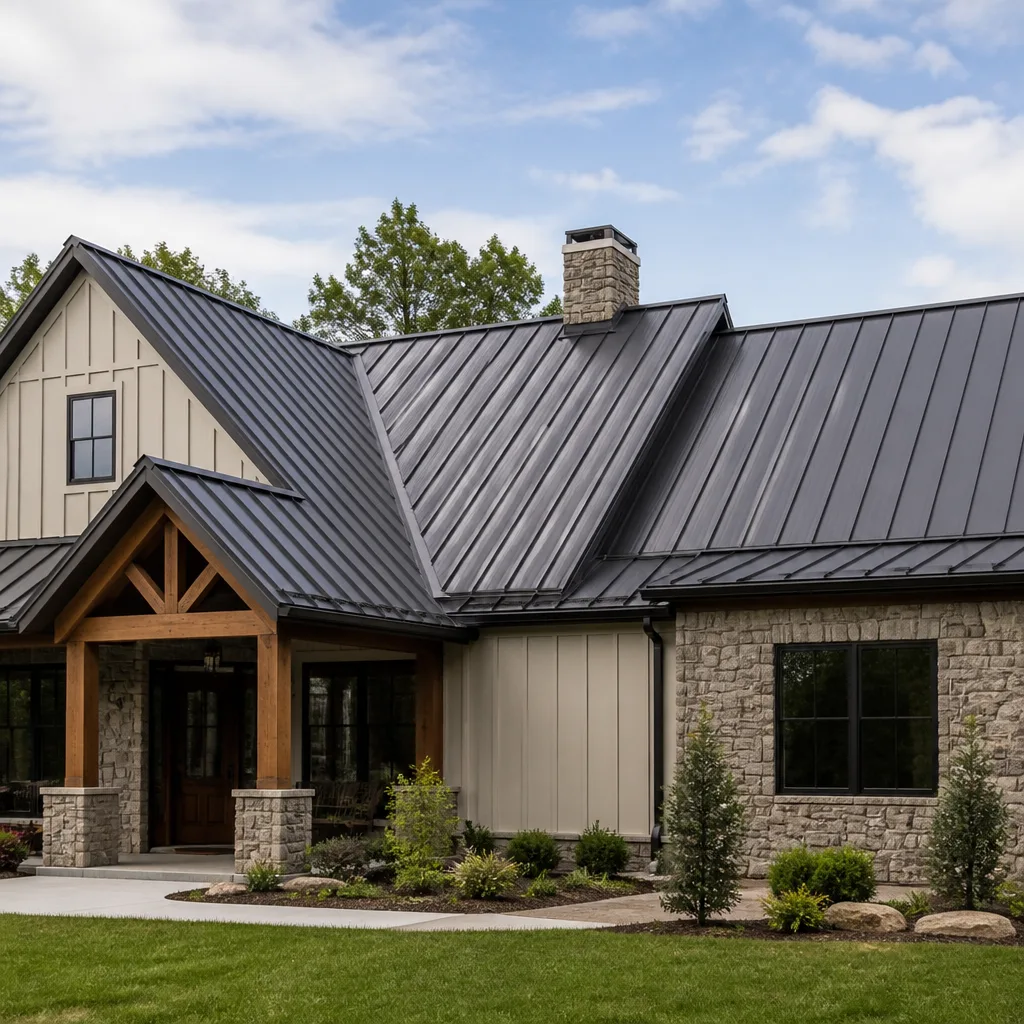 Metal roofing
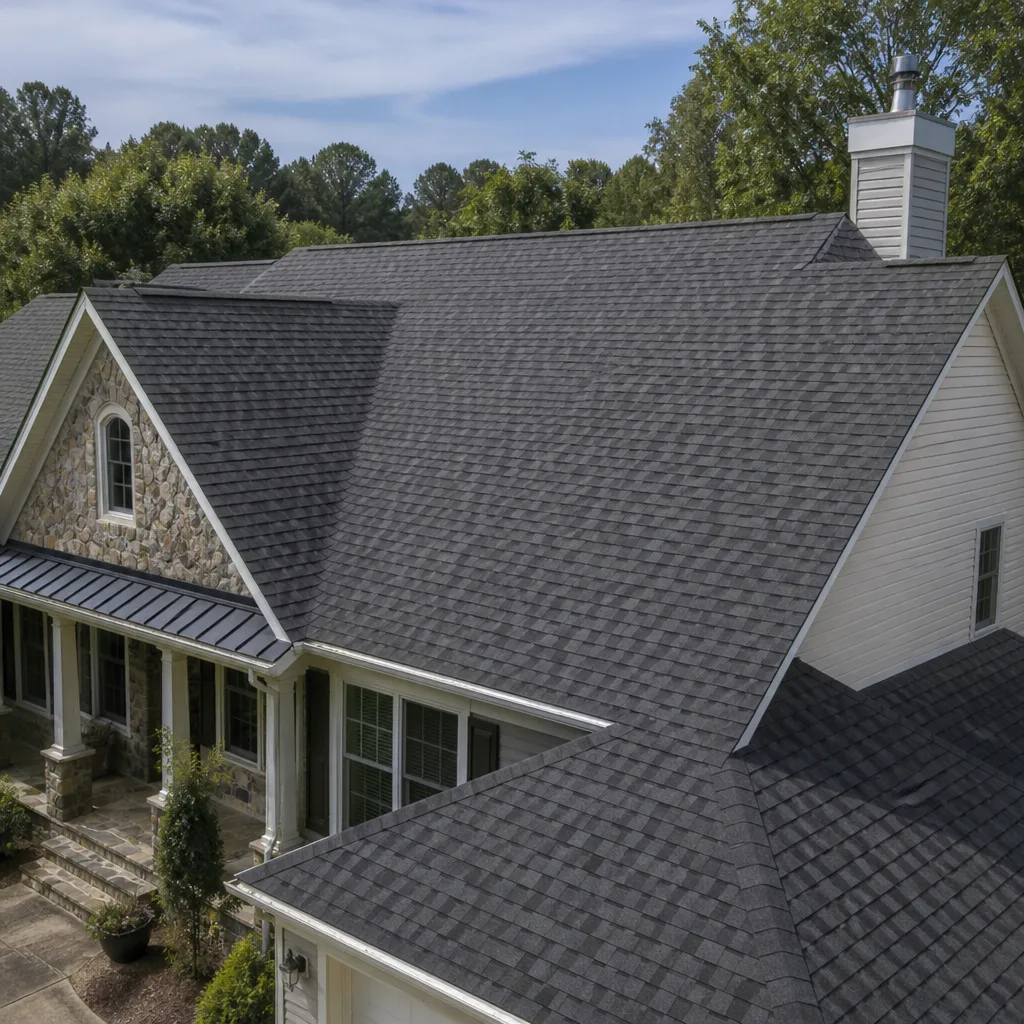
 Architectural shingles
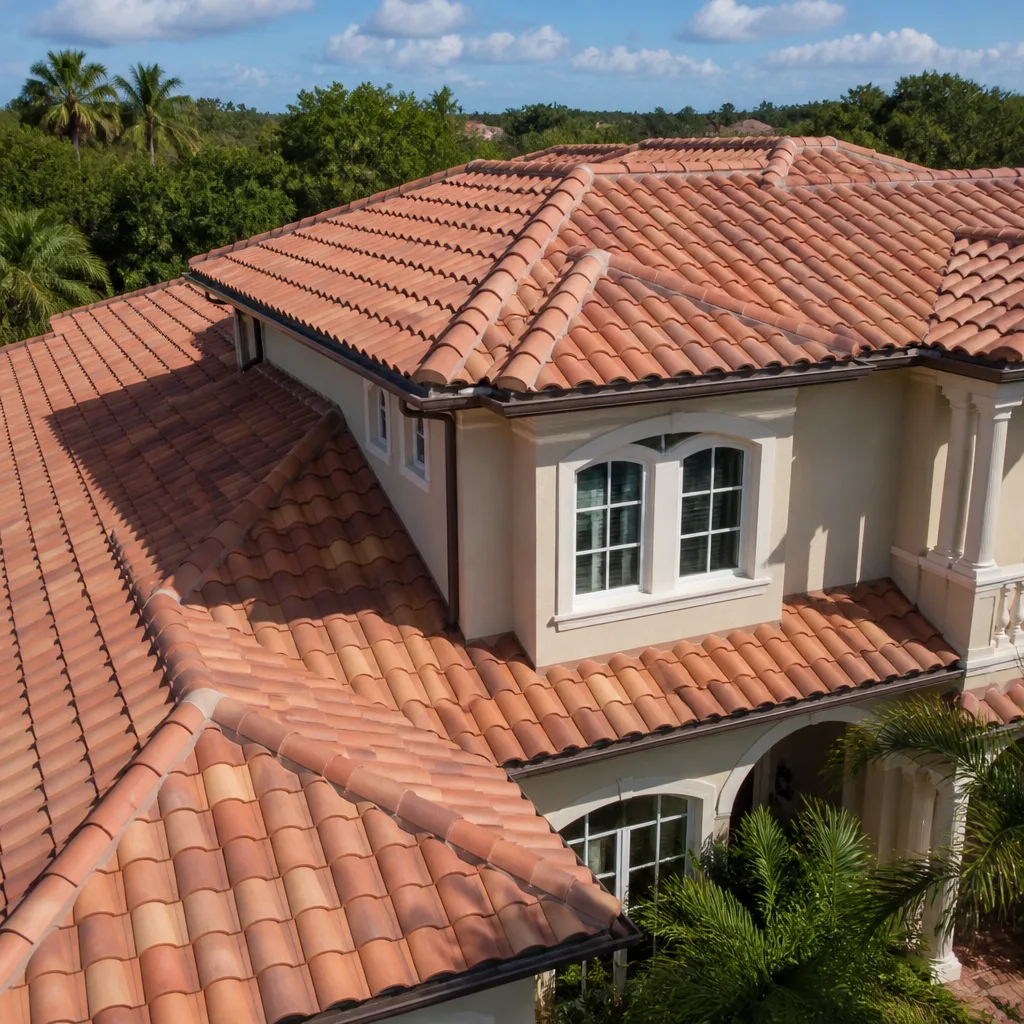 Tile roofing
 GAF
 Owens Corning
 Flat & low-slope
Free roof inspection with deck photos before we talk money - GAF and Owens Corning certified installation
Roofing Warning Signs: A Corona Homeowner’s Reference Guide
Here’s a counterintuitive fact about roofing in Corona: most homeowners don’t get caught by the damage they can see. They get caught by the damage they misread. A dark patch on your ceiling could mean a $400 flashing repair or a $14,000 re-roof, and the visual difference between those two outcomes is often invisible to the untrained eye. Blistering on asphalt shingles looks nearly identical whether it’s caused by fixable attic heat buildup or a manufacturing defect that qualifies for a full warranty claim. Confuse the two, and you’re either paying for a roof you didn’t need or missing a payout you deserved. This guide from Orange County Roofing Co home is built to fix that. We’ll pair every warning sign with its actual cause, its urgency level, and the repair path that matches your situation in Corona.
Quick Answer
The most common roof warning signs in Corona are curling or buckling shingles, dark ceiling stains, granule loss in gutters, and flashing separation around chimneys and vents. Most of these fall into three urgency tiers: cosmetic issues you can monitor (months to years), functional wear you should schedule within weeks, and active leaks you should address immediately. The single most important step is identifying the cause behind the symptom, because a ventilation failure, a flashing gap, and an aging shingle surface all demand different fixes at different price points.
Styles & brands we work with
Table of Contents
- Interior Warning Signs: What Your Ceiling and Attic Are Telling You
- Shingle Warning Signs: Curling, Cracking, and Granule Loss
- Blistering: Heat vs. Moisture and Why the Difference Matters
- Flashing Failure: Corona’s Thermal Cycling Problem
- Structural Signs: Sagging, Daylight, and Decking Deterioration
- The Urgency Framework: Months, Weeks, or Call Today
- Roof Age and Maintenance History: The Context That Changes Everything
- Common Mistakes to Avoid
- When to Call a Professional
- Frequently Asked Questions
Interior Warning Signs: What Your Ceiling and Attic Are Telling You
Interior signs are the most reliable roof diagnostic tool you have, because they don’t lie about moisture. If water is getting through, it shows up inside your home long before you see the exterior entry point. The key is ranking what you’re seeing by urgency. In our experience working on homes throughout Corona, we categorize interior warning signs into three tiers: stains that indicate past or slow leaks, active moisture that demands attention within days, and structural warnings that suggest the decking itself is compromised.
Here’s how to read what you’re seeing, ranked from least to most urgent:
- Faint, dried ceiling stains: These are brown or yellowish rings with no active dampness. They indicate a leak that happened at some point, possibly before you owned the home. Monitor these monthly. If they grow after rain, you have an active leak. If they stay unchanged for a full year, the issue may be resolved, though we recommend confirming with an inspection rather than assuming.
- Stains that darken or spread after rain: This is an active leak. Water is currently entering your roof system and traveling through the decking or insulation to your ceiling. In Corona’s dry summers, these can fool you by drying out completely between rain events. Don’t be fooled. The leak is still there, and the wet-dry cycle is quietly rotting your decking.
- Attic condensation or damp insulation: This points to a ventilation problem as often as a roof leak. Warm air from your living space rises into the attic and condenses on the underside of cold roof decking. In Corona’s hot summer climate, this is especially common in homes with insufficient intake or exhaust venting. Left unaddressed, attic condensation rots decking from the inside out, which is far more expensive to fix than adding vents.
- Visible light penetration through the roof deck: Get into your attic on a sunny day and turn off the lights. If you can see daylight coming through the roof boards, you have gaps that will absolutely admit water during the next rain. This is a call-today situation. Light penetration also means your roof’s thermal envelope is compromised, driving up cooling costs during Corona’s 90-degree-plus summer months.
- Sagging ceiling drywall: Water has pooled above the ceiling and saturated the drywall enough to bow it. This is the most urgent interior sign in this list. The next step is a partial ceiling collapse, which brings water, insulation, and debris into your living space. Call a roofing professional immediately if you see this.
The single most common mistake we see homeowners in Corona make with interior signs is treating a ceiling stain as the problem itself. The stain is a symptom. The actual entry point is often five to fifteen feet away from where the stain appears, because water travels along rafters and decking before finding a drip path downward. A roofer who fixes only the visible stain area is guessing. A proper diagnosis traces the water path from the interior stain back to its exterior source. That’s the difference between a repair that lasts and one that fails at the next storm. For a thorough diagnostic on your home, schedule a Roof Inspection in Corona before you start patching drywall.
Shingle Warning Signs: Curling, Cracking, and Granule Loss
Shingle deterioration is the most visually obvious category of roof warning signs, but it’s also the easiest to misjudge. Asphalt shingles are engineered to fail gracefully over 20 to 30 years, and some of the changes you’ll see are normal aging rather than urgent problems. The skill is knowing which changes are cosmetic and which are structural.
Here’s how to evaluate what you’re seeing from the ground or with a ladder:
- Curling at shingle edges: Curling is a heat and moisture response, and in Corona’s climate, it’s one of the most common aging signs we encounter. The corners or edges of shingles lift upward, breaking the flat seal that keeps water on the surface. Early-stage curling is often repairable by re-sealing, but widespread curling across large sections of the roof means the shingle’s adhesive strip has failed and the material is nearing the end of its service life. The threshold we use: if you see curling on more than 25% of the roof surface, replacement is more cost-effective than repeated repairs.
- Cracking or splitting: This is heat-driven thermal stress. Corona’s summer sun can push roof surface temperatures past 150°F, and the daily expansion-contraction cycle eventually causes the asphalt to become brittle and split. Small, isolated cracks can sometimes be sealed, but cracked shingles in clusters indicate the entire material batch is fatigued. You’re looking at replacement within a few years if cracking is widespread.
- Granule loss found in gutters or downspout drainage areas: All asphalt shingles shed granules over time, especially in their first year and again after year 15. The question is volume. A light dusting of granules in the gutter is normal. Piles of granules that look like sand drifts are not. The test we use: if you can scoop up a visible pile of granules from the bottom of your gutter, the shingle surface is eroding faster than normal, which accelerates UV damage to the asphalt underneath. Consistent heavy granule loss is the strongest visual signal that replacement is approaching.
- Bald spots or exposed fiberglass matting: This is the endpoint of granule loss. When the colored granules are gone, the fiberglass base layer is exposed to direct UV radiation and breaks down rapidly. Bald spots indicate the shingle has failed entirely and is no longer waterproof. This is not a repair situation. It’s a clear sign the roof needs replacement, and in our experience, by the time fiberglass is visible, the roof has likely been failing for two to three years already.
- Missing shingles after wind events: Corona’s Santa Ana winds routinely hit 40 to 60 mph gusts in the fall and early winter. Missing shingles are the obvious result. What’s less obvious is the damage hidden beneath them: each missing shingle exposes the seam below, where water will find a path through the roofing felt and into the decking. Even a single missing shingle warrants same-week repair, not because the shingle itself is expensive, but because every rain event while it’s missing compounds the damage underneath.
Here’s the framework most homeowners miss: granule loss, curling, and cracking are all connected symptoms of the same underlying process. Heat accelerates aging in Corona, which accelerates granule shed, which exposes asphalt, which weakens the shingle’s structural integrity, which leads to curling and cracking. They’re not separate problems. They’re stages of one progression. That’s why monitoring the rate of change matters more than the current condition. A roof that goes from minor granule loss to visible bald spots in 18 months is in serious decline. One that’s been stable for five years may have several more years of service life. We cover this in more depth on our Roof Repair in Corona page, specifically around whether individual shingle replacement buys you meaningful time or just postpones the inevitable.
Blistering: Heat vs. Moisture and Why the Difference Matters
Blistering is the most misunderstood sign on any asphalt shingle roof, and the stakes for getting the diagnosis right are higher than most homeowners realize. Visually, blisters are small raised bumps on the shingle surface, sometimes with a pinhole opening where the granule layer has popped. They cluster in patches or spread across entire slopes. What the visual inspection doesn’t tell you is whether the blisters came from trapped moisture inside the shingle during manufacturing or from heat driving volatile gases out of a poorly ventilated attic. The fix for one is a ventilation upgrade. The fix for the other is a warranty claim against the manufacturer.
Here’s how to tell them apart, and why a professional eye matters:
- Heat-driven blistering: Caused by excessive attic temperatures. In Corona’s summer, attic temperatures can exceed 160°F when ventilation is inadequate. That heat cooks the asphalt in the shingle from below, causing the oils to expand and form blisters. Heat-driven blisters tend to appear evenly across sun-exposed slopes, not in isolated patches. They develop slowly over multiple summers, and they’re usually accompanied by other heat-related symptoms: curling edges, accelerated granule loss, higher cooling bills. The fix is an attic ventilation upgrade, and in many cases, the underlying roof structure can be saved.
- Moisture-driven blistering: Caused by moisture trapped within the shingle’s asphalt layer during manufacturing. This is a defect, not a maintenance issue, and it’s why brands like GAF and CertainTeed have specific warranty provisions addressing premature blistering. Moisture-driven blisters tend to appear within the first few years of installation, often in isolated patches, and can appear on shaded slopes just as often as sun-exposed ones. If you have blistering within the first five years of a roof’s life, document it with photos and contact the installer about a warranty claim.
Here’s the practical takeaway: if your blisters showed up gradually over many years and are spread across the sun-facing slopes, you likely have a ventilation problem. If they appeared quickly after installation, you may have a warranty claim. The diagnostic difference matters because treating the wrong cause wastes money in both directions. Replacing a blistered roof without fixing inadequate ventilation means the new roof will blister the same way. And repairing blisters individually when you’re holding a valid warranty claim means paying out of pocket for something the manufacturer should cover. We carry multiple brands, including Owens Corning and IKO, specifically so we can evaluate warranty applicability honestly without steering you toward any single manufacturer’s interests. If you’re seeing blisters and want to know which path applies to your roof, schedule a Roof Inspection in Corona and we’ll give you a straight diagnosis.
Flashing Failure: Corona’s Thermal Cycling Problem
Flashing is the sheet metal (or synthetic membrane) that seals every place your roof changes direction or gets penetrated by something: chimneys, vents, skylights, wall-to-roof intersections, valleys, drip edges. In our experience, flashing accounts for the majority of residential roof leaks, and it’s the area where Corona’s specific climate creates the most concentrated wear.
Here’s why: Corona’s inland Southern California location means hot days and cool nights for much of the year, with temperature swings of 30 to 40 degrees between day and night in the spring and fall. That daily cycle causes metal flashing to expand and contract continuously. Over years, the expansion-contraction movement breaks the sealant bond between the flashing and the roofing surface, creating hairline gaps that admit water slowly. The leak starts as a damp spot in the attic you might never notice. By the time it’s visible on the ceiling, the opening has usually been active for months.
Early flashing failure signs to look for, in order of easiest to spot:
- Lifted or separated flashing at chimneys: Walk around your home and look at the chimney base from the ground. If you can see daylight between the metal and the chimney brick or stucco, the seal has failed. On most Corona homes, the chimney flashing is original to the house unless a prior owner replaced it. That means 20-plus years of thermal cycling, which is well beyond the reliable lifespan of most flashing sealants.
- Caulk or sealant cracking around vent pipes: Pipe boots (the rubber gaskets that seal plumbing vents) crack and shrink over time. The telltale sign is a ring of cracked, whitish sealant around the pipe. Pipe boots are inexpensive to replace individually, and catching them before they split entirely is one of the cheapest roof repairs available.
- Wall-to-roof step flashing pulling away: Where your roof meets a vertical wall, step flashing is layered under the siding and over each course of shingles. As the house settles and the flashing expands and contracts, the pieces can separate slightly. You’ll see a small gap where the flashing should tuck under the siding. Repairing step flashing is more involved than replacing pipe boots, but still far cheaper than replacing decking damaged by years of slow intrusion.
- Rust or corrosion on exposed flashing: Metal flashing doesn’t last forever, especially in areas where water pools or sprinkler overspray reaches the roof. Rust-through creates holes that channel water directly into the decking. If you see visible rust patches on your flashing, replacement is the only reliable fix.
The moment you spot any of these signs, get them addressed. Flashing gaps don’t self-heal, and every rain event pushes more water into the same channels. Repair is straightforward for a qualified roofer, and because the materials and labor are modest compared to a full replacement, addressing flashing early is the single highest-ROI repair most Corona homeowners can make. For a deeper look at what flashing repair involves and what it should cost, we cover it on our Roof Repair in Corona page.
Structural Signs: Sagging, Daylight, and Decking Deterioration
Structural warning signs are the ones that separate a roof repair from a roof replacement, because once the decking or framing is compromised, you’re no longer dealing with a surface problem. The structural layer is what everything else sits on. If it’s failing, patching shingles or sealing flashing is pointless.
Here are the structural warning signs we see most often in Corona homes, and what each one actually indicates:
- Sagging ridge line: From the street, look along the peak of your roof. It should form a straight, crisp line. Any visible dip or sway indicates the underlying structure has been weakened, usually by long-term moisture intrusion or inadequate original construction. A sagging ridge is not repairable from the top. It requires opening the roof structure, evaluating the trusses or rafters, and likely replacing compromised material.
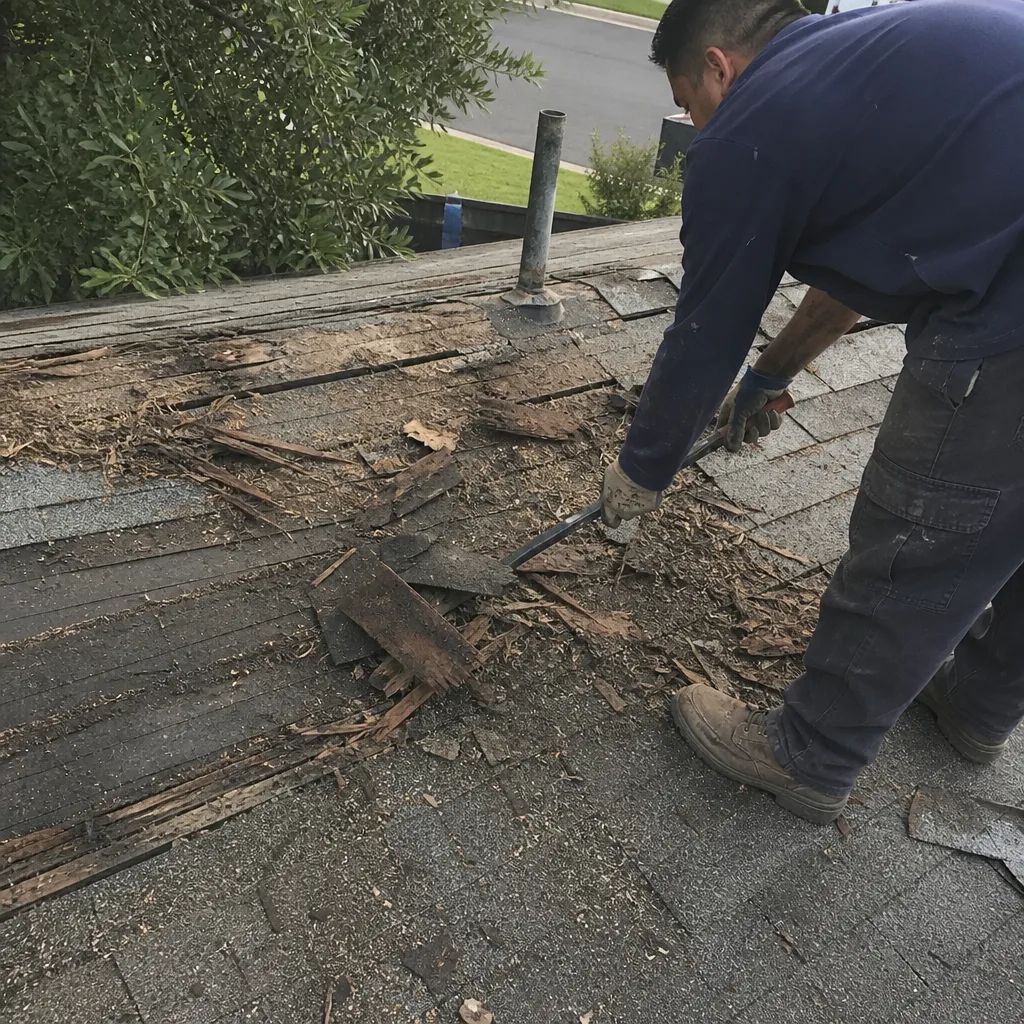
- Springy or bouncy feel when walking the roof: A roof deck should feel solid underfoot. If it gives or bounces, the plywood or OSB decking has lost integrity through moisture absorption. Even if there’s no visible leak yet, compromised decking will fail more completely, and a springy roof is unsafe to walk. During any full replacement on a Corona home, we make it a point to inspect the decking and replace any questionable sections before laying new underlayment. The marginal cost of decking replacement is small compared to building over a compromised substrate.
- Visible daylight through the roof boards from the attic: Covered earlier in the interior section, but worth restating: any visible light penetration means a direct opening for water. The gap you’re seeing is a full failure of the waterproofing system at that point.
- Stains or water damage on attic framing: If the rafters or trusses show dark staining, mold growth, or white efflorescence, water has been moving through the attic space for an extended period. The framing may still be structurally sound, or it may not. A structural evaluation is warranted, not just a roofing repair, because rotted framing members lose load-bearing capacity.
The important distinction here is that structural signs almost always indicate replacement-level work. You’re not fixing a shingle problem when the decking is soft or the ridge is sagging. You’re rebuilding the foundation of the roof system. The cost difference is significant, which is why catching structural issues early (when they’re still confined to a small area) matters so much financially. A single soft deck section can often be replaced during a larger repair. A roof with widespread decking failure is a full tear-off and re-deck. We walk homeowners through this exact evaluation during our Roof Inspection in Corona, with written line-item findings so you know exactly what you’re dealing with before committing to any work.
The Urgency Framework: Months, Weeks, or Call Today
Most roof warning sign lists fail homeowners because they treat every issue as equally urgent. That’s wrong, and it leads to two costly errors: either panicked overpayment for an issue that could have waited, or dangerous delay on an issue that couldn’t. The framework we use with Corona homeowners sorts every sign into three buckets. Here’s the complete framework:
Tier 1: “Call Today” (Immediate Action Required)
- Active water intrusion visible on ceilings or walls
- Sagging ceiling drywall
- Visible daylight through roof decking from the attic
- Missing shingles exposing the underlayment or seams
- Flashing lifted away from the chimney or wall with visible gaps
- Fallen tree limbs that have penetrated the roof surface
If you’re in this tier, the right move is to stop evaluating and call a roofing professional now. Water damage compounds hourly during active rain, and a small leak today is a decking replacement tomorrow. Emergency tarping can limit damage while a permanent repair is scheduled.
Tier 2: “Schedule Within a Few Weeks” (Active Deterioration)
- Widespread shingle curling across multiple slope sections
- Heavy granule loss accumulating in gutters
- Small cracks in pipe boot sealant
- Early rust spots on flashing
- Attic condensation or damp insulation
- Blisters that appeared suddenly after installation (warranty evaluation)
These issues are actively degrading but won’t likely cause catastrophic failure in the next 30 days, assuming no major storm event. They deserve prompt professional attention before they cross into Tier 1 territory, especially with Corona’s winter rains approaching. Acting in the weeks scale keeps repair costs at the lower end of the spectrum.
Tier 3: “Monitor and Plan” (Months to Years)
- Faint, stable ceiling stains with no active moisture
- Normal age-related granule loss (light dusting, not piles)
- Early-stage, isolated curling on a single shingle or two
- Cosmetic staining on shingles from mildew or algae (common in shaded areas)
- Minor rust staining on flashing without visible holes
These signs indicate you should start planning and budgeting for future work, but you’re not under immediate pressure. The essential caveat: monitoring means actually checking monthly, not forgetting about it. Corona’s climate is dry for long stretches, which means small issues can hide for months and then accelerate rapidly when the rains arrive. Most homeowners who end up with serious damage are those who saw early signs but didn’t act on them because the roof “wasn’t leaking yet.”
One more piece of context that changes everything: roof age. If your roof is 15 years old and showing Tier 3 signs, you’re looking at replacement planning now, not repair planning. If it’s 8 years old and showing the same signs, repair is the right path. We cover age-based decision-making on our Roof Replacement in Corona page, including the point where patching stops making financial sense.
Roof Age and Maintenance History: The Context That Changes Everything
One of the least understood facts about roofing is that the same warning sign means completely different things depending on your roof’s age and history. A curling shingle on a 5-year-old roof is a red flag warning of an installation error or a defective material batch. The same curling shingle on a 22-year-old roof is expected behavior, and the right response is likely budgeting for replacement rather than paying for isolated repairs.
Age Thresholds
Most asphalt shingle roofs in Corona fall into three age bands:
- 0 – 10 years: This is the warranty-protected window for most manufacturers. If you’re seeing significant issues in this range, you may have a valid warranty claim through brands like GAF, Owens Corning, or CertainTeed, depending on what’s installed. Documentation matters here. Save photos, note when you first observed problems, and have a professional inspection done to establish the diagnosis in writing.
- 10 – 18 years: This is the maintenance window. The roof is mid-life, and most issues are repairable at reasonable cost. Flashing replacement, individual shingle replacement, and ventilation upgrades are the most common interventions. The strategic question in this band is whether your roof’s overall condition justifies continued repair or whether early replacement might be the better financial decision. A professional inspection with written findings is the right input for this decision.
- 18+ years: This is the replacement window. Most asphalt shingles in Corona’s heat don’t make it past 22 – 25 years without significant degradation. Even if you’re not seeing active leaks, the granule surface is depleted, the asphalt is brittle, and the sealant strips have lost their grip. Waiting for visible failure at this age usually means paying for interior damage repair on top of the inevitable replacement.
Maintenance History
The second context factor is what’s been done to the roof over its life. A roof that’s received regular flashing inspections, prompt shingle replacement, and periodic gutter cleaning will simply perform better in its later years than one that’s been ignored. Here’s what to review in your own home’s history, if you can access it:
- Prior repairs: Were they done by a licensed contractor, or by a handyman? Were permits pulled? Poor-quality prior repairs can create new leak points while attempting to fix old ones. We see this regularly in Corona: a homeowner patched a leak with roofing tar and ended up creating a larger problem.
- Gutter maintenance: Clogged gutters in Corona’s fall leaf season cause water to back up under the shingle course at the roof edge, which accelerates deterioration in exactly the areas most vulnerable to Santa Ana wind-driven rain.
- Any ventilation changes: If you’ve added attic insulation without adding intake or exhaust venting, you may have inadvertently increased attic temperatures. More insulation is good for energy efficiency but can cook your shingles faster without proper airflow.
If you can’t reconstruct your roof’s history, a professional inspection is the fastest way to establish your baseline. We inspect roofs in Corona as a standalone service, not as a sales lead-in, and the written findings give you a point-in-time snapshot you can reference for years. That’s especially useful if you’re buying or selling a home and need objective documentation for disclosure purposes.
Common Mistakes to Avoid
We’ve seen these five mistakes cost Corona homeowners thousands of dollars, either through unnecessary spending or delayed action that multiplied the eventual damage. Here’s what to avoid:
- Treating every roof stain as an active leak: Ceiling stains that don’t grow, don’t darken after rain, and don’t feel damp are usually historical. Replacing a roof because of a stable stain from a decade-old leak is the most expensive misdiagnosis in residential roofing. Get a professional inspection before you commit to major work.
- Ignoring granule loss because “roofs just do that”: Some granule loss is normal. Piles of granules in gutters are not. Once you can see measurement-level accumulation, you’re likely within a few years of replacement, and every year you wait exposes more roof deck to moisture risk.
- Caulking over failing flashing instead of replacing it: Caulk is a temporary patch, not a flashing repair. In Corona’s thermal cycling, caulk bonds fail within a season or two, and you’re back to square one plus the challenge of removing the old sealant. Replacement flashing costs more upfront but lasts decades.
- Replacing shingles without addressing ventilation: If your roof is failing due to heat buildup, new shingles will fail the same way. The ventilation problem doesn’t disappear because the shingles are new. In fact, it may accelerate damage to the new surface. Ask any contractor you’re considering whether they’ve evaluated your attic airflow. If they can’t answer, call someone who can.
- Waiting until a visible leak to start budgeting: The most expensive roof replacement is the emergency one. Homeowners who identify age-related degradation early can plan replacement on their timeline, compare materials and contractors properly, and avoid the emergency premium that comes with active water damage. Even if you’re not ready to replace, knowing your roof’s condition and timeline gives you control over the decision.
When to Call a Professional
If you’re seeing any Tier 1 signs, call today. Active leaks, visible daylight through the decking, sagging ceilings, or missing shingles after wind events are not DIY territory, and the hourly cost of water damage quickly exceeds any savings from postponing. If you’re seeing Tier 2 signs, schedule an inspection within a few weeks to get a professional diagnosis before winter rains arrive in Corona. And honestly, if you’ve read this guide and still aren’t sure what you’re looking at, that uncertainty itself is a reason to call. The cost of a roof inspection is modest compared to the cost of guessing wrong. Orange County Roofing Co offers free estimates in Corona, call (866) 942-4187, and our inspections are a standalone service with written findings, whether or not any work is needed.
Frequently Asked Questions
Many roofing contractors in Corona, including Orange County Roofing Co, offer inspections at no charge when paired with a repair or replacement estimate. If you need an inspection as a standalone service, for a real estate transaction or insurance documentation, expect to pay a modest fee that varies by roof size and access difficulty. Call (866) 942-4187 for current pricing on your home.
At minimum, once a year in the fall before the rainy season. After major wind events like Santa Ana conditions, do a visual check from the ground for missing shingles or lifted flashing. If your roof is over 15 years old, twice-yearly inspections are worth the minor time investment because deterioration accelerates in the later years of a roof’s life.
Individual shingle repair is absolutely viable when the damage is isolated and the roof is under 15 years old. The economics shift once curling, cracking, or granule loss is widespread. At that point, repeated repairs cost more per year of extended life than the prorated value of a new roof. The honest answer depends on the percentage of the roof surface affected, and that’s something a professional inspection can quantify for you in writing.
Heat-related degradation. Corona’s extended summer heat accelerates shingle aging faster than coastal Southern California locations, and inadequate attic ventilation compounds the problem. We routinely see roofs in Corona at 18 years old that show the same wear patterns as 23-year-old roofs in cooler climates. The fix is twofold: proper ventilation design during replacement, and realistic expectations about roof lifespan in this climate.
Most architectural asphalt shingles in Corona’s climate deliver 20 to 25 years of service, with the variance driven mainly by ventilation quality, sun exposure, and maintenance history. Premium lines from manufacturers like GAF, Owens Corning, and CertainTeed may push the upper end of that range. Tile roofing lasts longer, but tile comes with its own maintenance profile and isn’t the right choice for every home’s structure.
Insurance generally covers sudden, accidental damage like wind-driven shingle loss or storm damage from a falling branch. It does not cover gradual wear and tear, age-related deterioration, or maintenance neglect. The line between those categories is where claims get contested, and having a professional inspection with written documentation can strengthen your position if you need to file. Call (866) 942-4187 if you need an inspection for insurance purposes.
The Bottom Line
Roof warning signs aren’t random events. They’re the visible output of specific causes: heat exposure, moisture intrusion, thermal cycling, ventilation failure, and simple aging. Once you understand which cause is producing which sign, you can make rational decisions about urgency and budget instead of reacting to anxiety. The three-tier framework in this guide is meant to give you that control. Monitor Tier 3 signs, schedule Tier 2 signs within weeks, and never hesitate on Tier 1. Know your roof’s age, understand its maintenance history, and don’t guess at causes when a professional diagnosis costs less than the mistakes guessing leads to. In Corona, our climate punishes neglected roofs faster than most homeowners expect, but it rewards attention with years of additional service life.
If you’re seeing any of the signs covered here and want to know exactly what they mean for your specific roof, call Orange County Roofing Co at (866) 942-4187 to schedule your free inspection and estimate. We’ll walk you through what we’re seeing, explain the diagnosis in plain language, and give you written findings you can use to make the decision that’s right for your home and budget.
Written by the team at Orange County Roofing Co, serving Corona since 2015.
See the difference
 Before
 After
 Before
 After
 Before
 After