Last updated October 31, 2026
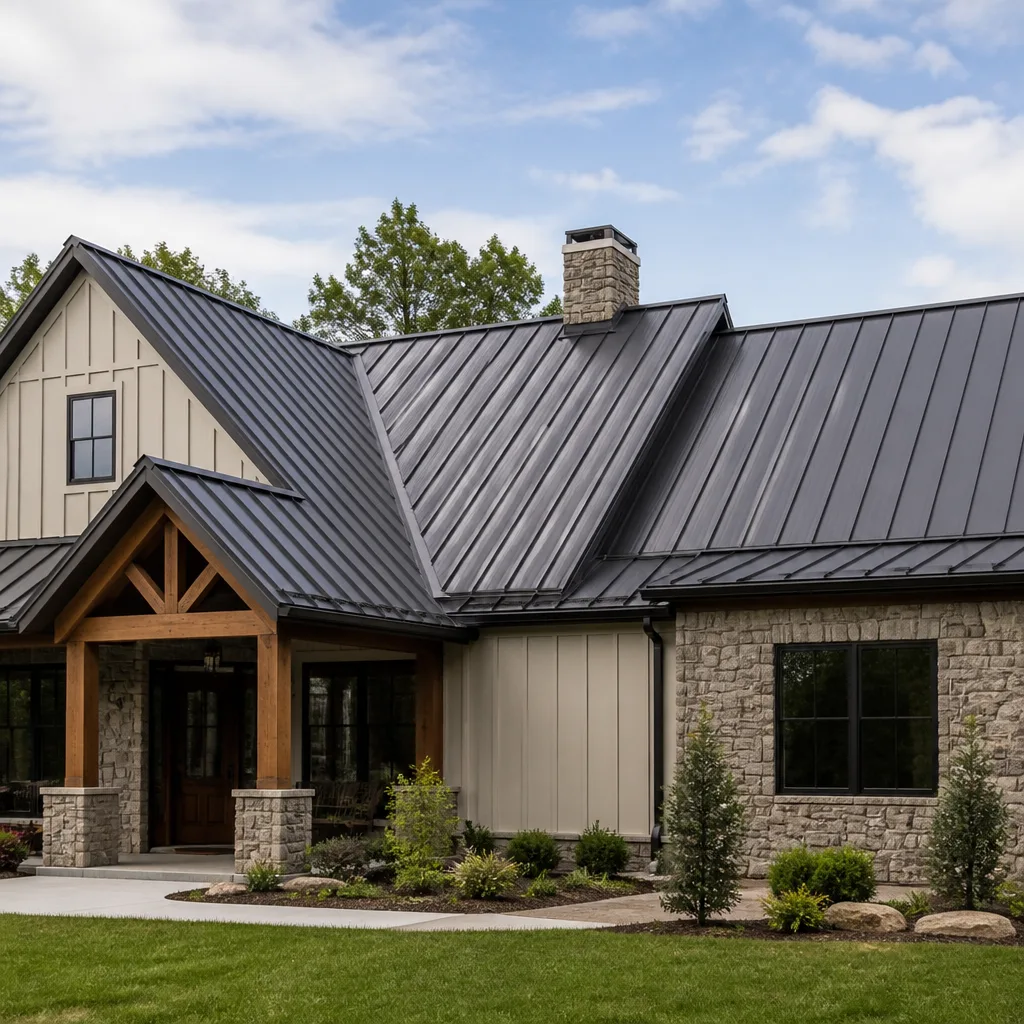 Metal roofing
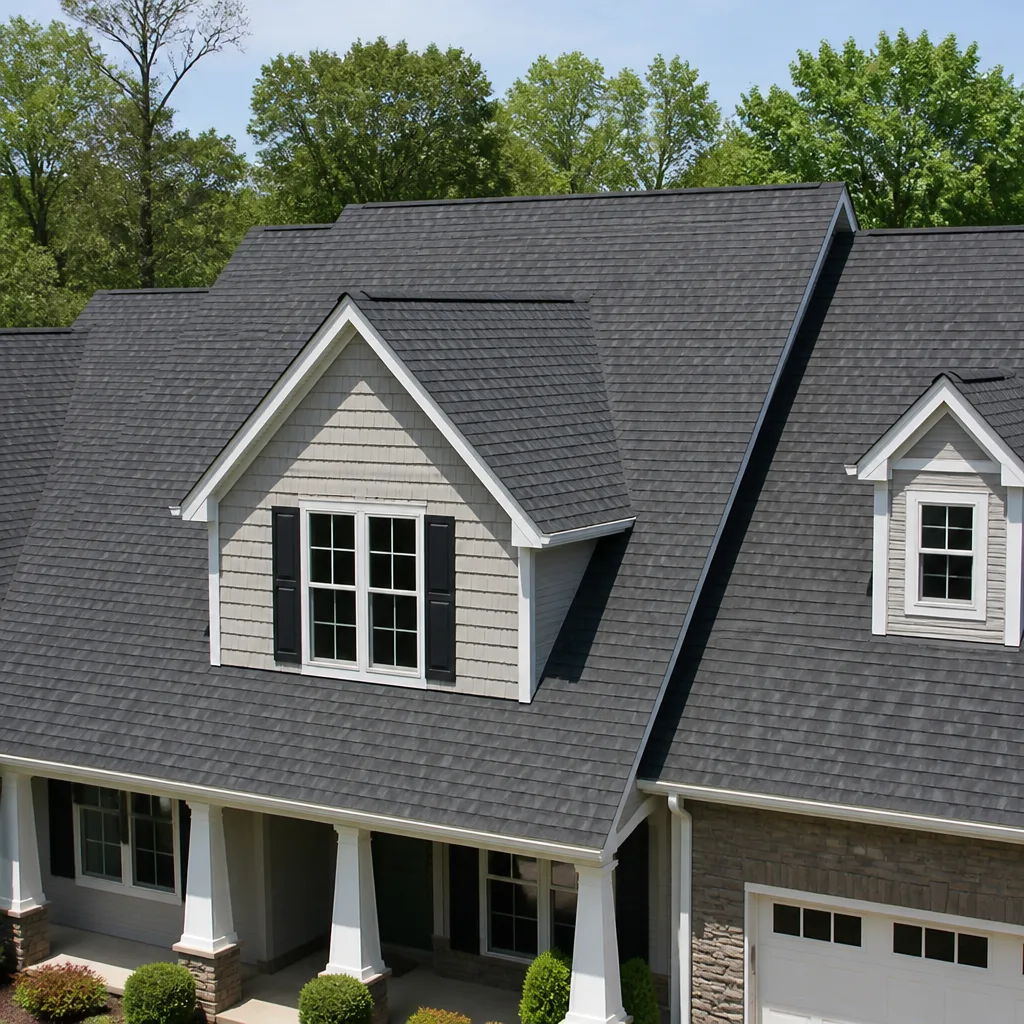 Architectural shingles
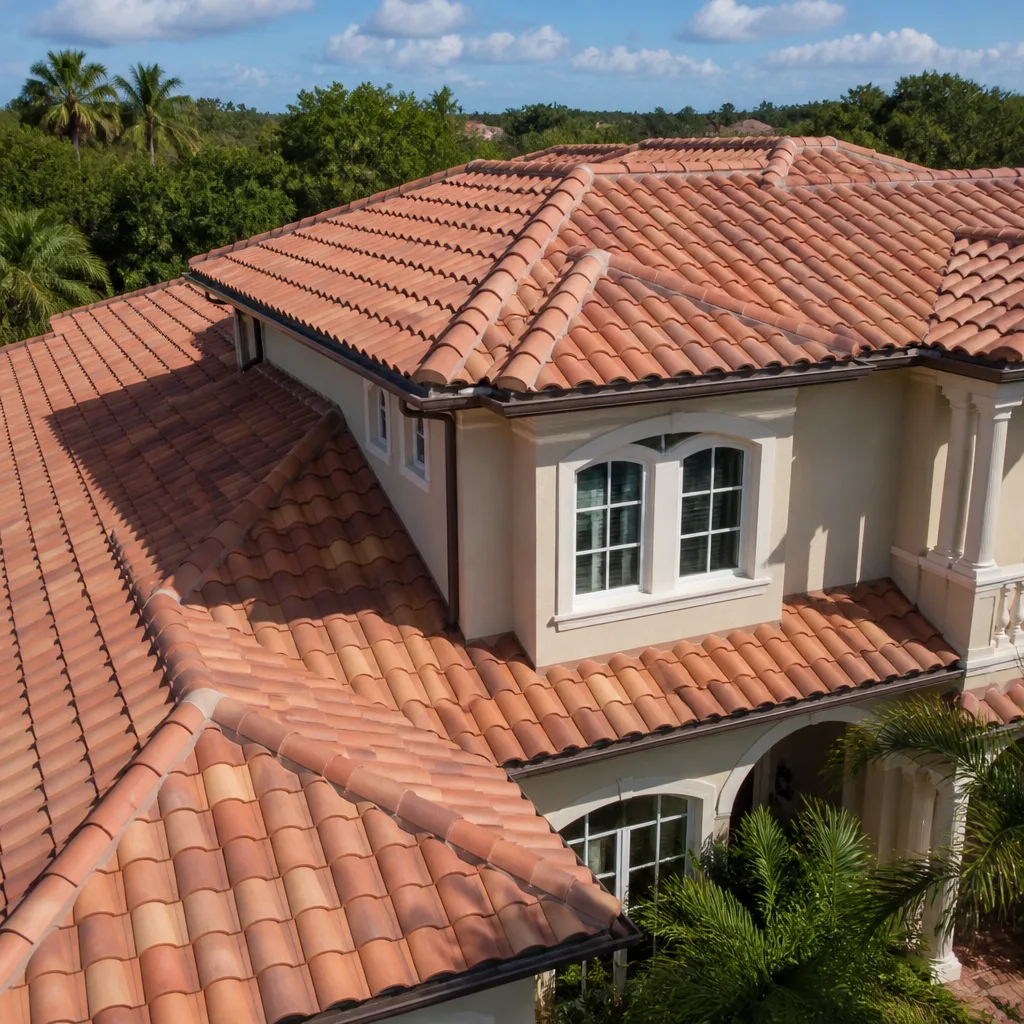 Tile roofing
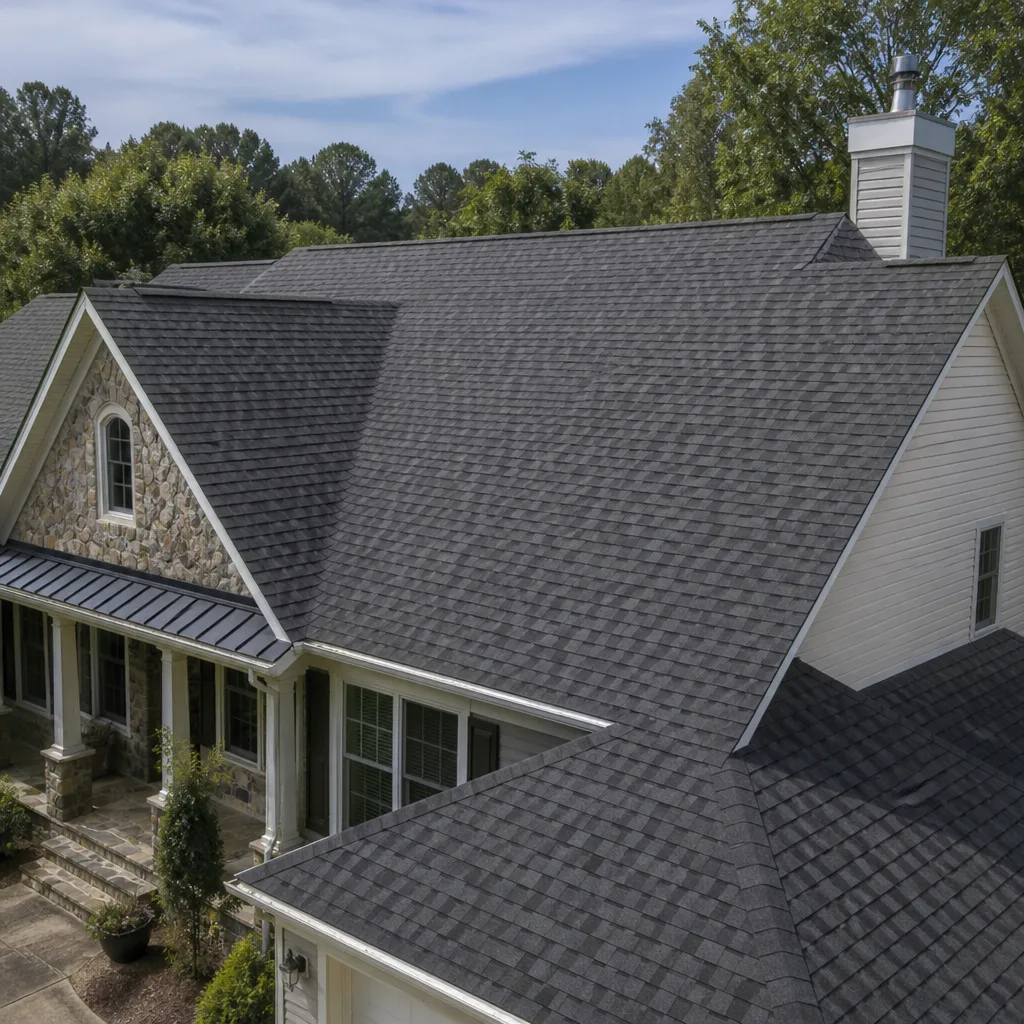 GAF
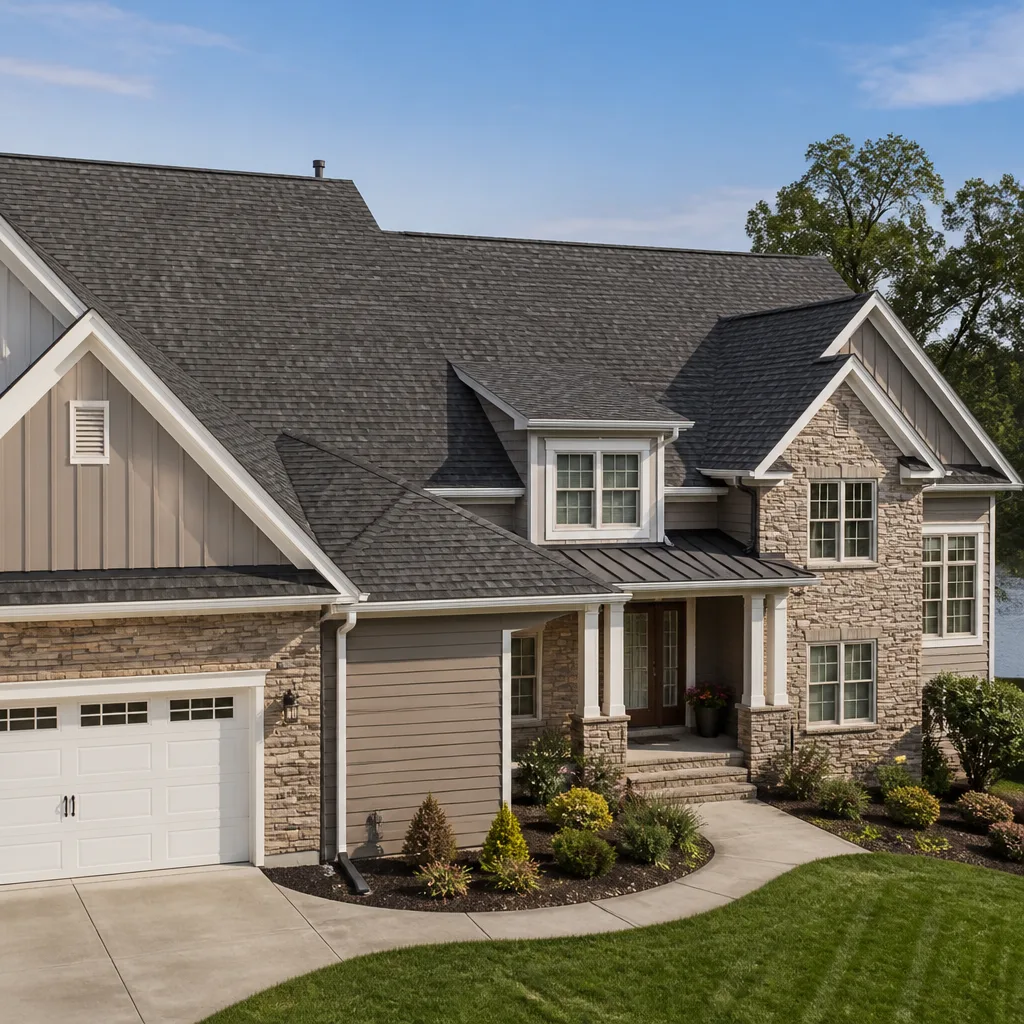 Owens Corning
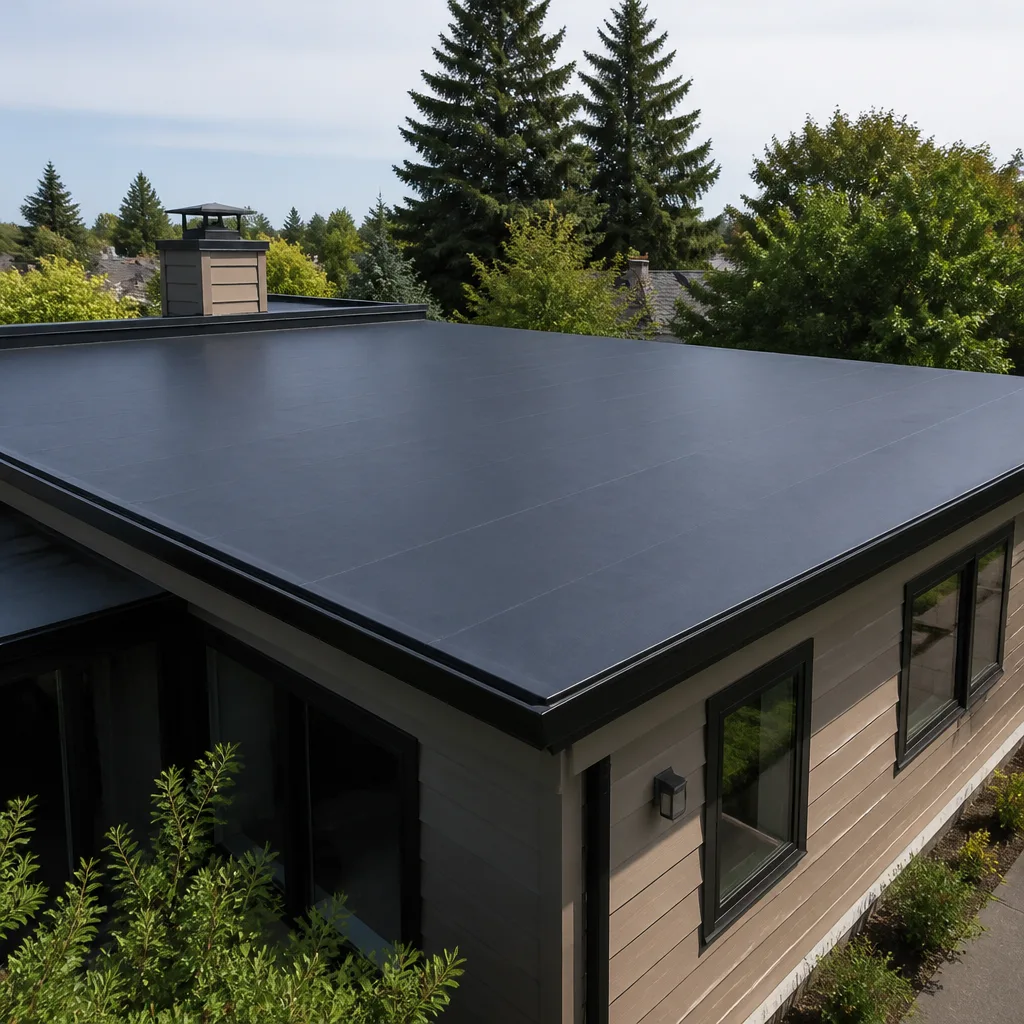 Flat & low-slope
Free roof inspection with deck photos before we talk money - GAF and Owens Corning certified installation
Roofing Permits, Codes & Inspections in CA: What You Need to Know
Most homeowners in Corona don’t realize their roof sits at the intersection of three separate regulatory layers until something goes wrong. A neighbor gets flagged during a refinance. A buyer’s agent demands permit records. A Title 24 energy audit comes back non-compliant. None of these are hypothetical: we’ve watched unpermitted re-roofs knock $15,000 to $30,000 off sale prices in Riverside County because sellers couldn’t produce a simple permit history. This guide maps every layer, from state energy code down to city-level inspection sequences, so you know exactly what your project requires before work begins. For Roofing Warning Signs: A Corona Homeowner’s Reference Guide, see our companion post.
Quick Answer
Most full re-roofs in Corona require a building permit from the City of Corona, compliance with California’s Title 24 cool-roof energy standards, and a minimum of two Riverside County building inspections (mid-roof and final). Simple repairs like replacing a handful of shingles or resealing flashing typically do NOT trigger a permit requirement, but any work involving decking replacement, structural repair, or complete tear-off does. Plan for 5 to 10 business days of permit processing time before materials hit the roof.
Styles & brands we work with
Table of Contents
- Which Roofing Projects Require a Permit in Corona
- Title 24 Cool-Roof Compliance: What Actually Applies
- The Riverside County Roofing Inspection Sequence
- Corona Permit Timeline Reality: Planning Around Processing Windows
- Unpermitted Roofs and Home Sales: What Sellers Need to Know
- How to Remediate an Unpermitted Existing Roof
- Roofing Material Codes and Fire Ratings in Corona’s Climate
- Common Mistakes to Avoid
Which Roofing Projects Require a Permit in Corona
Corona follows the California Residential Code with local amendments, and the threshold for what counts as “roof repair” versus “roof replacement” is where most confusion starts. The distinction matters because repair work generally slides under the permit radar, while replacement work does not.
Here’s the practical breakdown based on how the City of Corona’s building department interprets the code in practice:
Projects that require a permit in Corona:
- Full tear-off and re-roof – removing all existing roofing material down to the deck and installing new underlayment and surface material. This is always a permitted project.
- Decking replacement – if the plywood or OSB sheathing is rotted, delaminated, or damaged beyond patching, replacing it triggers a permit because it’s considered structural work.
- Re-roofing over existing shingles – even a “layover” where new shingles go over old ones requires a permit in Corona. The city wants to verify the existing structure can handle the added weight and that the old roof doesn’t hide deck damage.
- Structural repairs to rafters, trusses, or ridge beams – any framing work automatically requires permits and structural review.
- Changes to roof geometry or pitch – if you’re adding a dormer, changing a flat roof to a slope, or altering the roof line, you need permits and possibly design review.
Projects that generally do NOT require a permit:
- Replacing 10 or fewer damaged shingles – this falls under routine maintenance.
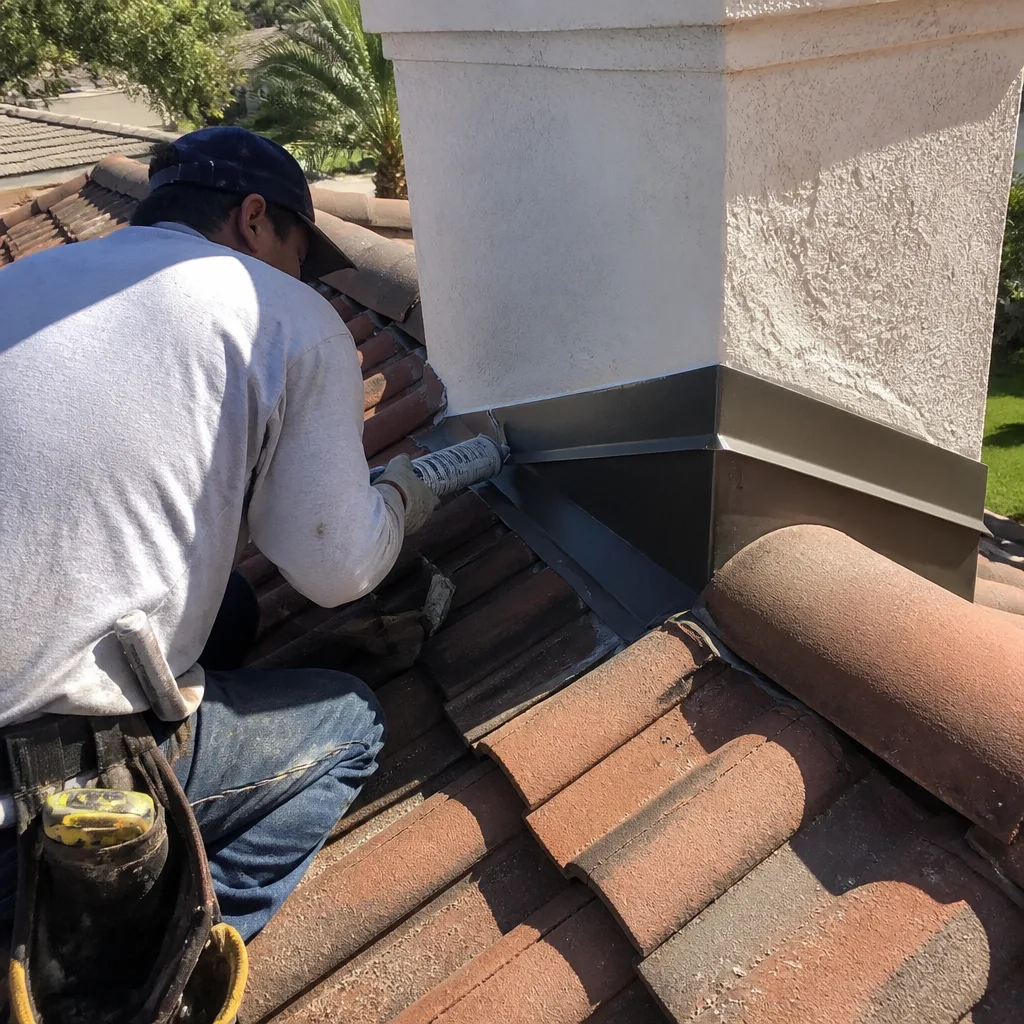
- Resealing flashing around vents, chimneys, or skylights – as long as you’re not removing the flashing entirely.
- Patching a small leak with compatible materials – minor surface repairs.
- Cleaning gutters and replacing gutter sections – separate from roofing code entirely.
- Re-nailing loose shingles – assuming the underlying decking is intact.
The gray zone is larger projects that are technically repairs. If you’re replacing a 100-square-foot section of shingles because of storm damage, Corona’s building department may treat that as a repair if the deck is sound and you’re matching existing materials. But if the underlayment is compromised, the definition shifts toward replacement and a permit becomes necessary. We recommend calling the Coronado building department at (866) 942-4187 before starting anything beyond isolated shingle work. In our experience, the counter staff will give you a straight answer in two minutes.
Roof Repair in Corona covers the repair-side scenarios in more detail, including what counts as proper material matching under current code.
Title 24 Cool-Roof Compliance: What Actually Applies
California’s Title 24 energy code has been quietly rewriting roofing specifications since 2005, and the 2022 code cycle (which remains the standard reference for most of 2024 and 2025) tightened things further. The short version: if you’re installing a roof in Corona, it has to meet a minimum “cool roof” standard unless you qualify for an exception.
Here’s what that means concretely:
A cool roof is measured by two values: solar reflectance (how much sunlight bounces off) and thermal emittance (how efficiently the roof releases absorbed heat). Under Title 24’s referenced Building Energy Efficiency Standards, a low-slope roof must have an aged solar reflectance of at least 0.63 and a thermal emittance of at least 0.75. For steep-slope residential roofs (what most Corona homes have), the requirement shifts to an aged solar reflectance of 0.20 and a thermal emittance of 0.75, OR the homeowner can meet the requirement through an alternative compliance calculation.
For most asphalt shingle roofs, the material itself satisfies the steep-slope requirements because modern shingles from GAF, CertainTeed, and Owens Corning (three of the seven brands we install, as detailed in our Choosing the Right Roofing Brand: A Buyer’s Guide for Corona) are manufactured with reflective granules that meet or exceed the 0.20 threshold. CertainTeed’s Landmark Solaris line and GAF’s Timberline Cool Series both list CRRC (Cool Roof Rating Council) ratings that clear the bar without any additional calculation. Standard architectural shingles from IKO and Atlas also generally comply under the default formula.
The exceptions come into play with darker custom colors, clay tiles with certain finishes, and some metal profiles. If you’re considering a deep charcoal or true black roof in Corona, the contractor should run the specific product’s CRRC rating through the Title 24 compliance software to verify it passes. Sometimes the fix is as simple as adding a radiant barrier in the attic to offset a lower-reflectance surface. Sometimes it requires switching the color.
Where this bites homeowners is when a roofer skips the compliance check, the roof gets installed, and the jurisdiction’s inspector notices the material doesn’t match what was spec’d on the permit. That triggers a correction notice, potential re-inspection fees, and sometimes a full material swap. We’ve seen this happen in the Sycamore Creek neighborhood when a homeowner chose a specialty black architectural shingle that looked great but didn’t clear the energy baseline without a supplementary calculation.
For a full breakdown of how material choices interact with energy compliance, our Roof Replacement in Corona page walks through brand-by-brand reflectance options.
The Riverside County Roofing Inspection Sequence
Riverside County handles building inspections through its Building & Safety Department, with inspectors covering Corona’s jurisdiction under a countywide service agreement. Understanding the inspection sequence before you start saves headaches, because the county schedules inspections by phone or online portal and inspectors don’t wait around.
Here’s the standard sequence for a permitted re-roof:
- Pre-inspection (sometimes combined with mid-roof) – after the old roofing is torn off but before new underlayment goes down, the inspector verifies that the decking is sound, that sheathing meets minimum thickness requirements, and that rotten or damaged sections are flagged for replacement. If you’re doing a layover (new shingles over old), this step is skipped because the existing roof isn’t exposed.
- Mid-roof inspection (nail-pattern and underlayment) – the inspector checks that underlayment is installed with proper overlap, that fasteners meet the nailing pattern specified by the manufacturer’s installation instructions, and that any valley flashing or pipe boot replacements are correct. This inspection often happens the same day or next day after the tear-off.
- Final inspection – after the new roof is fully installed, the inspector verifies the finished surface matches the approved permit plans, that ridge vents or static vents are properly installed and meet ventilation area calculations, that edges and drip edges are correct, and that the site is clean and safe.
What each inspection is actually checking, beyond the obvious:
- The mid-roof inspection is really about warranty compliance. Manufacturer warranties from GAF, CertainTeed, and Owens Corning require installation per their published specifications. A county inspector verifying nail patterns and underlayment overlaps is essentially protecting your warranty claim down the line.
- The final inspection looks at ventilation math. Corona’s summer attic temperatures routinely exceed 140 degrees Fahrenheit. The county checks that your roof has proper intake and exhaust ventilation because under-ventilated attics cook shingles from below, voiding material warranties and shortening roof life to 10-12 years instead of 25-30.
- Inspectors are checking for “roofing over” violations. If the permit says tear-off but the contractor left old shingles in a section and layered over them, the inspector will catch it. This is the most common reason for final inspection failures on re-roofs in this area.
If you’re starting with an inspection before deciding on repair versus replacement, our Roof Inspection in Corona service covers the same diagnostic points a county inspector checks, without requiring a permit or a commitment.
Corona Permit Timeline Reality: Planning Around Processing Windows
The honest answer about permit timelines in Corona right now: plan for 5 to 10 business days from application to permit issuance for a standard residential re-roof. Here’s how that breaks down in practice.
First, you (or your contractor) submit the permit application with a roof plan, material specs, and a Title 24 compliance document. Corona’s building department reviews residential roofing permits on a first-come, first-served basis, and current volume means the review itself typically takes 3 to 5 business days. If the application is clean, the permit is issued and the building fee is calculated based on the project valuation.
Then there’s a 24 to 48 hour waiting window between permit issuance and the first available inspection slot. Riverside County inspectors cover multiple cities, and Corona’s inspection demand is high during the dry season (May through October in practice, though the official rainy season technically starts in late November).
What to plan around:
- October through April is peak roofing season in Corona. Permit review times stretch toward the upper end of the 5 to 10 day window, sometimes longer in December and January when plan-check staff are on reduced schedules.
- Rain delays inspection backlogs. If a storm front comes through, inspectors get pulled to emergency damage assessments and scheduled inspections slip by 1 to 2 days.
- Corrections add time. If your permit application is missing a Title 24 compliance document or the material specs are incomplete, the reviewer sends it back and the clock restarts. This is the single biggest preventable delay.
- Some contractors wait to pull permits until right before demo. That’s a red flag. We pull permits as part of the project setup, before materials are ordered, so the processing window runs parallel to material lead times rather than after them.
The practical takeaway: if you’re planning a re-roof and want work to start on a specific date, submit the permit at least two weeks ahead. If you’re working with a contractor who tells you permits aren’t necessary or that you can “start now and permit later,” that’s a strong signal to find someone else.
Unpermitted Roofs and Home Sales: What Sellers Need to Know
Corona sits in the middle of one of California’s hottest resale markets, and unpermitted work is the quiet deal-killer that real estate agents in this area talk about behind closed doors. Here’s the reality: California’s real estate disclosure requirements (Civil Code sections 1102 and 1102.2, enforced through the Transfer Disclosure Statement) do not explicitly list “roofing permits” as a separate disclosure item, but they do require sellers to disclose “any room additions, structural modifications, or other alterations” made without permits.
A re-roof is an alteration. If you had your roof replaced without a permit, and you know about it, you have a legal obligation to disclose it. Failure to disclose is fraud, and it’s a fraud that gets uncovered when the buyer’s home inspector notes inconsistencies between the roof’s age and the permit history, or when the buyer’s lender requires a permit search before funding.
What actually happens in practice when an unpermitted re-roof surfaces during escrow:
- The buyer’s agent requests permit records from the City of Corona. If the roof was replaced within the last 15 years and no permit exists, it’s flagged.
- The buyer’s lender may put the loan on hold pending retrofit permitting, because unpermitted work creates a title and insurability concern.
- The buyer typically demands either a fully permitted retrofit inspection with all corrections completed, or a price reduction to cover the cost of bringing the roof to code.
- In Corona’s current market, we’ve seen that price reduction land between $15,000 and $30,000 on full re-roofs, because the buyer is now underwriting the risk of code compliance, potential re-work, and permit fees.
The permit fees for a standard re-roof in Corona run roughly $200 to $500 depending on project valuation. The disclosure cost for skipping that permit can be 40 to 60 times that amount. If you’re selling and know your roof was replaced without permits, there’s a remediation path, which is what the next section covers.
How to Remediate an Unpermitted Existing Roof
If you’ve discovered your roof was replaced without a permit, whether during a sale or through your own research, there’s a structured path to get it legal. Riverside County and the City of Corona both have provisions for “as-built” permit applications, which acknowledge the work was done before permits were pulled and allow the jurisdiction to review it retroactively.
Here’s the step-by-step process:
- Confirm the scope of unpermitted work. Was it a full tear-off and replacement? A layover? A partial repair? The answer determines whether you need a full retrofit permit or something simpler.
- Have a licensed roofing contractor perform a documented inspection. They’ll check the decking, underlayment, material type, ventilation, and Title 24 compliance. This produces the documentation the building department needs.
- Submit an as-built permit application to the City of Corona. Include the inspection report, material specs, and Title 24 compliance if applicable. Expect to pay the permit fee plus a late/mitigation fee, which varies by jurisdiction.
- Schedule a county building inspection. The inspector will verify the existing roof meets current code. If it does, you get a certificate of compliance. If it doesn’t (common with older unpermitted work that pre-dates Title 24 thresholds), you’ll need to correct the deficiencies.
- File the compliance record. Once the roof passes inspection, the city updates the property’s permit history, and the issue is resolved for future sales.
The process typically takes 2 to 4 weeks, depending on the building department’s current review backlog and whether corrections are needed. The cost varies with the roof’s condition: a clean-as-built on a 5-year-old roof might total $600 to $1,200 all-in. A 20-year-old unpermitted roof that fails the current Title 24 reflectance threshold or has deck rot might need partial re-work, pushing costs into the $3,000 to $8,000 range.
For a professional assessment of whether your existing roof meets current code, our Roof Inspection in Corona service includes exactly the documentation as-built permits require. We’ll tell you what passes, what doesn’t, and what it’ll take to get compliant, with no pressure to buy anything.
Roofing Material Codes and Fire Ratings in Corona’s Climate
Corona sits in a Wildland-Urban Interface (WUI) zone in several neighborhoods, particularly along the foothills near Eagle Glen, Sierra del Oro, and the communities that back up to the Cleveland National Forest boundary. That matters because California’s Chapter 7A of the Building Code applies to WUI zones and sets minimum fire-resistance standards for roofing materials.
What that means for your roof in Corona:
- Class A fire rating is the standard for roofing assemblies in WUI-designated areas. Most modern asphalt shingles meet Class A, but some specialty wood shakes and certain synthetic products do not.
- Underlayment in WUI zones must be non-combustible or meet a minimum fire rating. The county will check this during the mid-roof inspection if your property falls within a designated WUI boundary.
- The material choice interacts with the WUI requirement. A material that meets Title 24 cool-roof reflectance might not meet Chapter 7A fire resistance, or vice versa, depending on the product. This is why you verify both standards before ordering.
Beyond fire code, Corona’s specific climate creates three practical code-relevant considerations we cover in our Seasonal Roofing Care for Corona: Year-Round Homeowner’s Guide:
First, wind uplift requirements under the California Residential Code specify minimum fastener patterns for roof edges in areas with high wind exposure. Corona’s Santa Ana wind events in September through November routinely reach 40 to 50 mph gusts, and the code requires edge metal and starter strips to be fastened to a higher standard than interior field shingles. A roof that meets the code’s nail pattern but skips the edge-reinforcement requirement is vulnerable to lift-off at the eaves during Santa Ana events.
Second, ventilation calculations in Corona’s code jurisdiction are based on attic temperature management, not just moisture control. The county’s inspectors apply the standard 1/150 ratio (one square foot of net free vent area per 150 square feet of attic floor space) but they’re known to scrutinize ridge vent installation more closely in this climate because under-ventilated attics in Corona summers accelerate shingle deterioration dramatically.
Third, material compatibility requirements under manufacturer warranty terms are enforced by building inspectors receiving training on product-specific installation specs. If you’re mixing CertainTeed ridge caps with GAF field shingles because the contractor had leftover stock, the county can flag the mismatch on final inspection, and the manufacturer warranty on both products becomes void.
This is where working across multiple brands actually helps. We carry all seven major lines (GAF, CertainTeed, Owens Corning, IKO, Atlas, Tamko, Boral), so the material we install always matches both the code requirement and the warranty spec, without the “whatever’s in the yard” problem.
Common Mistakes to Avoid
- Assuming “repair” covers more than it does. Replacing 200 square feet of shingles after a windstorm is not a repair in Corona’s eyes. If the underlayment is damaged or the deck is exposed, the city considers it replacement work requiring a permit.
- Skipping the Title 24 compliance document in the permit application. This single omission is the most common reason roofing permits get sent back for correction, adding 3 to 7 days to the process. Have the compliance calculation done before you submit.
- Not checking whether your neighborhood is in a WUI zone. Corona’s foothill communities have fire-resistance requirements that flatland neighborhoods don’t. Installing a roof that fails Chapter 7A standards in a WUI zone means a failed final inspection and potential full material replacement.
- Trusting a contractor who says “we’ll pull the permit after we start.” A permit pulled after work begins is a red flag that the contractor is trying to avoid an inspection or is working without proper documentation. The permit should exist before any materials hit the roof.
- Choosing materials without checking CRRC ratings for your specific color. A dark-colored shingle that looks identical to a lighter one in the same product line can have a different solar reflectance rating. Verify the exact product code against the CRRC directory.
- Ignoring ventilation when doing a layover re-roof. If your attic is under-ventilated, adding a second layer of shingles makes the problem worse. The extra thermal mass and reduced heat dissipation can cut a 30-year shingle’s life to 12 years in Corona summers.
- Not keeping permit records after the project. When you sell, the buyer’s agent will request permit history. If you have it, the sale goes smoothly. If you don’t, you’re proving a negative. Store permit documents with your property records and keep them for the life of the roof.
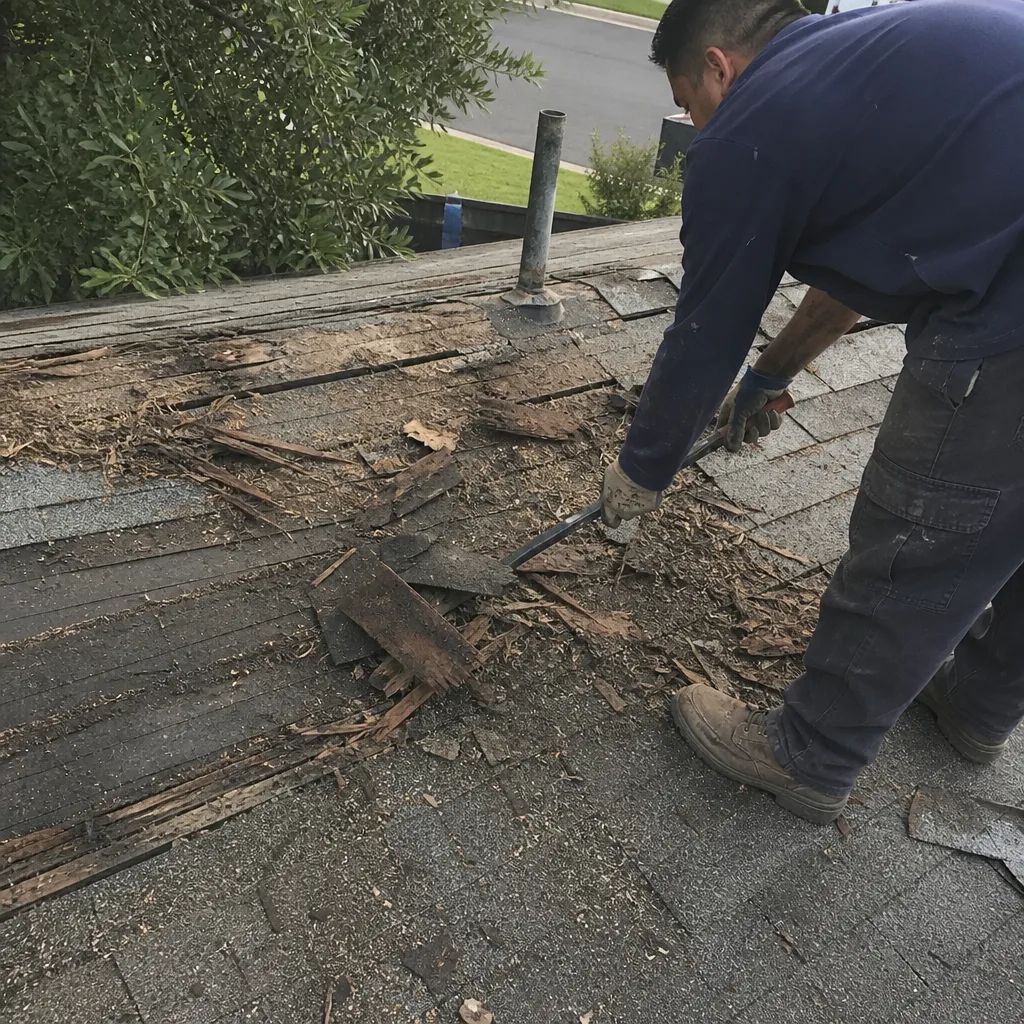
See the difference
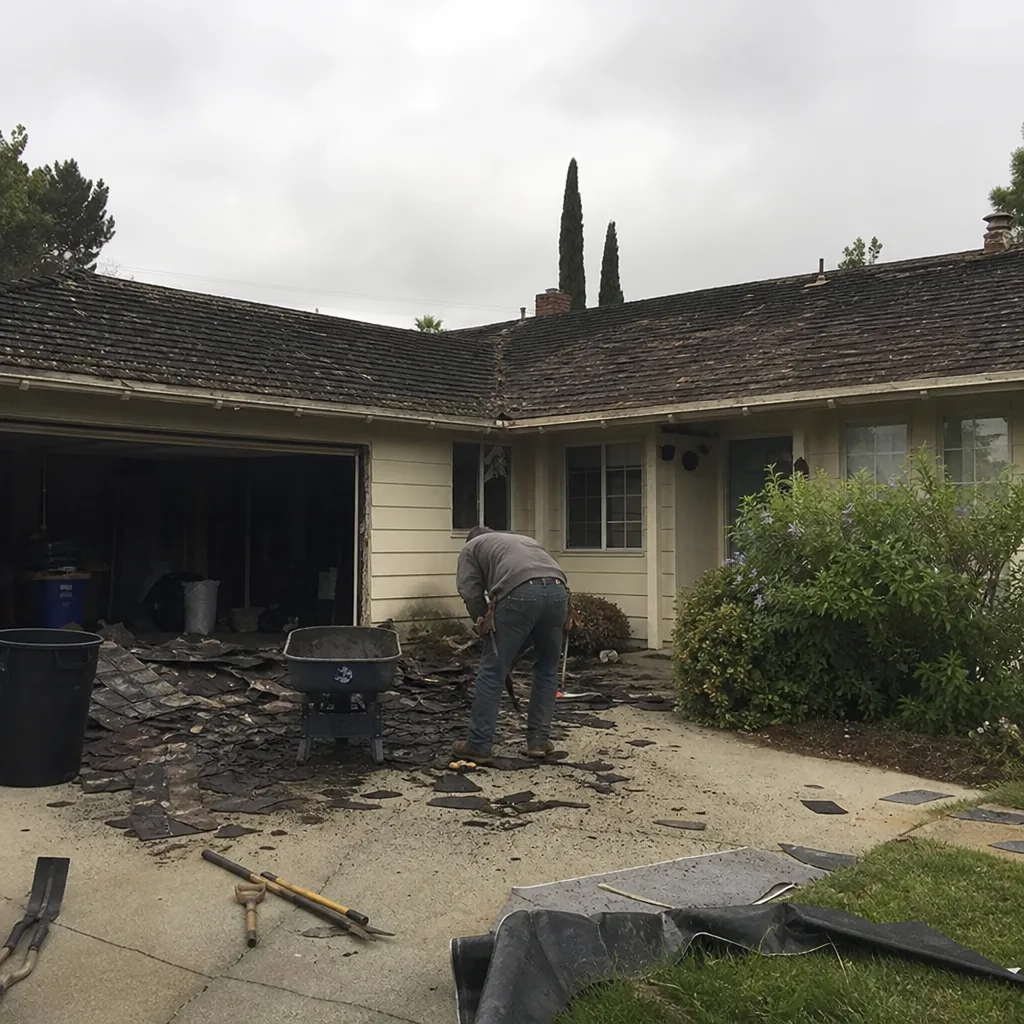 Before
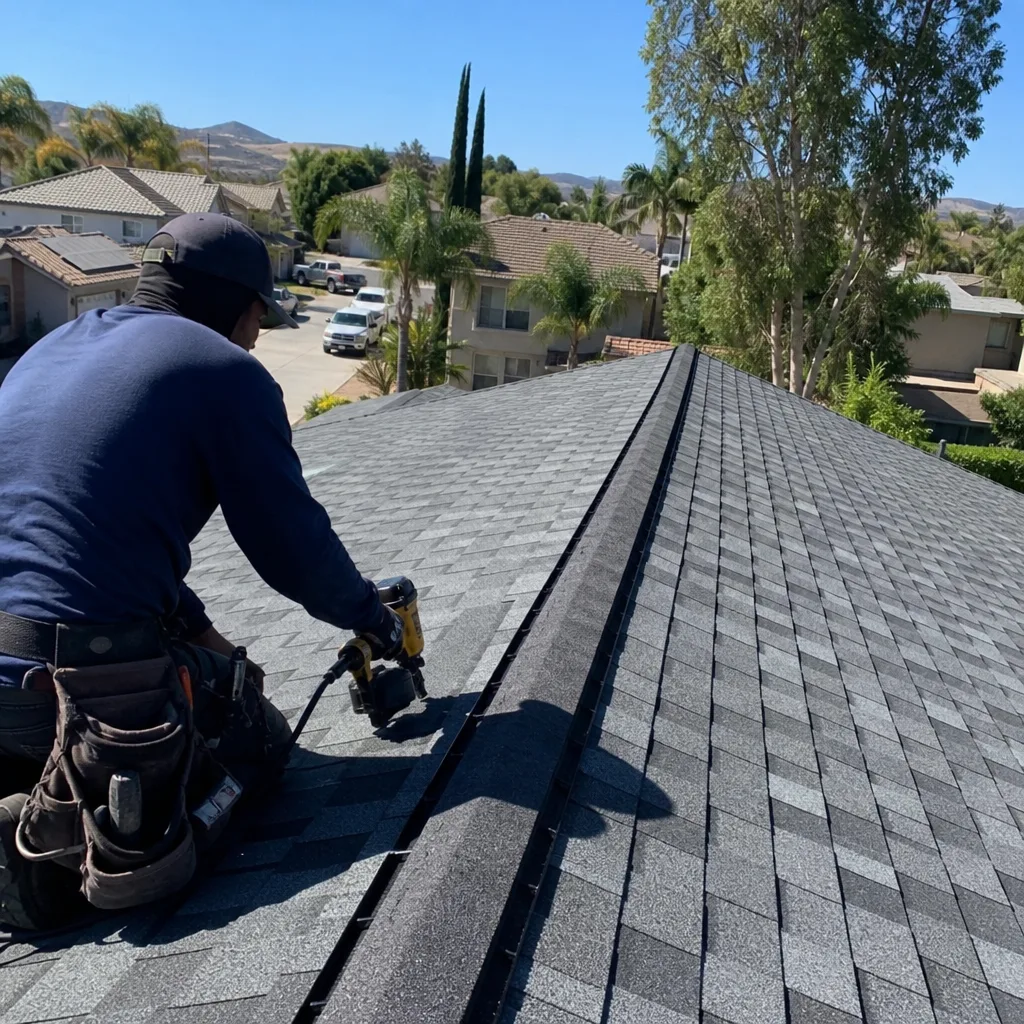 After
 Before
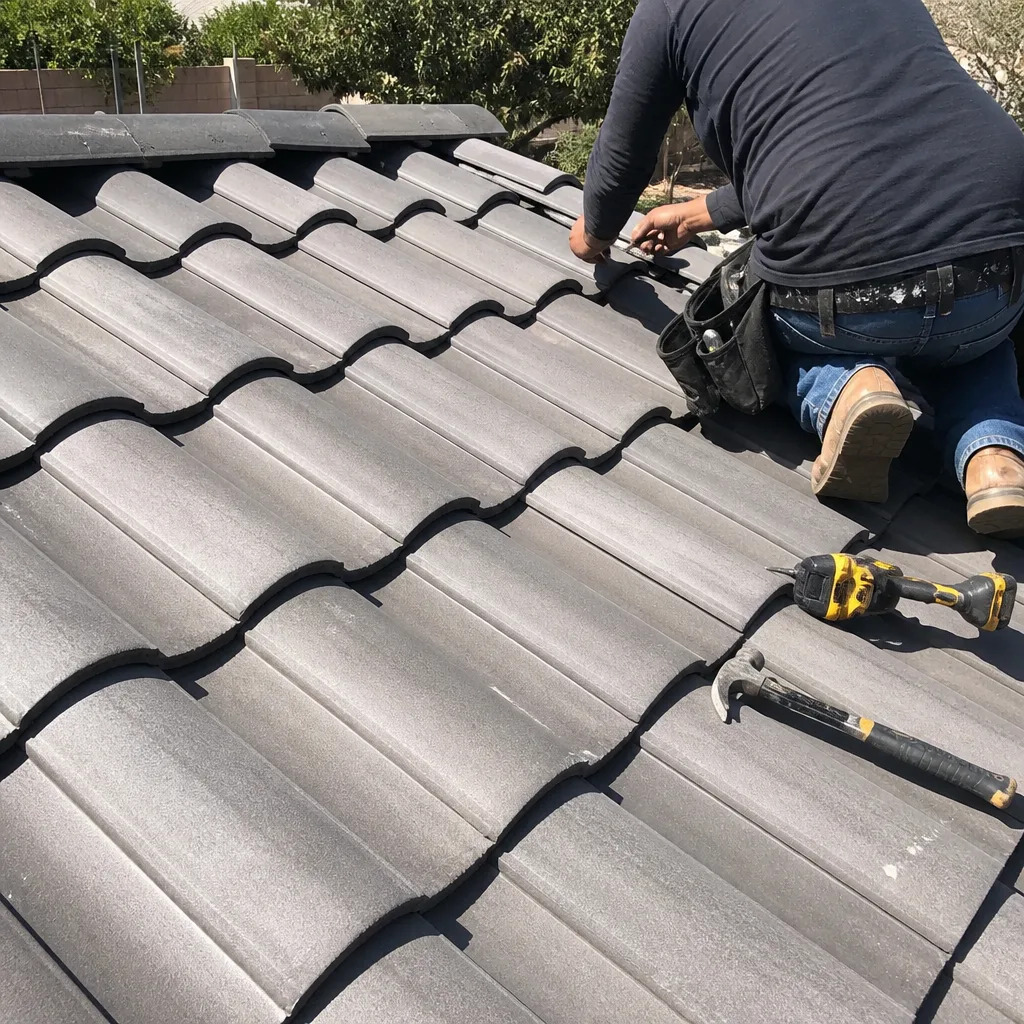 After
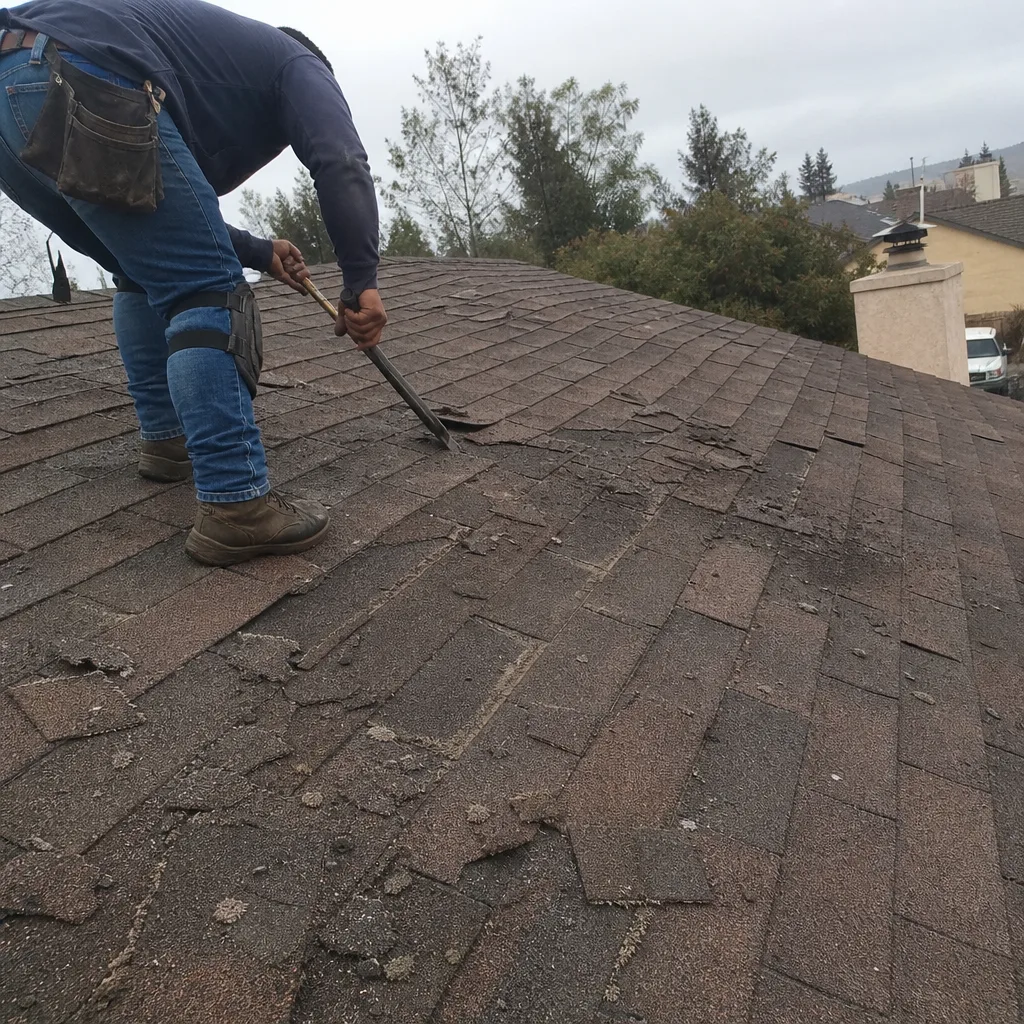 Before
 After
When to Call a Professional
If you’re replacing more than a handful of shingles, if you’ve found deck rot or leaks, or if you’re unsure whether your project triggers a permit, call a licensed roofing contractor before you start. The cost of a professional assessment is measured in hundreds of dollars. The cost of remediating an unpermitted or non-compliant roof is measured in thousands.
Specific scenarios where a professional is warranted: you’re in a WUI zone and need Chapter 7A compliance verification, you’re replacing a roof on a home built before 1990 and the original permit history is unclear, you’re planning a layover and need ventilation capacity calculated, or you’re in escrow and need a roof inspected for disclosure compliance. Orange County Roofing Co home covers all three core services: inspection, repair, and replacement. We offer free estimates in Corona, and you can reach us at (866) 942-4187 to schedule one.
Frequently Asked Questions
A standard residential re-roof permit in Corona typically costs between $200 and $500, depending on the project’s declared valuation and the scope of work. The permit fee is calculated on a valuation-based schedule, so a full tear-off on a 2,500-square-foot home will land higher than a simple layover on a 1,200-square-foot house. Call (866) 942-4187 for an exact quote on your project, and we’ll include permit costs in the written estimate.
It shouldn’t, if your contractor does a proper pre-inspection and pulls permits before work begins. The scenarios where costs shift are unexpected deck damage discovered during tear-off, or a mid-roof correction that requires material swaps. A reputable contractor in Corona will document any change in writing before proceeding. Our estimates are fixed-price with written line items, and we flag potential deck work during the initial inspection. Call (866) 942-4187 to get a written, fixed estimate.
Yes, we handle the full permit application, Title 24 compliance documentation, and inspection scheduling as part of every replacement project. You don’t need to visit the building department or coordinate with Riverside County inspectors. The permit is pulled before any materials are ordered or delivered. Call (866) 942-4187 and we’ll walk through the permit process specific to your neighborhood.
You have a legal disclosure obligation under California Civil Code, and the buyer’s agent will likely discover the missing permit during escrow due diligence. The typical outcome is either a retrofit as-built permit process (2 to 4 weeks, starting around $600) or a price reduction of $15,000 to $30,000 to cover the buyer’s risk. Remediating before listing is almost always cheaper. Call (866) 942-4187 to schedule a code-compliance inspection and get a remediation estimate.
Most modern architectural asphalt shingles from major manufacturers meet the steep-slope reflectance threshold without any additional calculation. Specific product lines that pass include GAF’s Timberline Cool Series, CertainTeed’s Landmark Solaris, and Owens Corning’s Duration Cool. Standard architectural shingles from IKO and Atlas also generally comply. The exceptions are deep charcoal, true black, and certain specialty colors, which need a CRRC rating check. We verify reflectance and emittance for every product before ordering. Call (866) 942-4187 for a material-specific compliance review.
For a standard single-family home, tear-off through final inspection typically runs 3 to 5 working days, weather-dependent. The permit processing adds 5 to 10 business days before work starts, and inspection scheduling slots into that window. A re-roof with extensive decking replacement or a complex tile-to-shingle conversion can extend the timeline by 1 to 2 days. We’ll give you a day-by-day schedule during the estimate. Call (866) 942-4187 to get a project-specific timeline.
The Bottom Line
Roofing in Corona means navigating three layers: California Title 24 energy code, Riverside County building inspections, and City of Corona local amendments. Most full re-roofs require a permit. Most simple repairs do not. The thing to remember is that the permit you skip today becomes the disclosure you’re obligated to make tomorrow, and that disclosure costs substantially more than the permit ever did. Material choice matters more in Corona than in many cities because WUI fire standards, cool-roof reflectance thresholds, and wind uplift requirements all intersect here. Work with a contractor who verifies all three before ordering, pulls permits before starting, and keeps records after finishing. If you’d like a free estimate on a new roof, a repair, or a code-compliance inspection, call (866) 942-4187, or browse more guides & resources.
Written by the team at Orange County Roofing Co, serving Corona since 2015.