
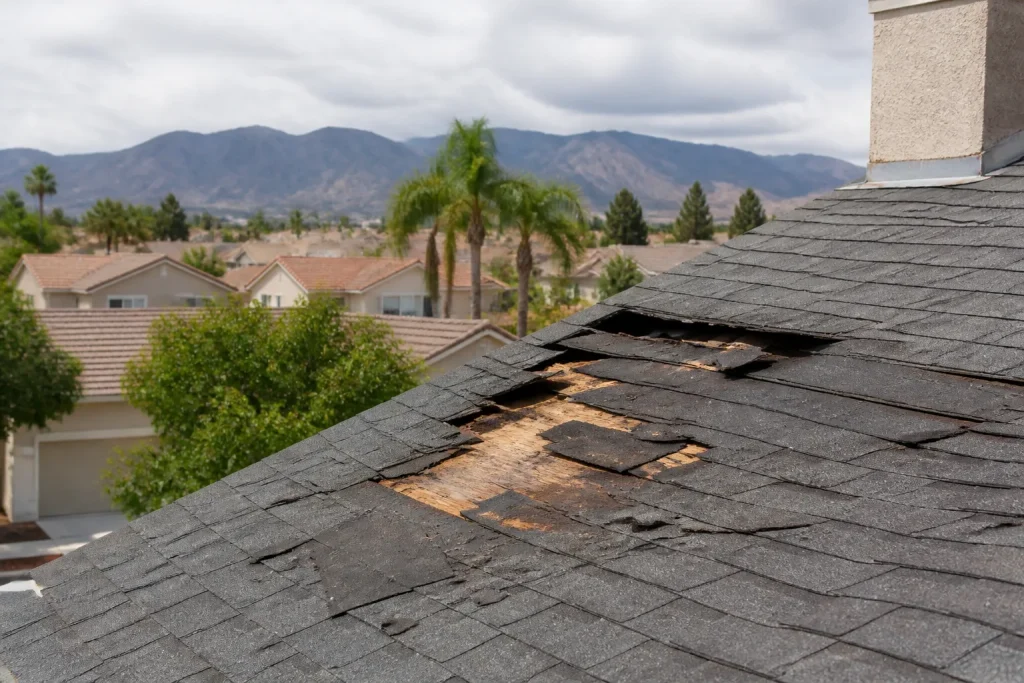
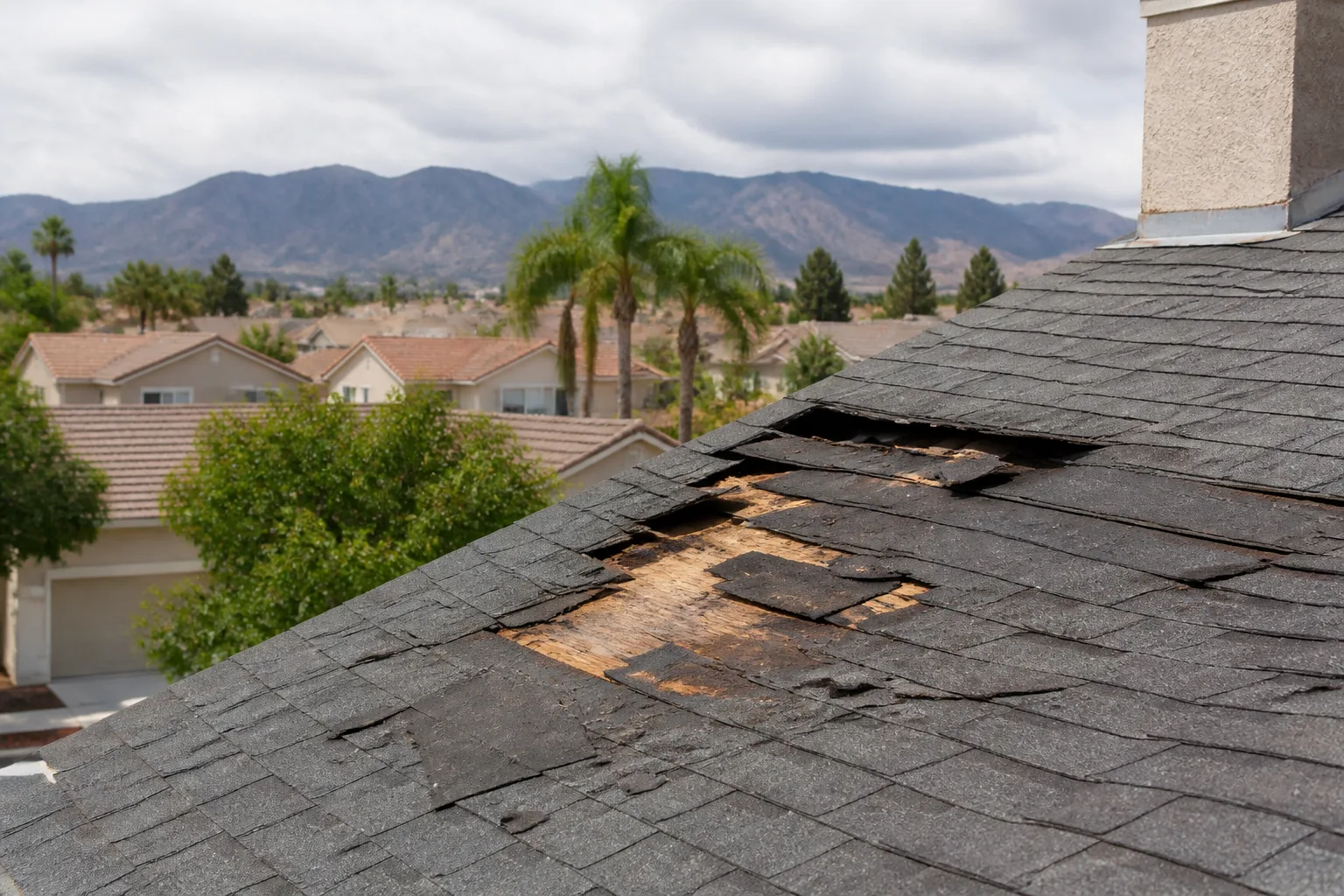
Emergency Roof Repair Near Me: What Corona Homeowners Should Do First
Calling a roofer is actually the third thing you should do after a storm tears off part of your roof. The first two steps take about 20 minutes and can be the difference between a $3,000 insurance claim and a $15,000 one. Here’s the sequence that protects your home, your wallet, and your warranty.
If you’d rather skip the reading and get someone on the phone right now, call (866) 942-4187 and we’ll walk you through it. Corona homeowners have been calling us mid-panic for years. We get it.
Key Takeaways:
- Protect the interior first, document damage second, call a contractor third. In that order.
- Photograph everything before any tarping happens. Adjusters reject claims based on what’s missing, not what’s broken.
- Santa Ana winds and rain storms require completely different tarping approaches.
- Storm-chasers flood Corona after big wind events. Three checks separate them from legitimate local roofers.
- A rush repair can void your existing roof warranty. There’s a right way to handle the emergency phase.
The First 90 Minutes: What to Do, in What Order
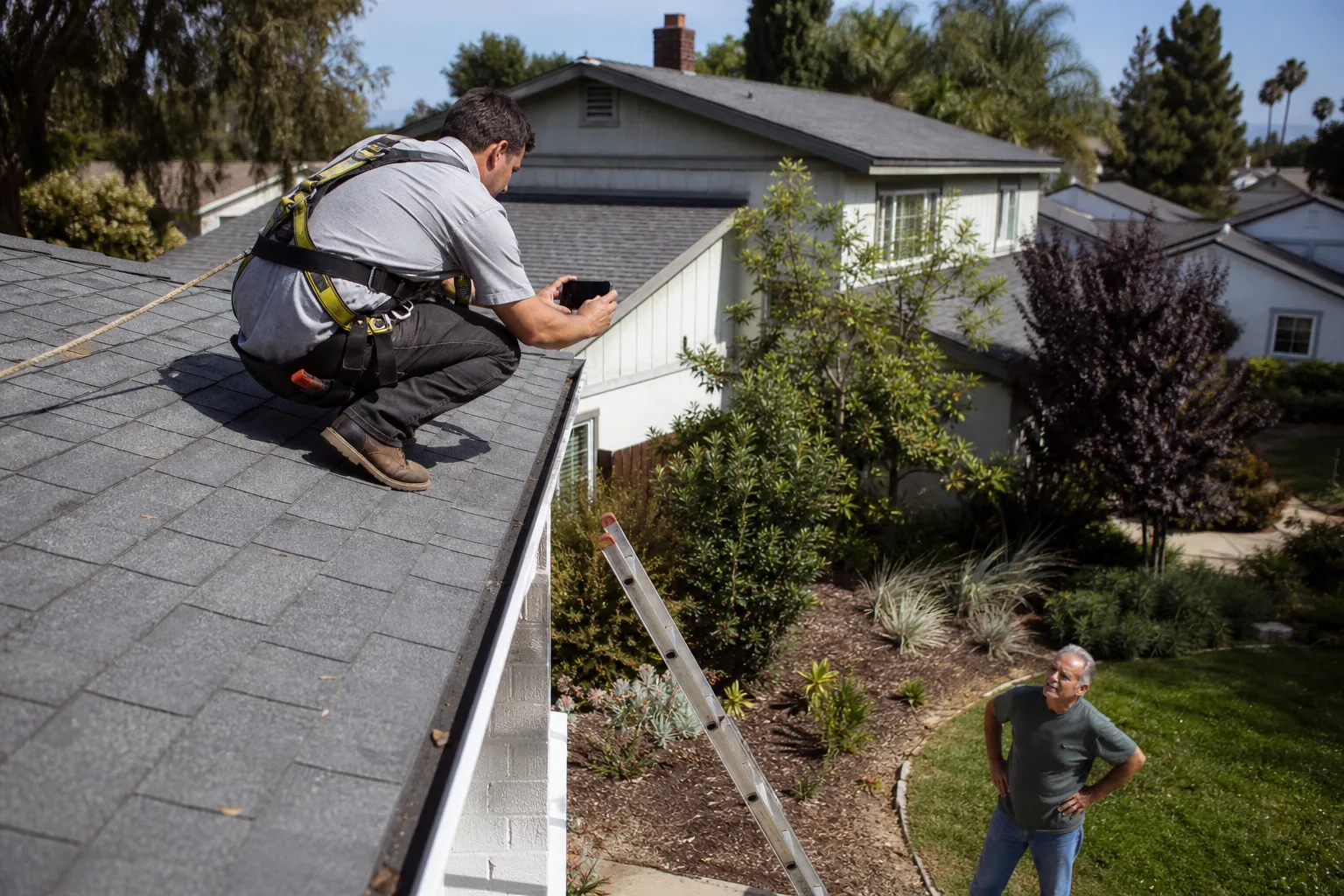
The sequence matters more than the speed. We’ve seen homeowners in Corona’s Sierra Del Oro neighborhood nail tarps over broken tiles before photographing the damage, and their insurance adjuster came back with “insufficient documentation.” The claim got cut nearly in half.
Here’s the order that holds up, legally and practically:
Step 1: Protect the interior (minutes 1-15).
Move furniture, electronics, and anything you care about away from the leak. Put down buckets, plastic sheeting, old towels, whatever you have. If water is pooling on the ceiling, poke a small hole at the center of the sag to let it drain into a bucket instead of spreading across the drywall and collapsing the whole section. This is not a DIY repair tip. This is damage triage.
Step 2: Document everything (minutes 15-30).
Photograph the interior damage from multiple angles. Then photograph the exterior damage from the ground. Do not get on the roof. We’ll get to who should be doing that in a moment. Use your phone’s timestamp feature or photograph an open newspaper next to the damage. It sounds old-school, but adjusters love it.
Step 3: Call a roofer (minute 30).
Now call. Not before. A roofer who shows up and immediately starts throwing a tarp over the damage before you’ve documented anything is doing you a disservice, even if it feels like heroics. The documentation protects the claim. The claim protects your wallet.
If you’re in Corona and need someone fast, call (866) 942-4187. We’ll talk through the damage, tell you honestly whether it’s an emergency or can wait until morning, and get your Roof Repair in Corona scheduled without the upsell speech.
Photographing Roof Damage: What Adjusters Actually Look For
Insurance adjusters are not trying to deny your claim. They’re trying to verify it. The gap between what a homeowner photographs and what an adjuster needs to see is where legitimate claims get reduced. Here’s what makes the difference:
Photograph from the ground first. Wide shots that show the entire roof, then close-ups of the specific damage. The wide shots establish context and prove the damage location. The close-ups show severity.
Capture the edges of the roof. Corona’s Santa Ana wind events often lift shingles at the eaves and rakes first. These are the most common points of failure, and they’re easy to miss if you’re only photographing obvious holes.
Photograph any debris. Tree branches, roof tiles in the yard, pieces of shingle scattered on the ground. This establishes what actually hit your roof and when.
Document the interior immediately. Water stains spread. What’s a 6-inch stain today is a 2-foot stain tomorrow. Photograph it before it grows.
Save the photos in three places. Your phone, a cloud backup, and an email to yourself. Phones get dropped, lost, and run over. The cloud is your friend.
One more thing adjusters notice: photos taken after a tarp is installed show almost nothing useful. That’s why documentation comes before tarping, not after. We can’t tell you how many Corona homeowners have asked us to “come take photos” after they’ve already covered the damage. The photos won’t help. The order matters.
Tarping: What It Protects Against, What It Doesn’t, and Who Should Do It
Temporary tarping does one thing well: it keeps water out. That’s it. It does not restore structural integrity. It does not make your roof safe to walk on. It does not last more than a few weeks in Corona’s sun and wind.
A rain storm and a Santa Ana wind event demand completely different tarping strategies. In a rain storm, the tarp needs to be laid over the damaged area with generous overlap uphill from the damage, secured with nails driven into the tarp through furring strips (wood strips that hold the tarp without ripping it). Water runs over the tarp, not under it.
Santa Ana winds are different. A tarp that’s not secured against 60 mph gusts becomes a sail. It tears off, takes more shingles with it, and can damage neighboring properties. Corona’s location at the base of the Santa Ana Mountains means those winds funnel through the canyons with real force. A wind-rated tarp looks different: more fasteners, tighter to the deck, edges sealed against uplift.
Here’s the safety reality: walking on a damaged roof is dangerous. Broken tiles, soft decking, and hidden structural damage are not things you discover by trial and error. Falls from roofs are one of the leading causes of construction-related injuries in Southern California. If the damage requires tarping, it requires someone with roofing experience, proper fall protection, and insurance. Hiring an uninsured handyman to tarp your roof is a liability you don’t want. If they fall on your property, your homeowner’s insurance is on the hook.
If you need emergency tarping in Corona, call (866) 942-4187. We’ll get it done properly, and we’ll document everything before and after so your claim stays intact. While you’re at it, our roof inspection service is a standalone offering. We’ll tell you exactly what your roof needs, nothing more, and that’s a promise we’ve kept since day one.
How to Spot a Storm-Chaser in Under Five Minutes
After a big wind event in Corona, the storm-chasers show up. They knock on doors, leave flyers, and promise immediate service at prices that sound too good to be true. Some of them are legitimate contractors from out of the area. Some of them are not. Here are three checks that take less than five minutes total:
Check 1: Local address or local presence.
Ask for their local address. Not a P.O. box. An actual physical location. A roofer who has lived through Corona’s weather patterns, building codes, and permit requirements is going to do better work than a crew working out of pickup trucks from three states away. If they can’t tell you where they’re based, walk away.
Check 2: California contractor’s license.
California requires a C-39 roofing license. The Contractors State License Board (CSLB) website lets you look up any contractor by name or license number in about 60 seconds. If the name doesn’t match the license, if the license is expired, or if they “don’t have the number handy,” that’s the end of the conversation. No exceptions.
Check 3: Insurance and workers’ comp.
Ask for a certificate of insurance. Any legitimate roofer will provide one without hesitation. If they don’t carry workers’ comp and someone gets hurt on your property, you’re exposed. This is non-negotiable in California.
One real example: we pulled a broken skylight out of a garage over in Corona’s Dos Lagos neighborhood last spring. The homeowner had paid a door-to-door crew half upfront to repair a wind-damaged roof section. That crew never came back. The homeowner’s out the money, and the roof was still leaking. We repaired it properly, but that’s a $7,000 lesson that took a week to unfold. The checks above take five minutes.
How to Keep an Emergency Repair From Voiding Your Roof Warranty
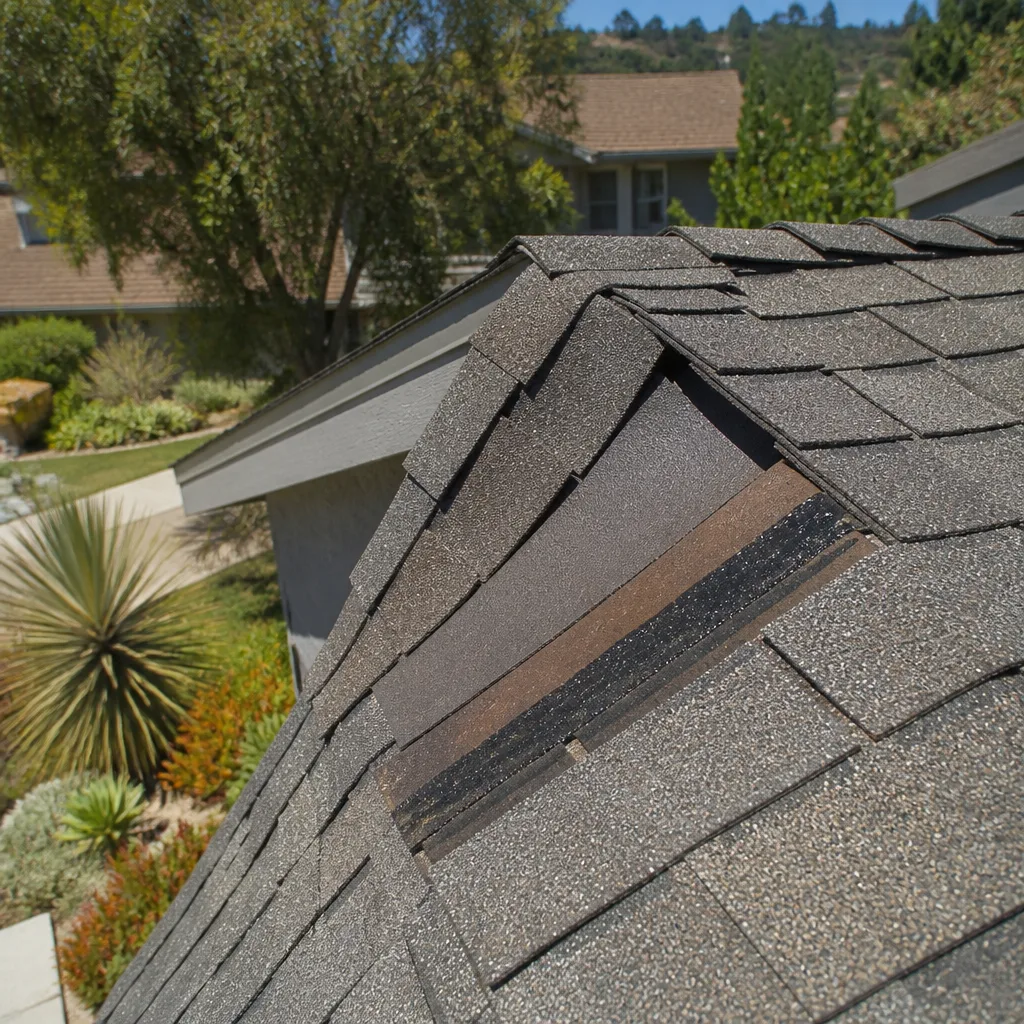
This is the part nobody talks about. If your roof is under manufacturer warranty, the emergency repair you do today can void that coverage if it’s done wrong. Manufacturers like Owens Corning, IKO, and Atlas have specific requirements about how their shingles are handled, installed, and repaired.
Here’s what actually voids a roof warranty in the emergency phase:
- Mismatched materials. If a repair uses a different shingle than what’s on the roof, and that repair fails later, the manufacturer can point to the mismatch. They’re not wrong. Different shingle brands have different sealant formulas, different nail zones, and different wind ratings. Mixing them in a repair is a known failure point.
- Improper installation. Even the right shingle, installed with the wrong nail pattern or without following the manufacturer’s spec, voids that section’s coverage. And since most homeowners can’t tell the difference between a proper nail pattern and a sloppy one, this becomes a post-failure discovery.
- Unapproved contractors. Some manufacturer warranty tiers require installation or repair by certified contractors. A storm-chaser with no manufacturer relationships performs a repair that technically voids the warranty on that section.
- Improper tarping. If a tarp is nailed through shingles in a way that compromises the water-shedding layer, and water gets in anyway, the manufacturer may determine the tarping caused the failure.
The fix is simpler than it sounds: call a roofer who installs multiple brands and understands the specific requirements of the shingle on your roof. If your roof is Owens Corning, the repair should follow Owens Corning’s spec. Same for IKO, Atlas, and Tamko. The fact that we carry seven major brands including GAF, CertainTeed, Owens Corning, IKO, Atlas, Tamko, and Boral matters here. We’re not tied to one manufacturer’s product line, so we match the repair to your existing roof rather than tearing off more than necessary to install what we happen to stock.
If you’re in Corona and want a warranty-conscious approach, call (866) 942-4187. We’ll check what’s on your roof, verify the warranty requirements, and make sure your emergency repair doesn’t become a future coverage problem.
When to Call a Pro (and When You Can Wait Until Morning)
Not every roof issue is a 2 a.m. emergency. Here’s the honest distinction:
Call now if: water is actively entering the living space, a section of the roof is missing, the ceiling is sagging, or you can see through the roof from inside the attic. These can’t wait.
Can wait until morning if: a few shingles are missing but no water is entering, a branch is resting on the roof without penetration, or you’ve noticed a stain that’s dry and stable. These need attention within days, not hours.
If you’re unsure, call. A five-minute phone call beats a $3,000 water damage bill. And if we tell you it can wait, we mean it. Our inspection tells you exactly what your roof needs, nothing more.
Related services in Corona: Roof Repair in Corona for wind and rain damage, Roof Replacement in Corona when the damage is beyond repair, and Roof Inspection in Corona as a standalone diagnostic after any weather event. All handled by one team, so you’re not juggling three different contractors at three different points in the process.
Visit the Orange County Roofing Co home page to see how the full scope of services fits together.
The Bottom Line
The 90 minutes after roof damage are the window that determines how this whole thing plays out. Protect the interior, document the damage, then call a professional. In that order. Tarping is important, but it comes after documentation, and it’s not a job for a homeowner on a damaged roof. Storm-chasers are out there, and they’re not hard to identify if you take five minutes to check.
If you’re in Corona and need help with storm damage, a leak, or just want a professional opinion on what you’re looking at, Orange County Roofing Co offers free estimates. Call (866) 942-4187 and we’ll tell you straight what’s going on and what it costs to fix. No scare tactics, no pressure. Just an honest read on the roof over your head.
Frequently Asked Questions
Emergency tarping in Corona typically runs between $400 and $800 depending on the size of the damaged area and roof pitch. Permanent repairs for wind or rain damage typically range from $600 to $2,500, while a full section replacement can reach $4,000 to $8,000. The biggest cost driver is whether the decking underneath the shingles is damaged. Call (866) 942-4187 for an exact quote. Estimates are free.
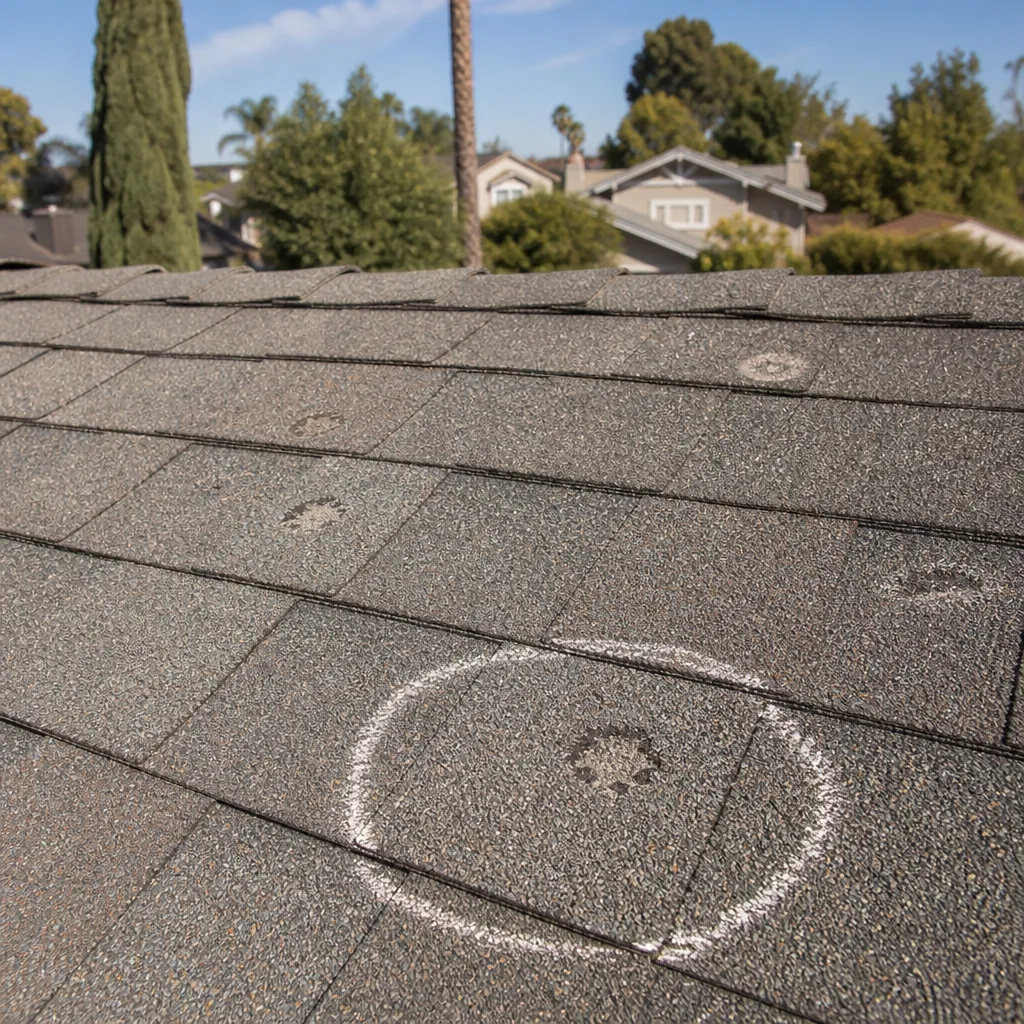
Most standard California homeowner’s policies cover roof damage from wind, hail, and falling debris. The key is documenting the damage before any repairs or tarping happen. If you’ve already covered the damage, take photos when the tarp comes off and before the permanent repair begins. Call (866) 942-4187 and we’ll help you document everything the adjuster needs to see.
A properly installed tarp can last 30 to 90 days in Corona’s climate, but Santa Ana winds reduce that window significantly. A tarp that catches a 60 mph gust is a liability on your own roof and your neighbor’s car. The permanent repair should be scheduled within two to four weeks of the tarp going on. Call (866) 942-4187 and we’ll prioritize your permanent repair so the tarp comes off quickly.
Yes. We handle wind and rain damage, missing shingles, roof leaks, and structural damage for Corona homeowners. We also provide Roof Inspection in Corona as a standalone service if you want a professional assessment before deciding on repairs. Call (866) 942-4187 and we’ll help you figure out the right next step.
Written by the team at Orange County Roofing Co, serving Corona.
Need Roofing Help?
Call Orange County Roofing Co - licensed & insured, here with fast help in Corona.
(866) 942-4187