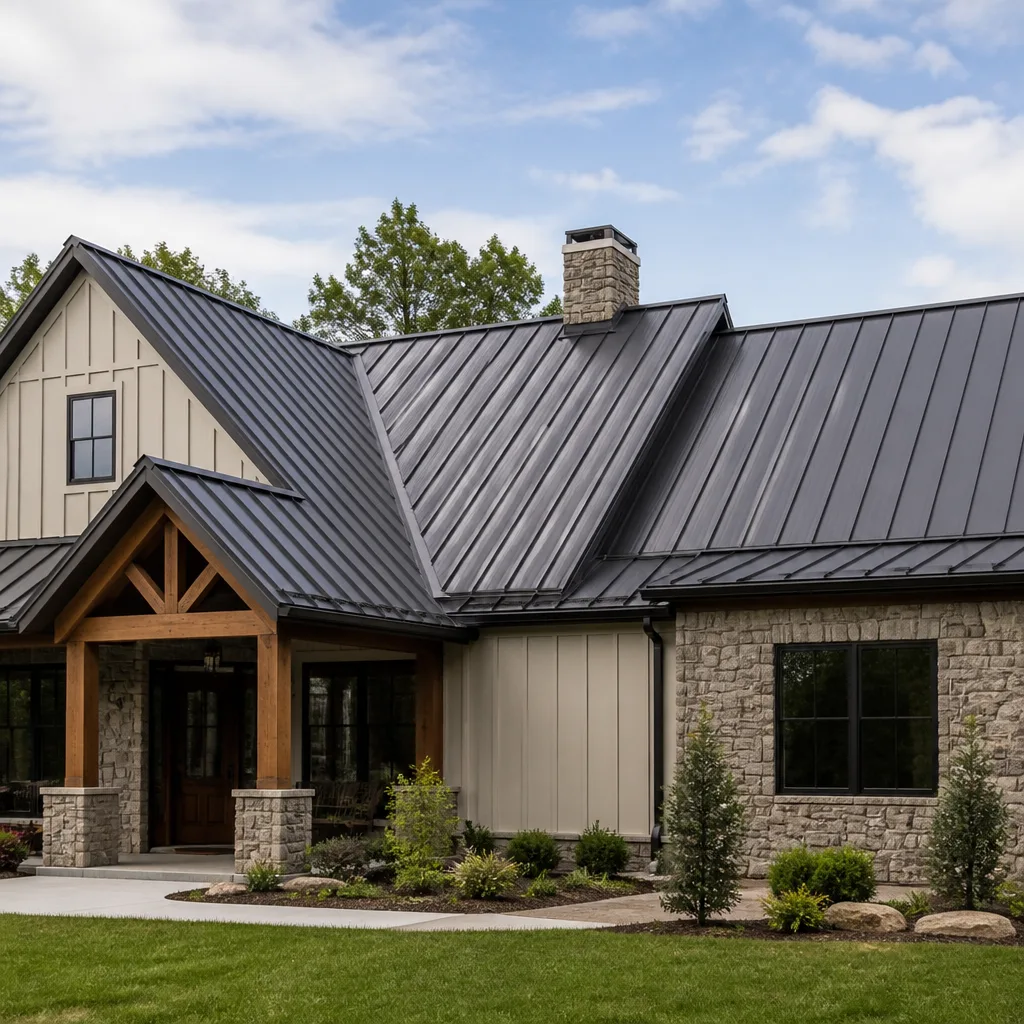
 Metal roofing
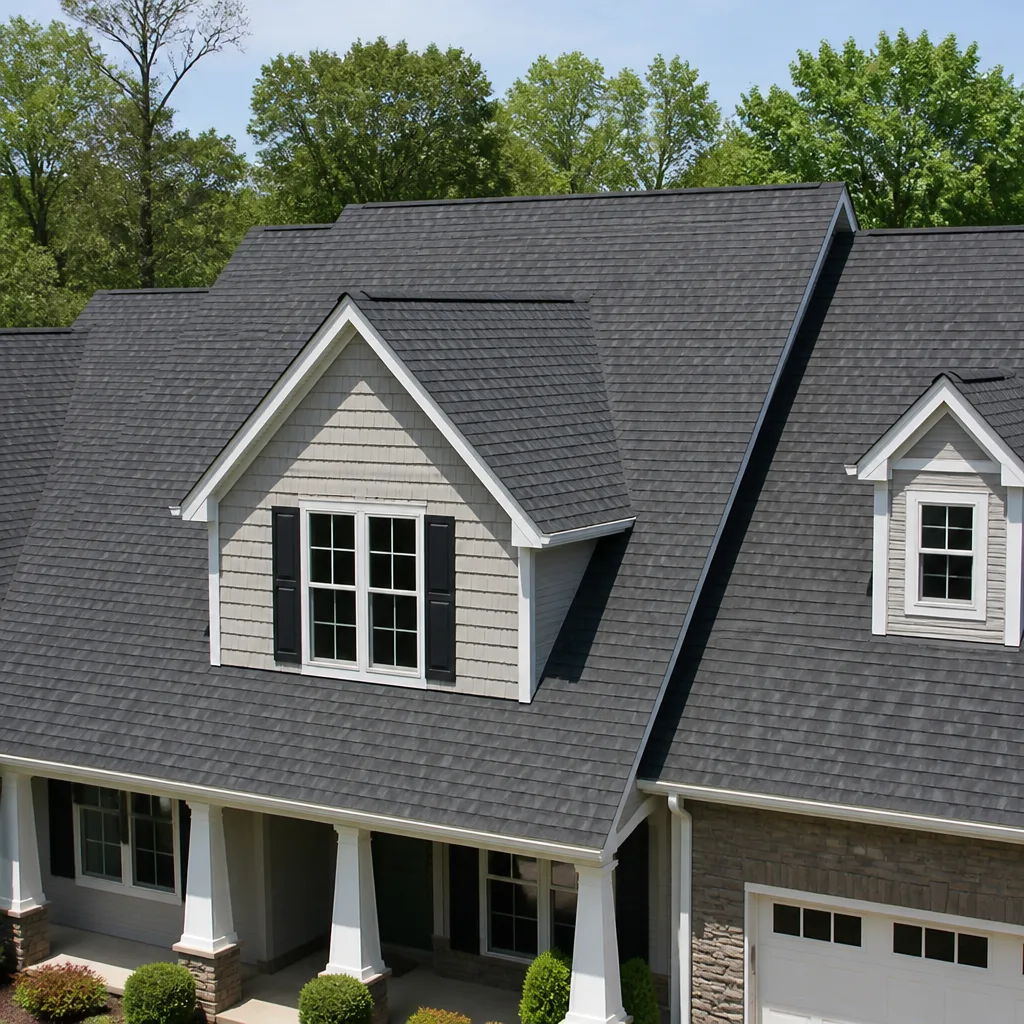 Architectural shingles
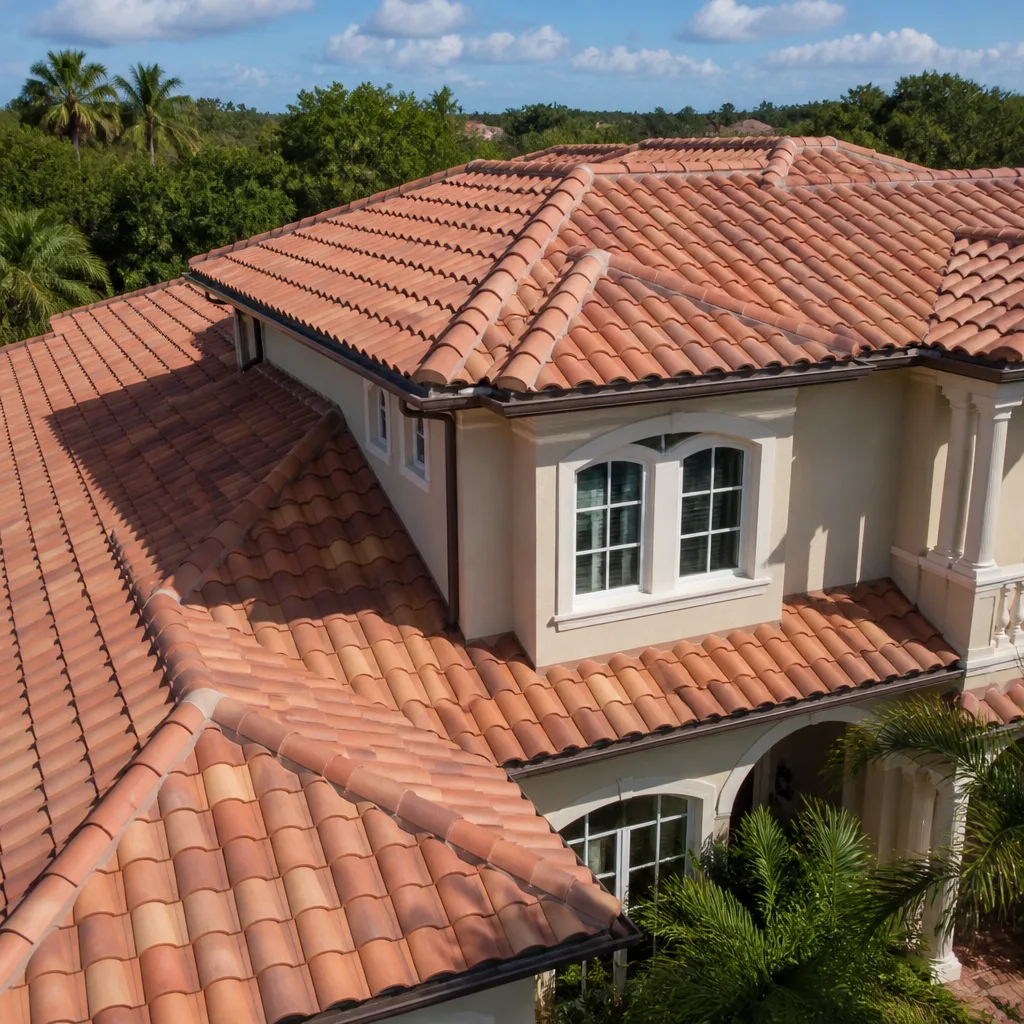 Tile roofing
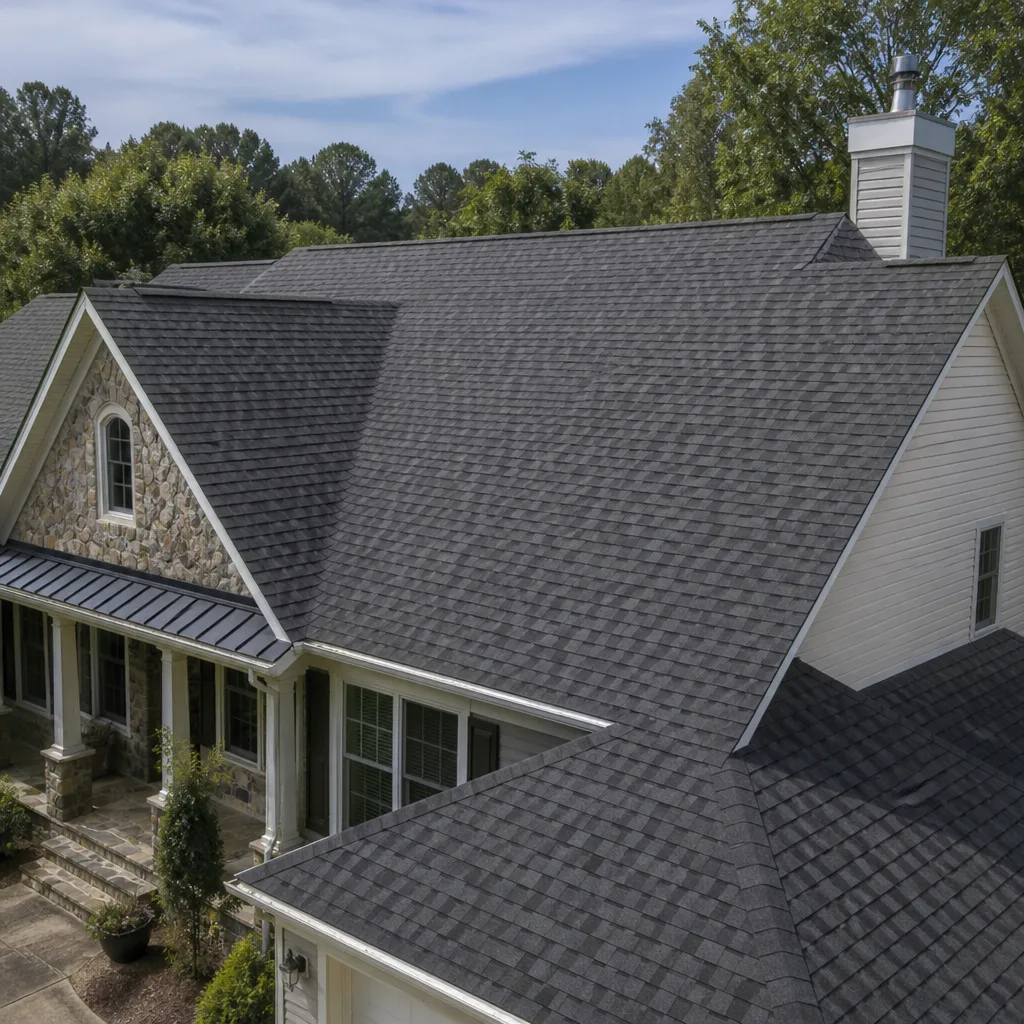 GAF
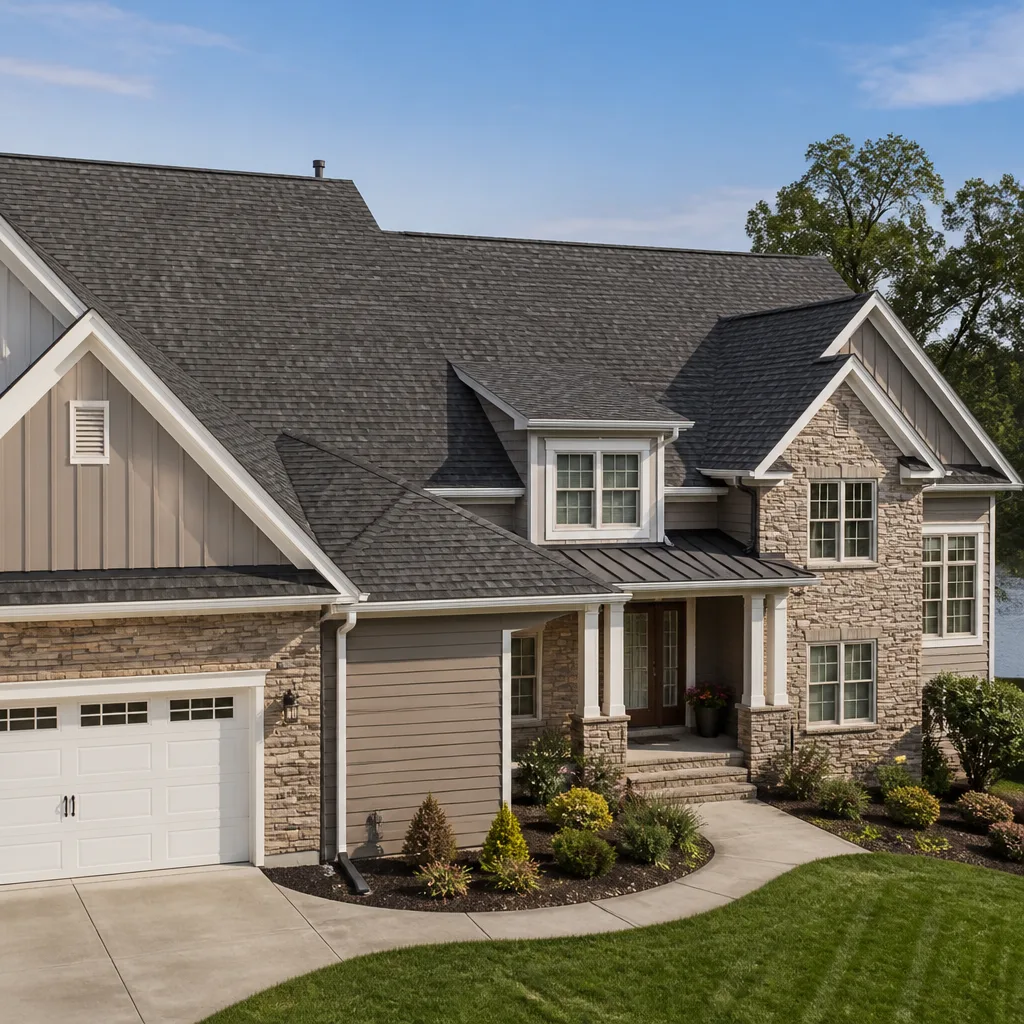 Owens Corning
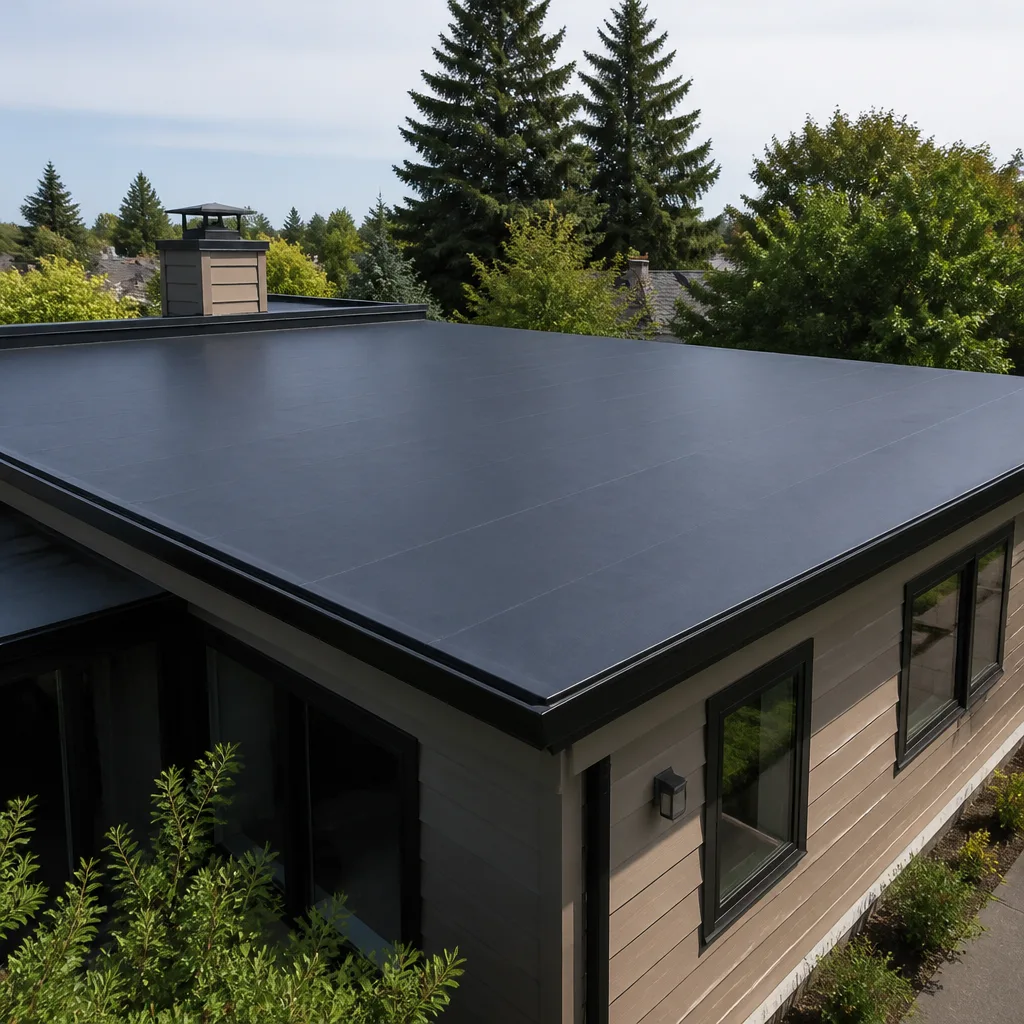 Flat & low-slope
Free roof inspection with deck photos before we talk money - GAF and Owens Corning certified installation
Roof Replacement in Shadow Hills: Fire-Zone Codes, Tight Lots, and the Right Assembly
Roof replacement in Shadow Hills costs between $18,000 and $65,000 for most custom homes, with flat/low-slope sections running $12 – $22 per square foot and full tear-offs on steep lots landing in the $28,000 – $48,000 range depending on fire-rated assembly requirements. The price isn’t driven by square footage alone. It’s driven by what your specific lot demands: ember-resistant venting, Class A underlayment, and a staging plan that works around a narrow driveway and equestrian neighbors. Call (866) 942-4187 for a written, line-item estimate based on your actual roof, not a generic price-per-square guess.
Key Takeaways:
- Shadow Hills sits largely inside a Very High Fire Hazard Severity Zone, which legally and practically requires ember-resistant vents and fire-rated underlayment assemblies most flatland Valley roofs never need.
- Steep custom lots, mature eucalyptus, and horse properties change both the roofing scope and the daily work plan: staging, debris control, and neighbor communication matter as much as shingle choice.
- We carry seven major brands (GAF, CertainTeed, Owens Corning, IKO, Atlas, Tamko, Boral), so the material recommendation comes from your roof’s geometry and fire-zone requirements, not a brand deal.
- Estimates are free, written, and line-itemed. Call (866) 942-4187.
Fast, Reliable Roof Replacement Across Shadow Hills
Shadow Hills isn’t a tract-home community. It’s a hillside equestrian pocket of the northeast San Fernando Valley where homes are custom, lots are steep, and the roof has to hold up against Santa Ana wind gusts, 100-degree summers, and flying palm debris. We’ve worked on roofs along Sunland Boulevard’s corridor, up the winding streets off Wheatland Avenue, and across the canyon-facing properties near La Tuna Canyon Road. Those jobs taught us something every Shadow Hills homeowner eventually learns: the roof assembly that works in Burbank or La Crescenta often doesn’t meet code here, and the staging plan that works on a flat lot won’t work when your driveway drops twelve feet from the street. We quote Shadow Hills jobs with that understanding from the first visit. Call (866) 942-4187 and we’ll come take a look.
We’re Orange County Roofing Co, and our Roof Replacement crew has handled full tear-offs, decking replacement, and new installations throughout the 91040 ZIP code. Kurt Hensley leads our team with a straight-forward approach: inspect honestly, explain the options in plain language, and let the right material win. That’s how we’ve built our name in this part of the Valley, and it’s why Shadow Hills homeowners call us when the wind finally wins.
Styles & brands we work with
Why Orange County Roofing Co Is Shadow Hills’s Preferred Roof Replacement Company
Homeowners in Shadow Hills tend to ask sharper questions than most. They’ve usually lived through at least one Santa Ana season where a eucalyptus limb thudded onto the roof at 3 a.m., and they’ve seen what a wildfire ember storm can do to a 40-year-old composition shingle. We respect that. Our estimates for Shadow Hills properties include the fire-zone specifics from the start: ember-resistant ridge and soffit vents, Class A underlayment where the hazard zone requires it, and flashing details engineered for steep valleys that shed water fast during winter rain. We don’t pad the scope. We explain what the roof needs and why, then give you a line-item price so you can see exactly where the money goes.
Kurt Hensley built this company on the belief that a roofer should be material-agnostic. That’s not marketing talk; it’s practical. Because we install GAF, CertainTeed, Owens Corning, IKO, Atlas, Tamko, and Boral, we don’t have to steer you toward one brand to make numbers work. Your Shadow Hills roof gets the assembly it needs, backed by whichever manufacturer’s warranty fits your budget and coverage expectations.
Our response time to Shadow Hills is same-day for inspection requests and typically two to four days to get a written estimate in your hands. We know the area well enough to give you a real price, not a placeholder that changes when the crew arrives.
Flat Roof Replacement in Shadow Hills
Flat Roof Replacement in Shadow Hills is a common part of larger replacements because many custom homes here blend pitched shingle fields with low-slope sections over additions, covered patios, or garage wings. On these low-slope areas, the covering options usually come down to modified bitumen, TPO, or a multi-ply built-up system, and fire-zone requirements still apply. A flat section under 600 square feet typically runs $9,500 – $14,500 when tied into a larger replacement; a standalone flat roof replacement on a detached structure or barn usually falls between $7,000 and $18,000 depending on decking condition and access.
The flat sections on Shadow Hills homes fail differently than the pitched fields. Debris collects, water ponds after winter rain, and the seams around chimney bases, scuppers, and equipment curbs break down under year-round UV. If you’re seeing water stains on the ceiling below a low-slope section, the underlayment or membrane has likely already gone. That’s a repair-first situation: we inspect, tell you if a patch buys you two more years or if a full recover makes better financial sense, and price it accordingly.
Fire-Zone Assemblies on Low-Slope Sections
In the Very High Fire Hazard Severity Zone, a flat roof still needs a fire-rated assembly. That means a Class A rated membrane or an approved cap sheet, plus ember-resistant vents if your low-slope section has any ventilation. We include this by default on Shadow Hills quotes, and it’s one of the reasons our prices look different from a flatland Valley roofer who’s never worked in 91040.
When a Patch Is Enough
Not every flat roof problem requires replacement. Small punctures from fallen branches, failed pipe boot flashing, or a cracked scupper seal can often be repaired for $400 – $1,200. We’ll tell you straight if a patch is the right call. Our inspection is a standalone service, not a sales lead-in, so you’ll get an honest answer before any work is quoted.
Roof Installation in Shadow Hills
Roof Installation in Shadow Hills usually means a full tear-off of the existing field, replacement of rotted decking, and installation of a new fire-rated assembly on a home whose roof geometry is anything but simple. Most homes here were built between the 1950s and 1990s, which means the original decking is often 1x plank or thin plywood that has been baked by decades of Valley sun. A full installation on a 2,500 – 3,500 square foot home typically runs $22,000 – $48,000 before flat sections are added, with architectural shingles on the lower end and standing seam or concrete tile on the upper end. New construction and detached structures (barns, garages, covered patios) add their own line items.
We don’t install over failed decking. If the plywood or planks are spongy, delaminated, or sagging between rafters, that gets replaced before a single shingle goes down. That’s a code requirement and a common-sense one: new shingles nailed into rotten wood fail at the first wind event, and in Shadow Hills wind events are guaranteed. We include decking replacement at a per-sheet price in every quote so there’s no surprise change order when the tear-off exposes what’s underneath.
Complex Roof Geometry and Flashing Work
Shadow Hills roofs have valleys, dormers, hips, and height changes that tract homes never see. Each valley is a future leak point if the flashing isn’t layered correctly, and each penetration (turbine vents, plumbing stacks, chimney bases) is a place where wind-driven rain finds a way in. Our crews treat flashing as a ridge-to-eave system, not an afterthought. It’s the difference between a roof that lasts 25 years and one that stains the ceiling at the first hard rain.
Crane Work and Material Delivery on Steep Lots
On a tight lot off Stonehurst Drive, there’s no room for a full material truck and trailer. We crane bundles to the roof or stage them on a section of flat ground near the barn and run materials up with a lift. The access affects the price, but more importantly it affects the schedule. We quote access costs upfront so the invoice matches the estimate.
Trusted Brands We Service in Shadow Hills
The brand conversation in Shadow Hills is different from the flatland Valley because fire rating, wind rating, and hail-like debris impact matter more than curb appeal alone. We install Atlas and Tamko architectural shingles for homeowners who want strong wind warranties and solid Class A fire ratings at a mid-range price point. Boral concrete tile comes up often on custom homes that want to keep or replace an original tile profile, especially where the existing tile has been cracked by falling eucalyptus limbs over the years. GAF and CertainTeed round out the most common requests. Because we carry all seven brands, we’re not married to any single one. We’ll show you samples, compare warranty terms honestly, and let you choose. The material that fits your roof’s fire-zone requirements and your budget gets the recommendation.
Common Roof Replacement Problems We See in Shadow Hills Homes
- Santa Ana wind damage from palm fronds and eucalyptus limbs. Mature palm and eucalyptus trees surround most Shadow Hills lots. When the Santa Anas blow, the fronds and limbs broadside shingle and tile fields, cracking tile and tearing shingle tabs. The underlayment underneath gets exposed, and that’s where leaks begin.
- Ember intrusion through old open gable, ridge, and soffit vents. Homes built in the 1950s – 1990s often have open ventilation that was code-legal then but fails the current fire-hazard-zone standard. Embers from a hillside fire can enter those openings and ignite the attic before the roof deck ever catches flame. Replacement in 91040 means upgrading to ember-resistant venting.
- Failed flashing at complex valleys and penetrations. The steep, custom roof geometry across Shadow Hills creates multiple valleys, dormers, and height changes. Each one collects rain and channeled water, and if the flashing underneath was installed poorly or has corroded over 30 years, the ceiling stains come fast during winter storms.
- Rotted decking from prolonged UV and intermittent rain. Valley heat dries decking until it cracks, winter rain soaks into the cracks, and the cycle repeats for decades until the deck softens. Quite often the damage is invisible until the tear-off starts. We always price decking replacement per sheet so you’re prepared for what’s underneath.
See the difference
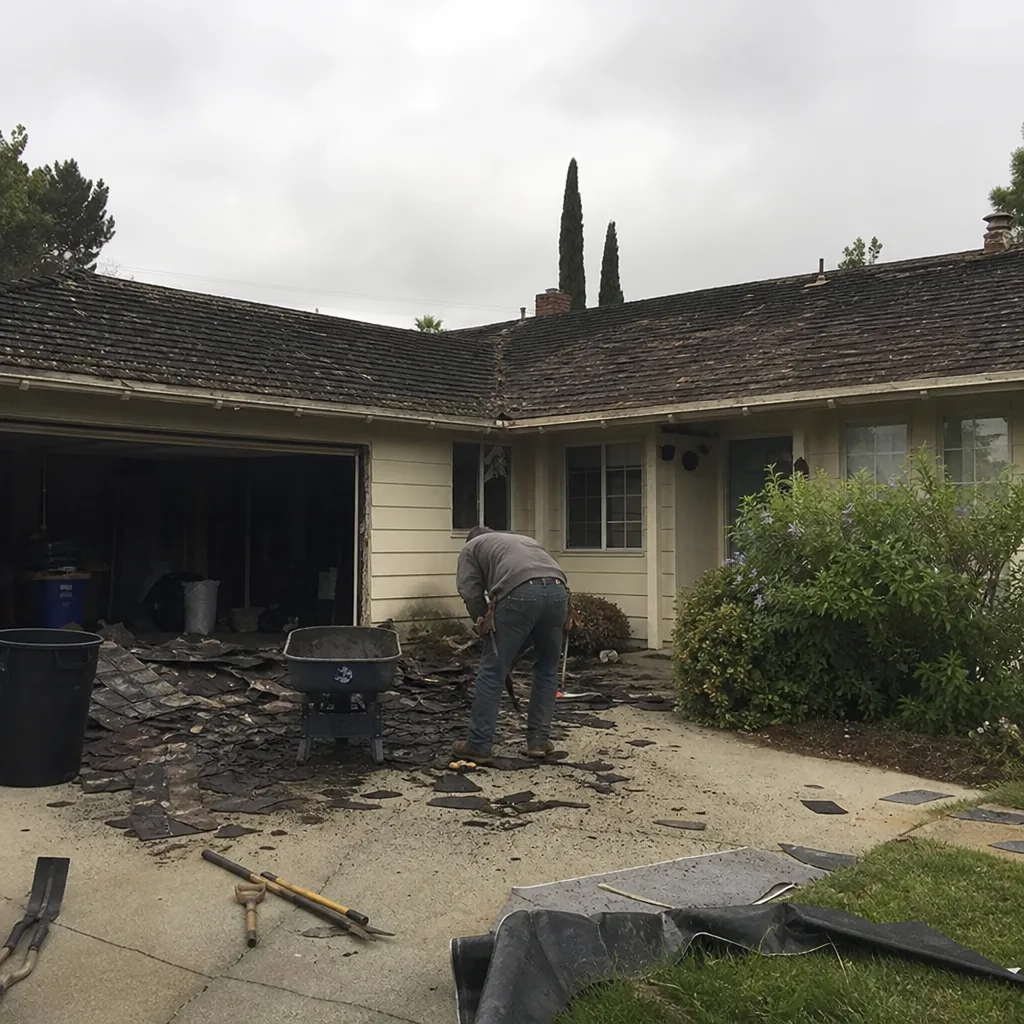 Before
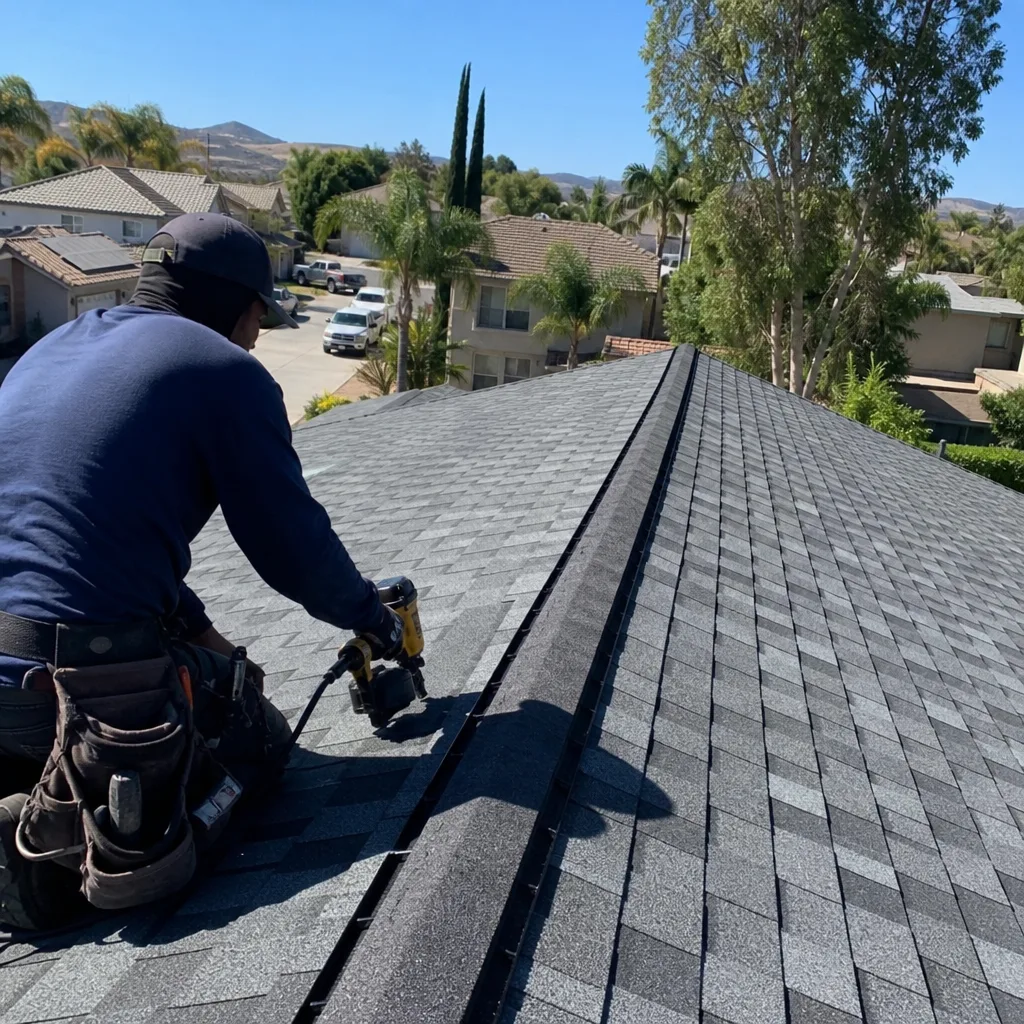 After
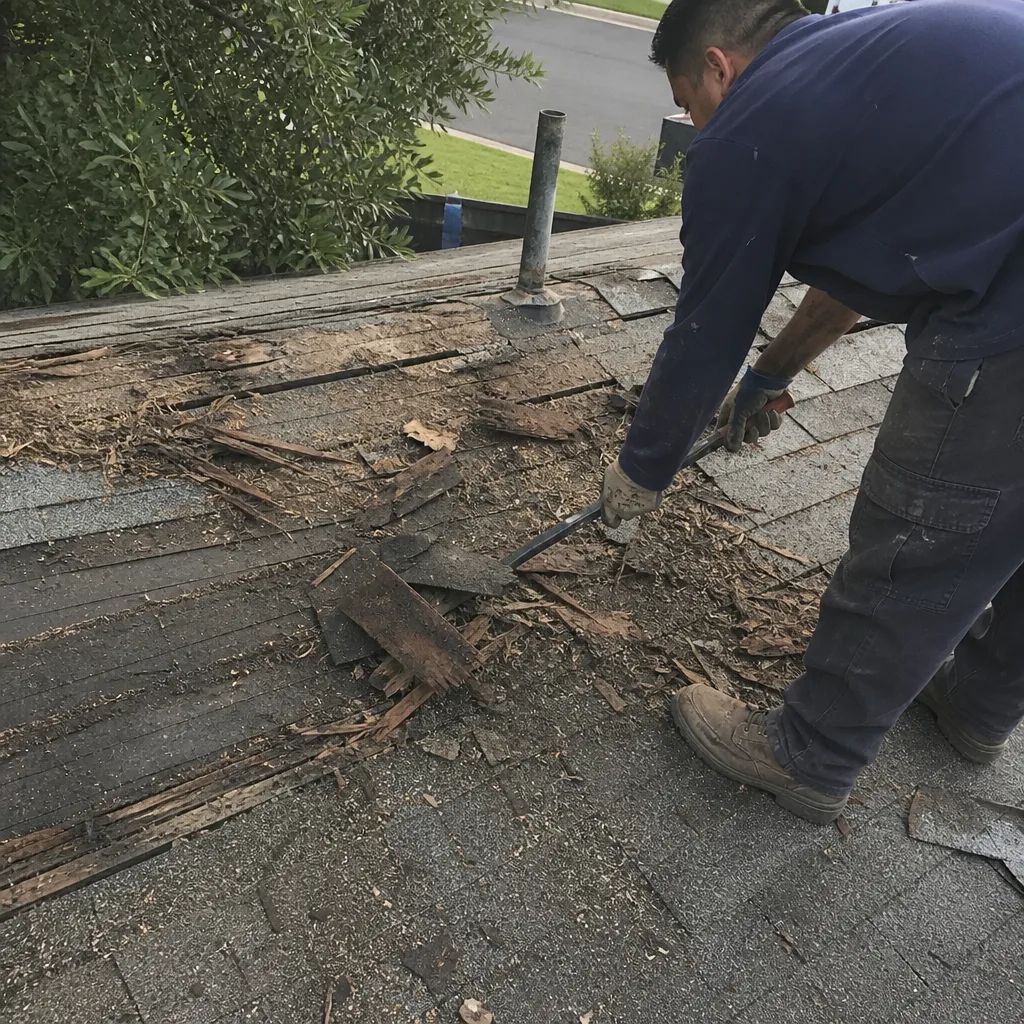 Before
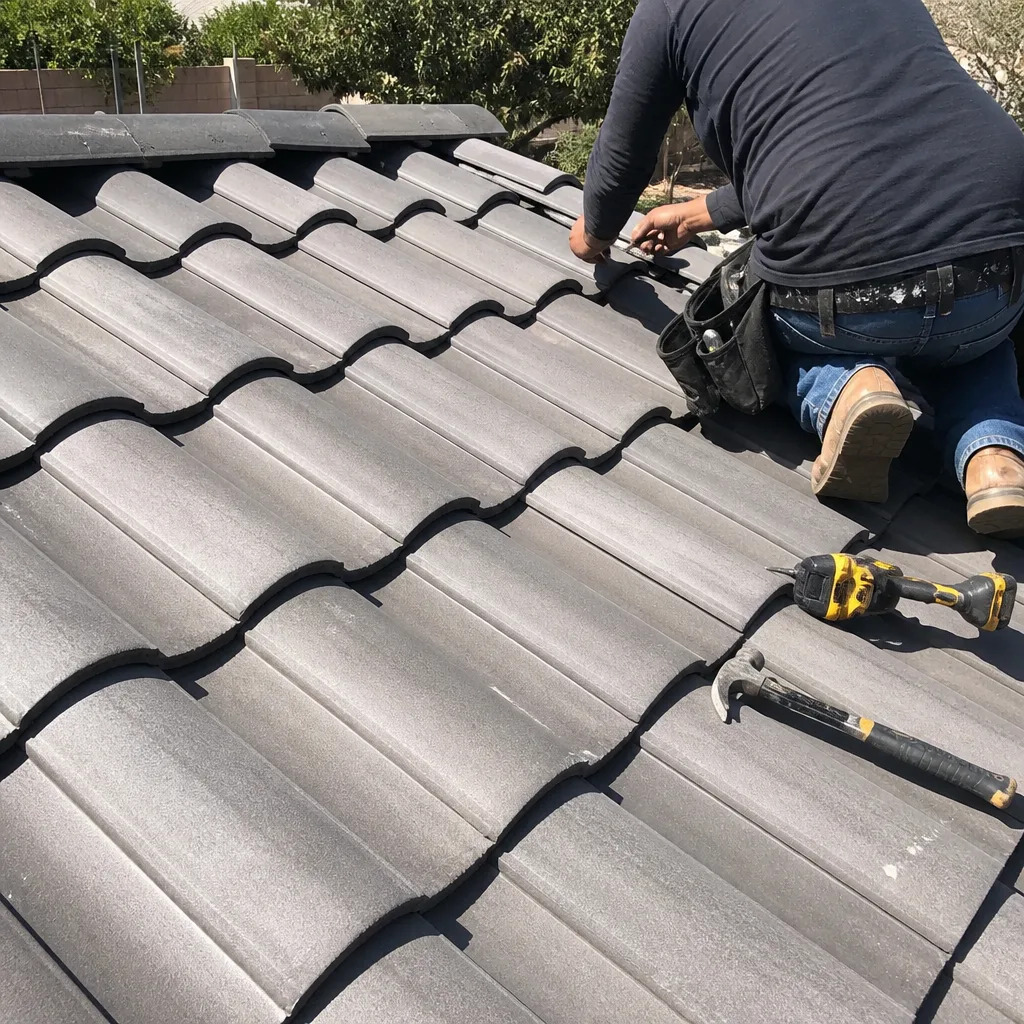 After
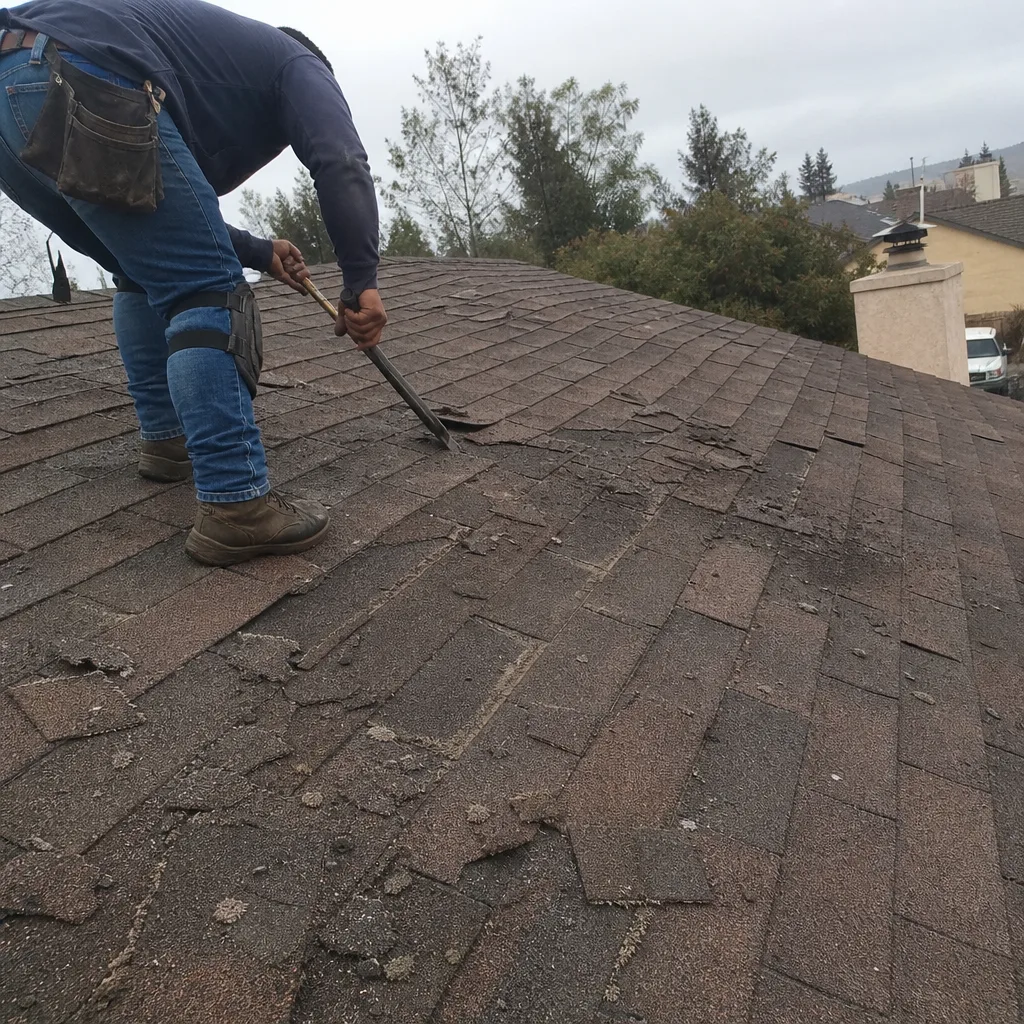 Before
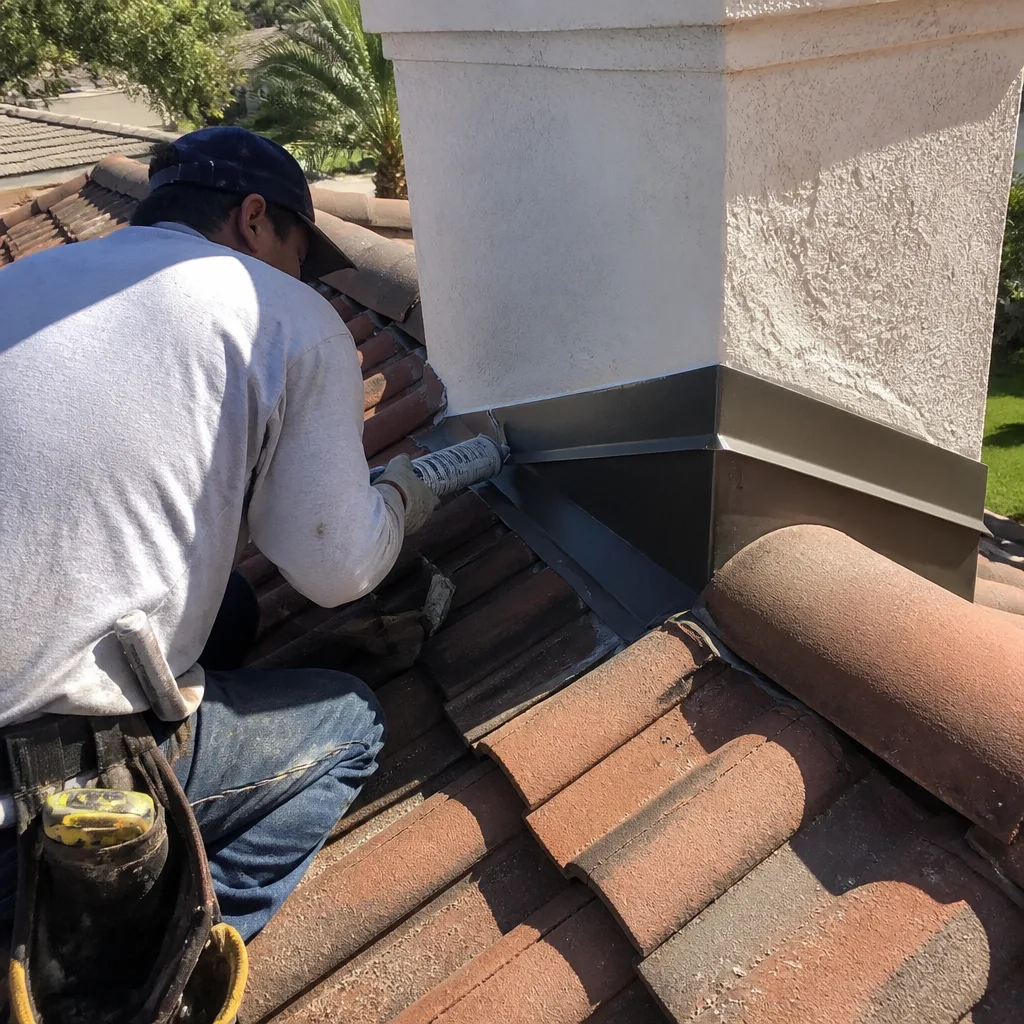 After
Pricing for Roof Replacement in Shadow Hills, CA
Here are real numbers for the Shadow Hills market, based on the work we’ve priced across 91040:
| Service | Shadow Hills Price Range |
|---|---|
| Full tear-off and replacement (pitched, 2,500 – 3,500 sq ft) | $22,000 – $48,000 |
| Flat/low-slope section (standalone, under 600 sq ft) | $7,000 – $18,000 |
| Flat section tied into larger replacement | $9,500 – $14,500 |
| Architectural shingle installation (mid-range brand) | $18,000 – $32,000 |
| Decking replacement (per 4×8 sheet) | $85 – $140 |
| Emergency tarp or temporary repair after wind damage | $600 – $1,800 |
What moves the price in Shadow Hills isn’t just square footage. It’s access (crane vs. lift vs. shoulder-carry), the number of valleys and penetrations, whether your home sits in the Very High Fire Hazard Severity Zone and needs a Class A assembly, and how much decking has rotted. A tight lot with no flat staging area adds real labor hours. We show every one of those line items in the estimate, so you can see what you’re paying for and why. Call (866) 942-4187 to schedule your free estimate, and we’ll walk the roof with you and explain what we see.
Working on a Tight Shadow Hills Lot: Staging, Parking, and Keeping Neighbors on Side
Most roof replacement companies are built for flat lots. A truck pulls up, a 40-foot dump trailer gets dropped, materials stack in the driveway, and the crew works from the front yard. That model doesn’t work in Shadow Hills. The lots here are steep and custom, with driveways that often drop sharply from the street, park only one or two vehicles, and sit within clear sight and sound of neighbors who keep horses, goats, and quiet homes. A tear-off on a tight lot becomes a logistics exercise before it becomes a roofing job.
Here’s how we handle it. First, we walk the property and identify the one spot where a debris chute can fall safely without hitting a fence, a shared wall, or a neighbor’s parked vehicle. On a recent job off Stonehurst Drive, there was no flat ground at all beside the house, so we craned material bundles to the roof in the morning and ran a magnetic sweep of the shared drive every evening before leaving. The neighbors’ horses stayed clear, the driveway stayed clean, and the township never heard a complaint. That’s the bar we hold in Shadow Hills.
Parking permits and work-hour ordinances matter here too. Shadow Hills is Los Angeles County adjacent, and steep narrow streets mean parked vehicles can block access for trucks or emergency vehicles if we’re careless. We coordinate parking before day one, keep the crew’s vehicles off the road where possible, and respect the quiet of an equestrian neighborhood. No early-morning compressor starts, no loud radio. Just a clean, orderly job site, torn off and rebuilt as fast as the roof geometry and fire-zone work allow.
Fire Hazard Zone Codes and What They Mean for Your Shadow Hills Roof
Much of Shadow Hills sits inside a Very High Fire Hazard Severity Zone, and that changes what a roof replacement legally and practically demands. Fire-rated underlayment assemblies are required in this zone. You can’t simply nail a new shingle field over a standard felt and call it done. The assembly has to be designed so that if embers land on your roof during a hillside fire, they don’t ignite the deck or enter the attic. That means Class A rated underlayment, ember-resistant ridge, soffit, and gable venting, and careful flashing around every penetration where embers tend to accumulate.
This is the difference between a roof that meets code and a roof that actually protects your home. We’ve seen too many Shadow Hills roofs replaced in the last decade with open soffit vents and standard underlayment because a flatland roofer never checked the hazard zone map for 91040. We check it on every quote. If your home falls inside the zone (most of Shadow Hills does), the fire-rated assembly goes in the estimate by default, with the specific materials named. That’s not an upsell. It’s the law, and it’s the only way a replacement roof delivers the protection you’re paying for.
We Also Serve Cities Near Shadow Hills
Our roofing crews work throughout Shadow Hills and the surrounding communities, including Sunland, Tujunga, La Crescenta-Montrose, and Burbank. If you’re in a neighboring city or have a rental property near the 210 corridor, the same material-agnostic, fire-zone-aware approach applies. Call (866) 942-4187 and we’ll schedule a free estimate wherever your roof is.
Serving Shadow Hills, CA — Our Local Coverage Area
We’re based in the Shadow Hills area and know this community well. Use the map below to see our service coverage — if you’re nearby, we can almost certainly help.
FAQs About Roof Replacement in Shadow Hills
Yes, significantly. Homes in the Very High Fire Hazard Severity Zone are required by Los Angeles County code to use a Class A fire-rated roof assembly, which includes the shingle or tile itself plus a fire-rated underlayment and ember-resistant vents at the ridge, soffit, and gable ends. A standard composition shingle field without these components won’t pass inspection, and more importantly won’t stop an ember storm from igniting your attic. When we quote a replacement in Shadow Hills, we verify the hazard zone map for your specific parcel and include the required fire-rated assembly in the estimate from the start.
We plan the job around access before starting work. On steep lots, we crane material bundles to the roof or stage them on the nearest flat area (often near a barn or a wide section of the driveway apron) and run them up with a lift. Debris goes down a chute into a trailer positioned in the one workable spot. If there’s no room for a trailer, we schedule daily debris removal runs. Access costs are priced into the quote upfront so the final invoice doesn’t surprise you. Every Shadow Hills property has a workable staging solution; it just takes planning, not guesswork.
No, not when the crew follows a real containment plan. On Shadow Hills lots where homes sit close together or share property lines, we run debris chutes into covered trailers, not open piles, and we sweep and magnet-sweep the work area every evening. Flashing and tiles that get removed near a shared wall are dropped into bags, not thrown. If the properties are close enough that debris could cross the line, we tarp the neighbor’s side before tearing off that section. You’ll never come home to your neighbor’s horse picking up a roofing nail.
Most custom Shadow Hills homes are between 2,500 and 3,500 square feet of roof area, which translates to 25 to 35 squares (a square is 100 square feet of roof surface). Flat sections, covered patios, detached garages, and barns add squares on top of that. Some horse properties with a large barn and covered arena total 50 or more squares of roofing across all structures. We measure every slope and structure by hand or with a drone, never by square footage of the house footprint, because a steep roof’s actual surface area is often 20 – 30% larger than the floor plan. Your quote will show the measured square count for your property.
For Shadow Hills, you want shingles rated for at least 110 mph wind uplift, and 130 mph is better if your home sits on an exposed ridge or canyon lip where the Santa Anas hit without obstruction. The wind rating is obtained through testing by the manufacturer and is printed on the shingle bundle. We recommend Atlas and Tamko architectural shingles on many Shadow Hills homes because their higher wind-rated lines pair well with the fire-zone underlayment requirements. A shingle that’s only rated for 80 mph will lose tabs during the first strong Santa Ana event, and you’ll be patching it within a year.
Get Your Shadow Hills Roof Replacement Estimate
If your roof has been through one too many wind storms, or you’re simply ready to know what a fire-rated replacement will cost, call us. We’ll schedule a free inspection, walk you through what we find in plain language, and hand you a written estimate with the exact scope and line-item pricing. No pressure, no brand pushing, no vague numbers. Call (866) 942-4187 to book your free estimate. We’ll bring the measuring tape and the straight answers.
Written by Kurt Hensley, Owner at Orange County Roofing Co, serving Shadow Hills and the San Fernando Valley.