

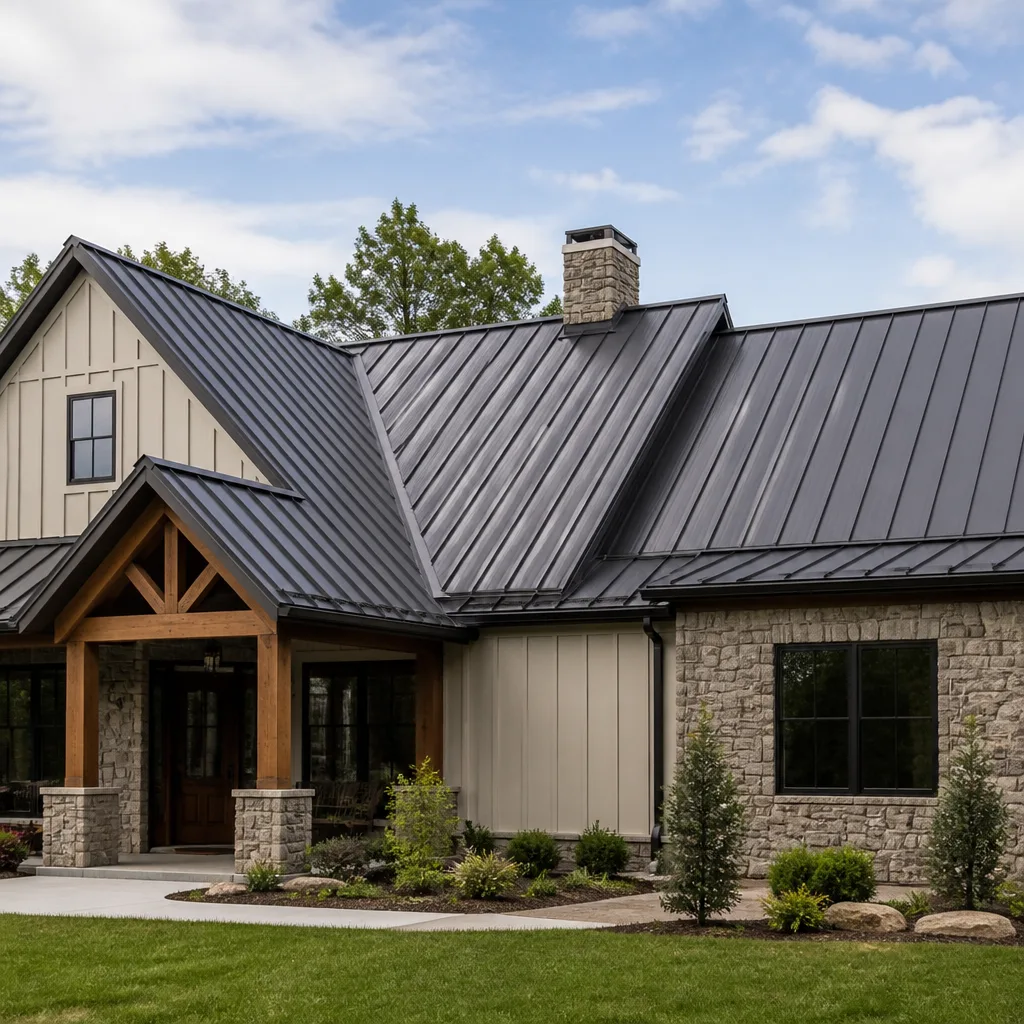
 Metal roofing
 Architectural shingles
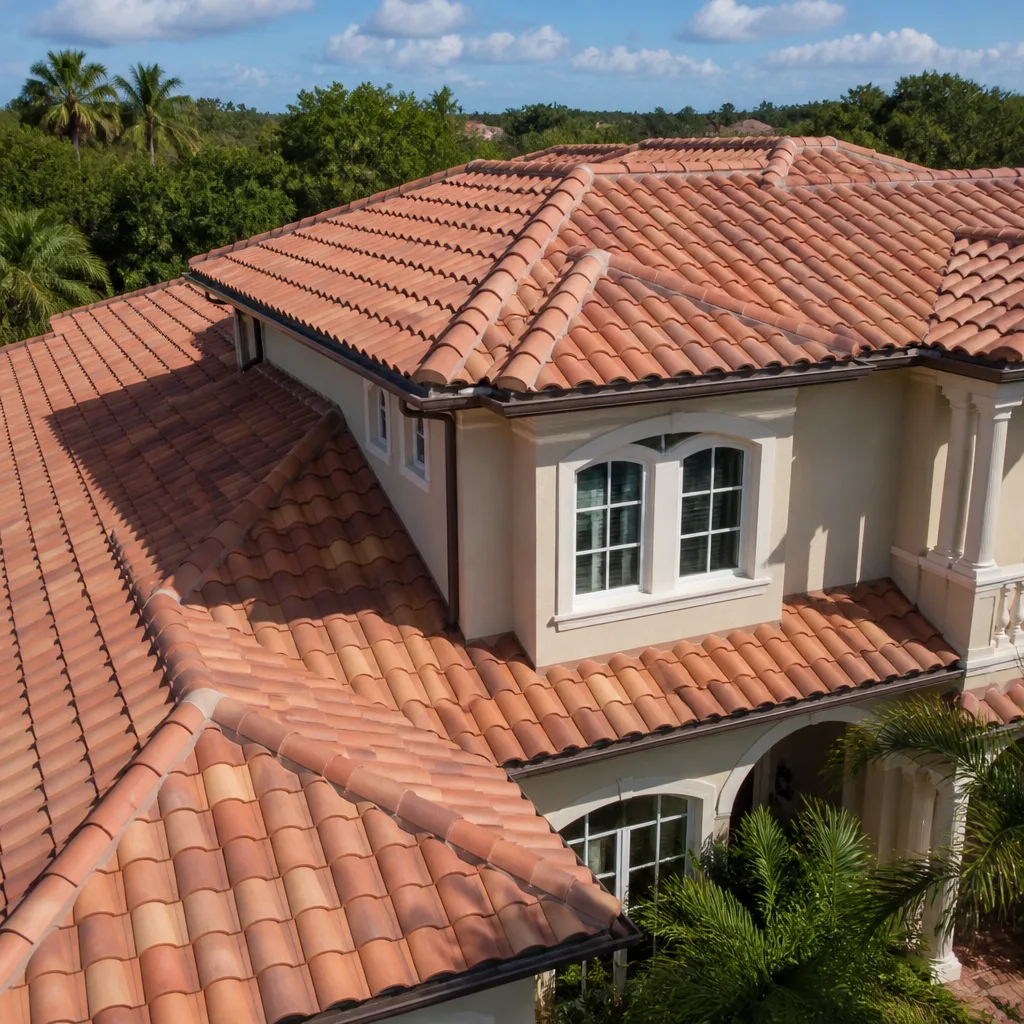 Tile roofing
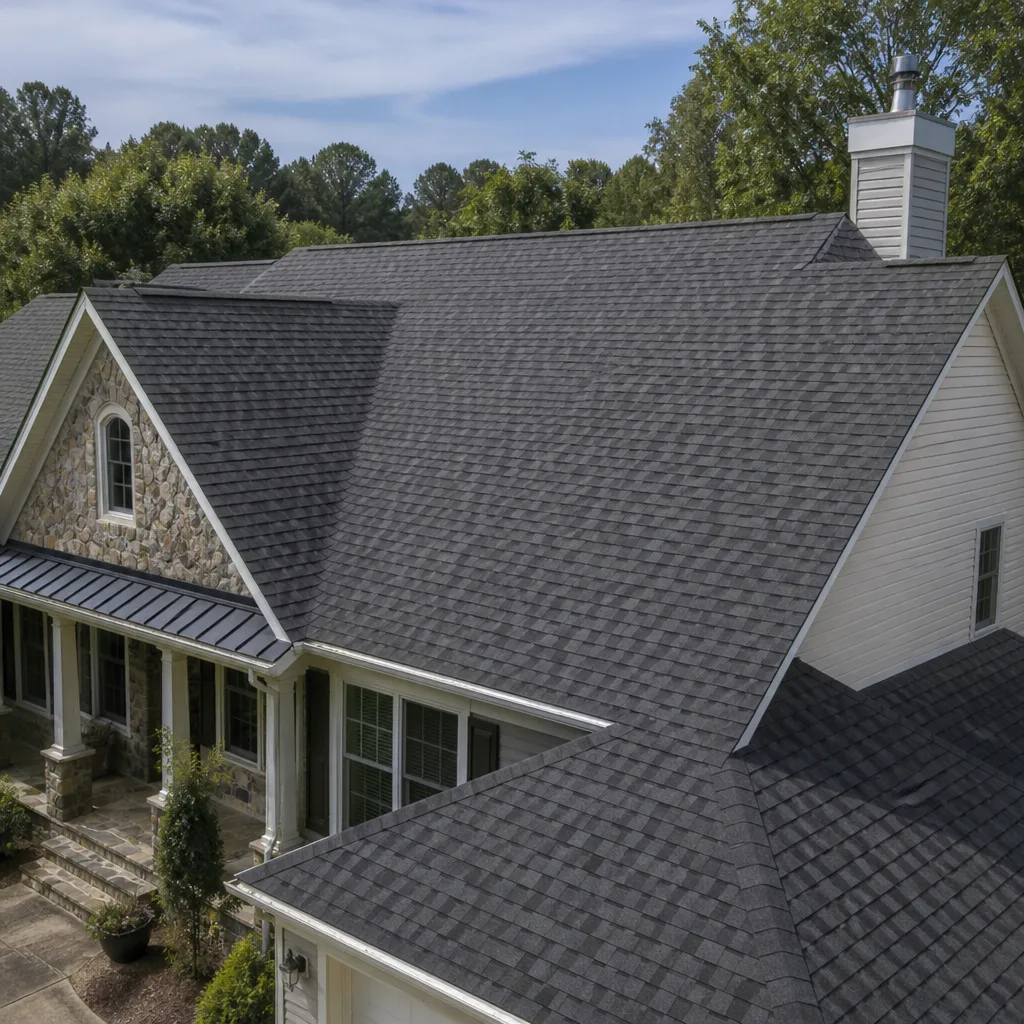 GAF
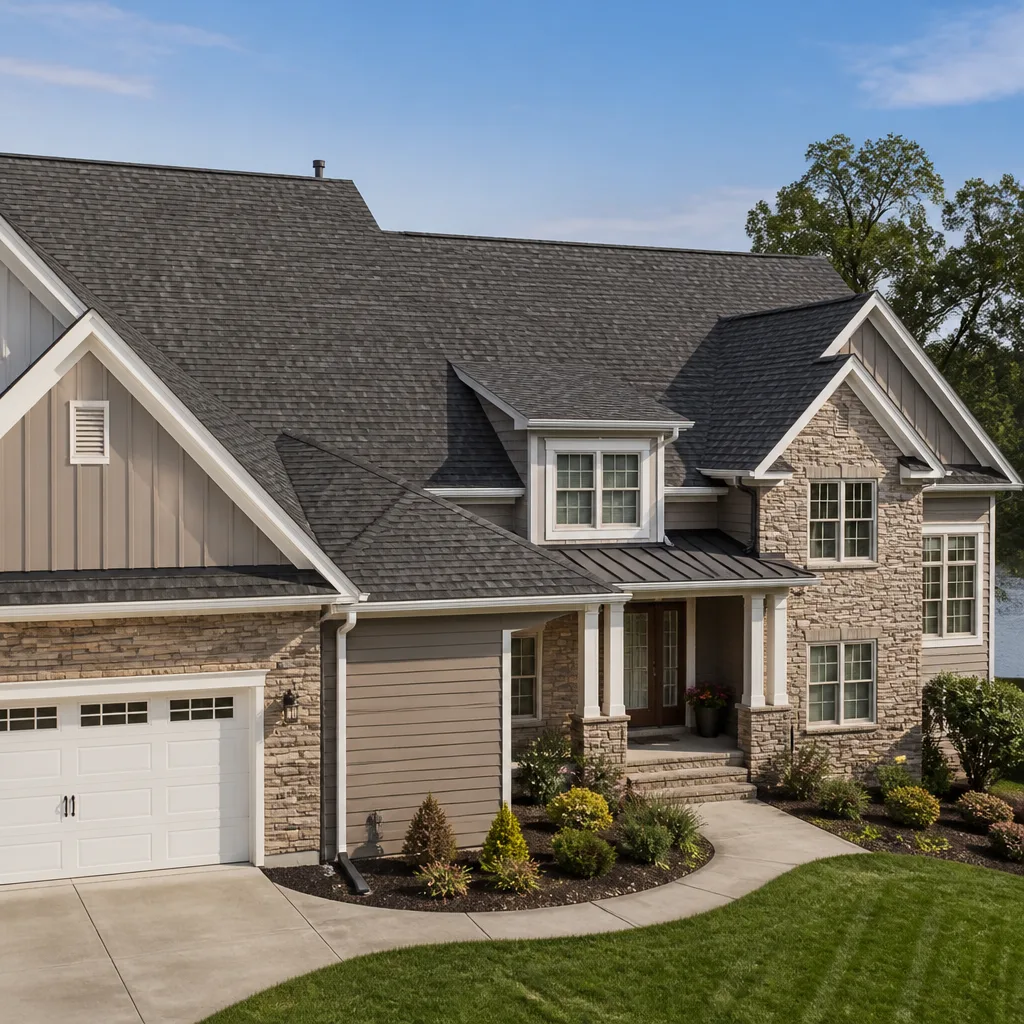 Owens Corning
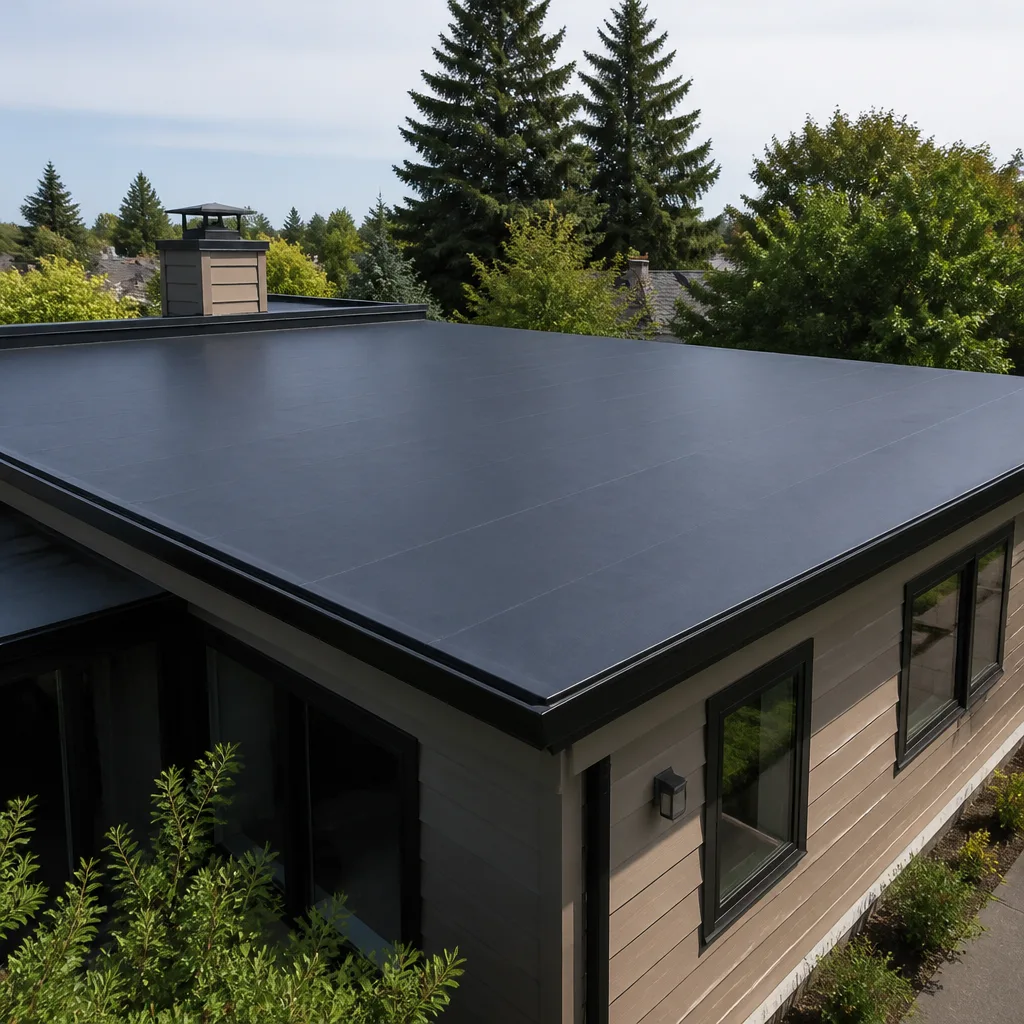 Flat & low-slope
Free roof inspection with deck photos before we talk money - GAF and Owens Corning certified installation
Fast, Reliable Roof Repair Across Highland
Roof repair in Highland usually costs between $350 and $1,400 depending on what failed and how much of the roof is involved. Most repairs our team handles in the 92346 ZIP take one day on site. If you’re dealing with a lifted shingle, a leak near the eave, or wind damage from the last Santa Ana event, call (866) 942-4187 and we’ll get you scheduled for a free estimate.
Highland isn’t like flat-land Inland Empire cities. The lots off Greenspot Road and Baseline climb toward the foothills, and the wind that comes through the Cajon Pass hits the windward roof slopes hard. We know those streets. We know what fails first. We’ll tell you what’s wrong, what it costs to fix, and what can wait.
Why Orange County Roofing Co Is Highland’s Preferred Roof Repair Company
We’re based in Corona, but Highland has been part of our regular service area for years. Our Roof Repair crews know the difference between a heat-baked south-facing plane on a 1970s tract home off Victoria Avenue and a wind-lashed hillside roof closer to the foothill canyons. That matters when you’re deciding whether to patch or replace.
Highland homeowners call us because we don’t push a single brand. We carry materials from GAF, CertainTeed, Owens Corning, IKO, Atlas, Tamko, and Boral. That means when we tell you a certain shingle is right for your wind exposure, it’s because it’s the right product for your roof, not because it’s the only one we sell.
Kurt Hensley built this company around straight answers. If your roof has five years left, we’ll tell you. If a repair is a waste of money and a tear-off makes more sense, you’ll hear that too. Most Highland repair jobs don’t need a full replacement, and we won’t manufacture one to make a larger sale.
We carry insurance, we pull permits when Highland requires them, and every repair includes a written scope before work starts. No change orders after the fact. No vague line items. You’ll know exactly what you’re paying for.
Styles & brands we work with
Commercial Roof Repair in Highland
Commercial Roof Repair in Highland covers flat and low-slope buildings along Base Line, Victoria Avenue, and the retail strips near the 210. These roofs handle different problems than residential ones. Ponding water after winter rain, failed seams on older single-ply membranes, and HVAC curbs that let moisture through after years of temperature swings are the usual calls.
Highland’s commercial stock is a mix of 1980s and 1990s strip-mall construction and newer tilt-ups. The older buildings often have original modified bitumen or early-generation TPO that’s now prone to cracking at flashings and seams. A roof patch on a commercial building in Highland typically runs $800 to $2,500 depending on the square footage and how many penetrations need re-sealing.
Flat Roof Patches and Seam Repairs
Most Highland flat roof repairs are leak-stop jobs around penetrations: vents, drains, and curbs. We inspect the surrounding membrane, not just the visible crack. A seam that’s opened up once will usually keep opening up, so we address the cause, not just the symptom.
Commercial Flashings and Parapet Walls
Parapet walls on Highland commercial buildings take direct sun on one side and shade on the other, which causes metal flashing to expand and contract until the sealant fails. When we repair a parapet cap, we re-secure the metal and replace the sealant band completely. Spot-sealing buys you a season; re-sealing buys you five or more.
Roof Leak Repair in Highland
Roof Leak Repair in Highland usually starts with water staining on a ceiling, but the real source is rarely right above that stain. Water travels along rafters and trusses before it drips. We trace the leak from the interior back to the actual point of entry, which is often a failed chimney flashing, a corroded vent boot, or a valley that’s lost its seal after years of UV exposure.
Highland’s intense summer heat accelerates shingle and flashing degradation faster than coastal climates. A leak that starts as a pinhole in January can become visible only after a heavy rain in March. By then, the decking underneath may already be saturated. Repairing a leak before it spreads is almost always cheaper than the ceiling work that follows.
Flashing Repair at Roof Transitions
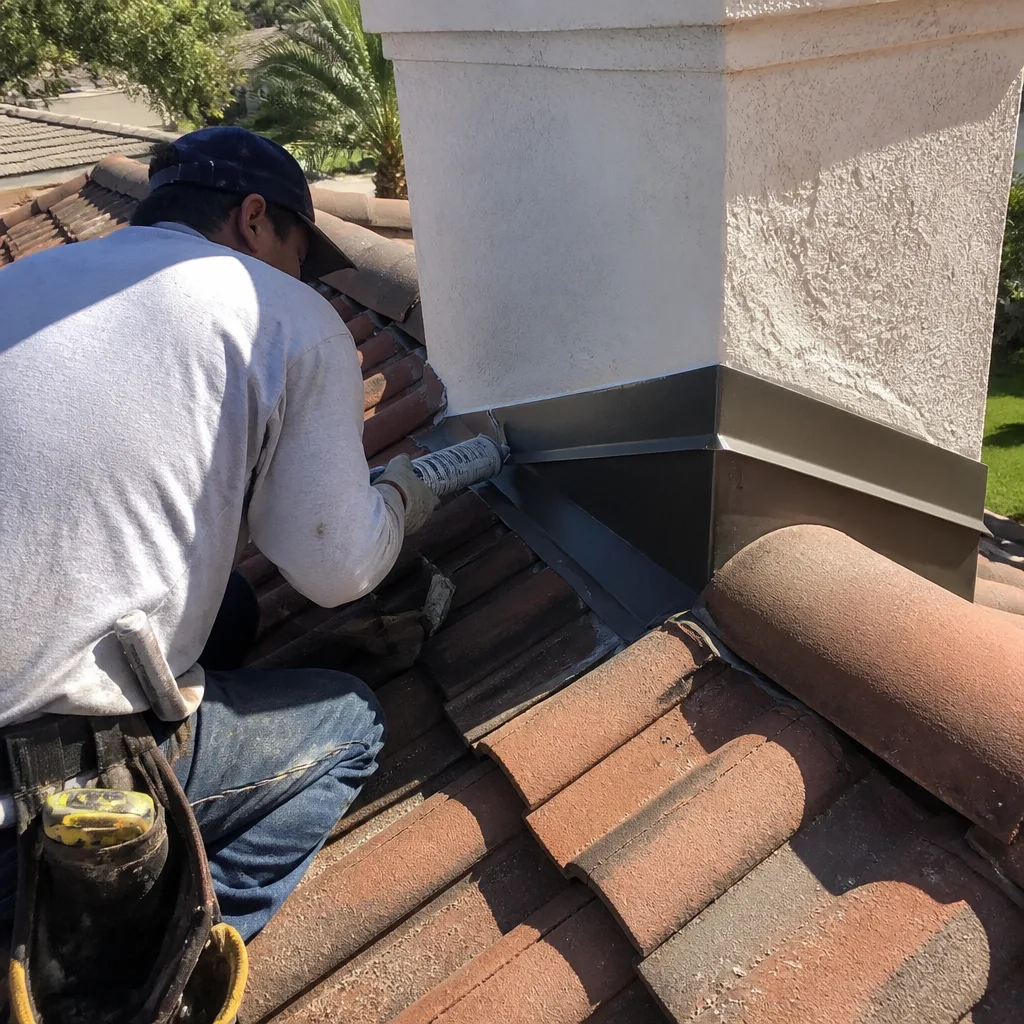
Flashing failures are the single most common leak source we see in Highland. Chimney flashing, step flashing at shared walls, and apron flashing at the roof-to-wall intersections on tight side yards all corrode eventually. We replace flashing with material matched to the existing system, sealed and fastened to manufacturer spec.
Vent Boot Repair and Replacement
The rubber boots around plumbing vents crack after a decade of Highland sun. When one fails, rainwater follows the pipe straight into the attic. We replace boots with a silicone-over-rubber product that holds up better under intense UV and reseal around the pipe base. This is a one-hour fix on most homes and runs $250 to $450.
Trusted Brands We Service in Highland
We install and repair products from seven major manufacturers, and on Highland repair jobs we typically match the existing roof with Owens Corning, IKO, or Atlas shingles. The wind ratings matter here. After a Santa Ana event, homeowners want to know their new shingles will stay put at the next wind event. We stock local parts and common color lines for faster turnaround, so a repair that starts Monday usually wraps the same day or by Tuesday end of day.
Common Roof Repair Problems We See in Highland Homes
- Wind uplift at the ridge and windward eave. Highland sits in the Santa Ana wind corridor below the Cajon Pass, and gusts over 60 mph strip starter strip and ridge vent when fastening isn’t up to 130-mph rating. We see this most often on homes closest to the foothill canyons.
- Flashing failures at shared roof-to-wall junctures. Tight side yards on Highland’s older tract homes mean downspout runoff and shade keep the metal flashing damp, which speeds corrosion. Water tracks into the wall cavity before anyone notices staining inside.
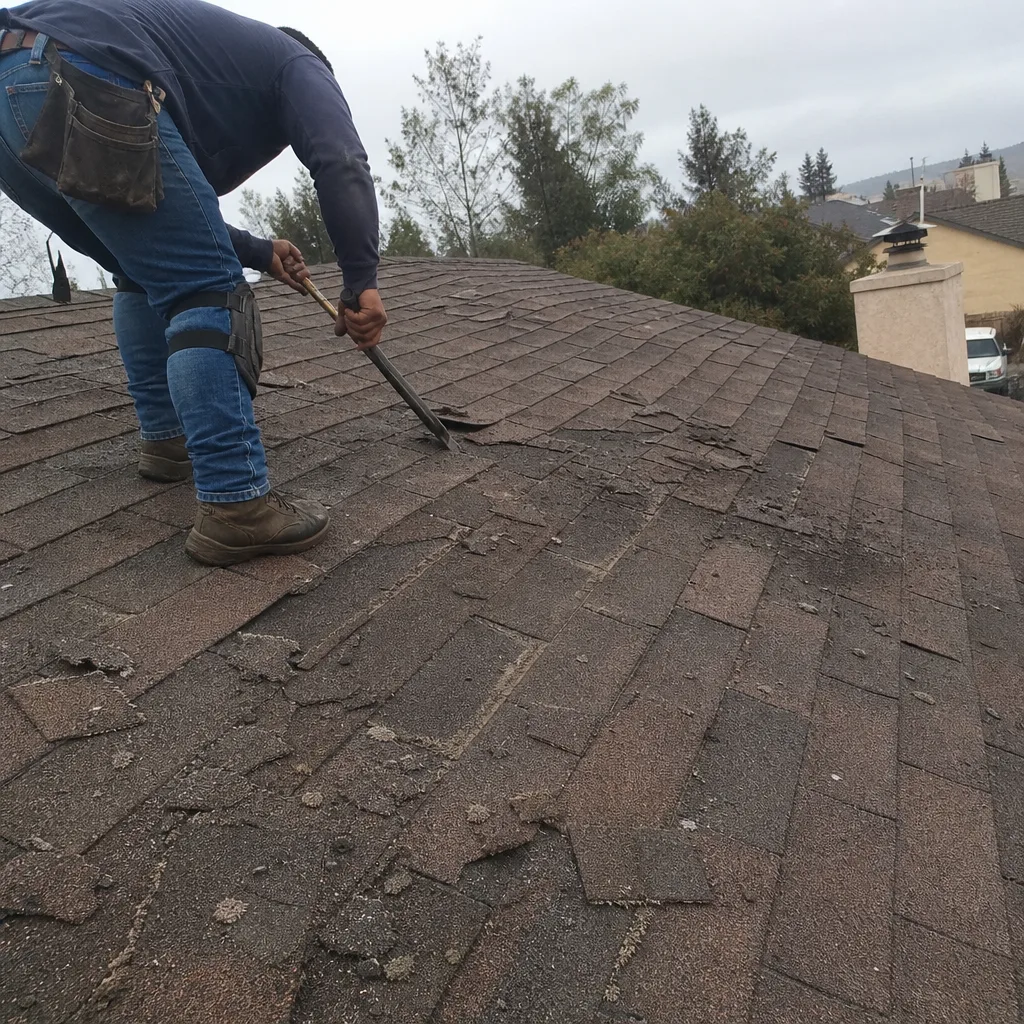
- Granular loss on south-facing planes. Years of 100°F-plus summers bake the shingle surface. Once a significant amount of granules are gone, the asphalt underneath is open to UV and starts to break down. By then, patching those slopes is a stopgap, not a fix.
- Valley seams pulling apart under heat expansion. Highland’s hot days and cool nights force roofing materials to expand and contract daily. Valleys take the most movement. When the seal tape fails, water runs under the shingle on the next heavy rain.
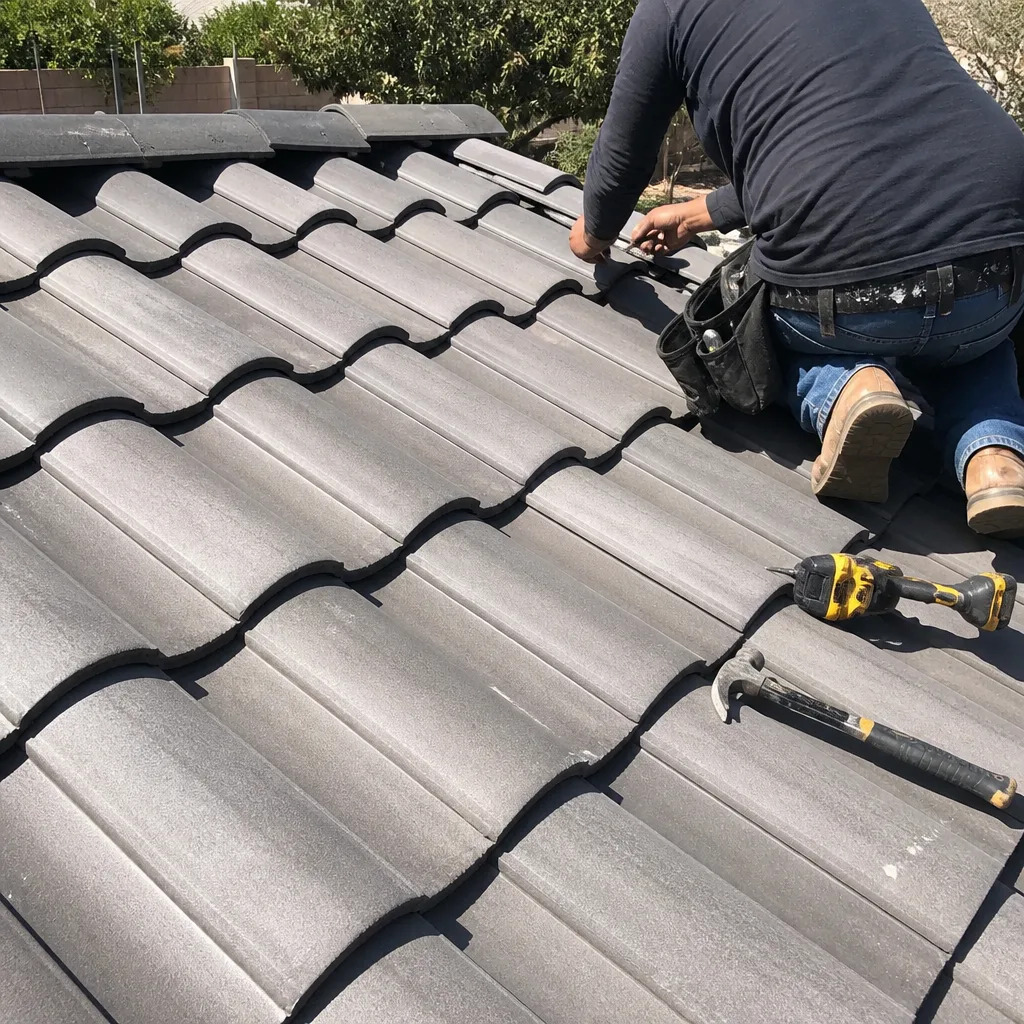
See the difference
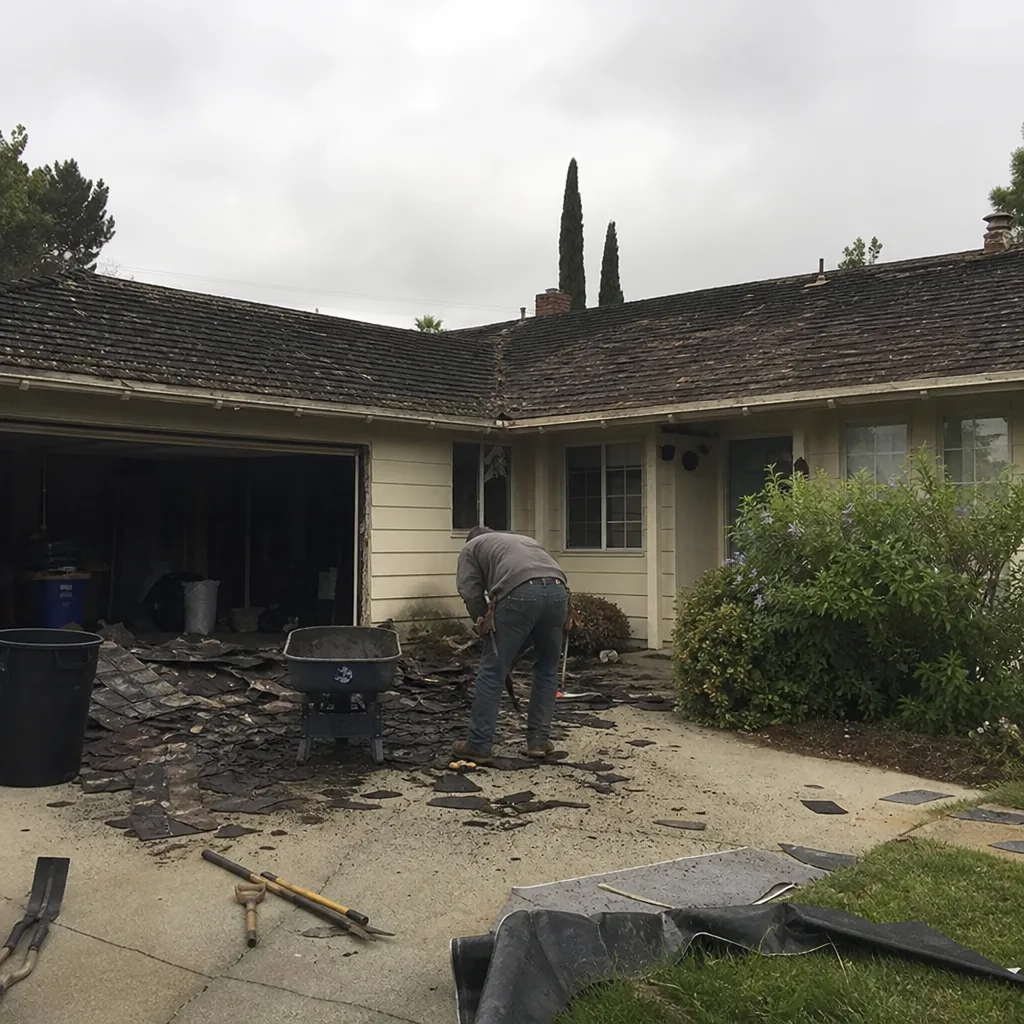 Before
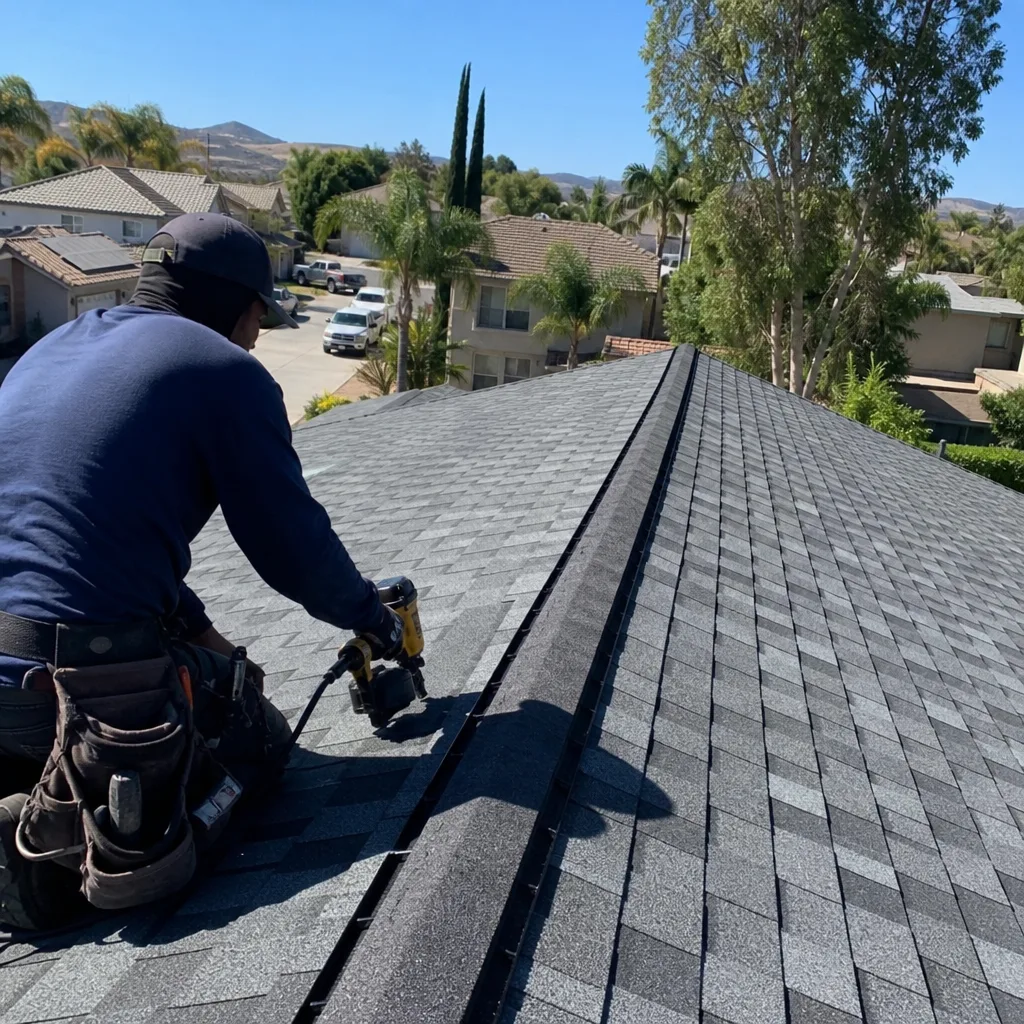 After
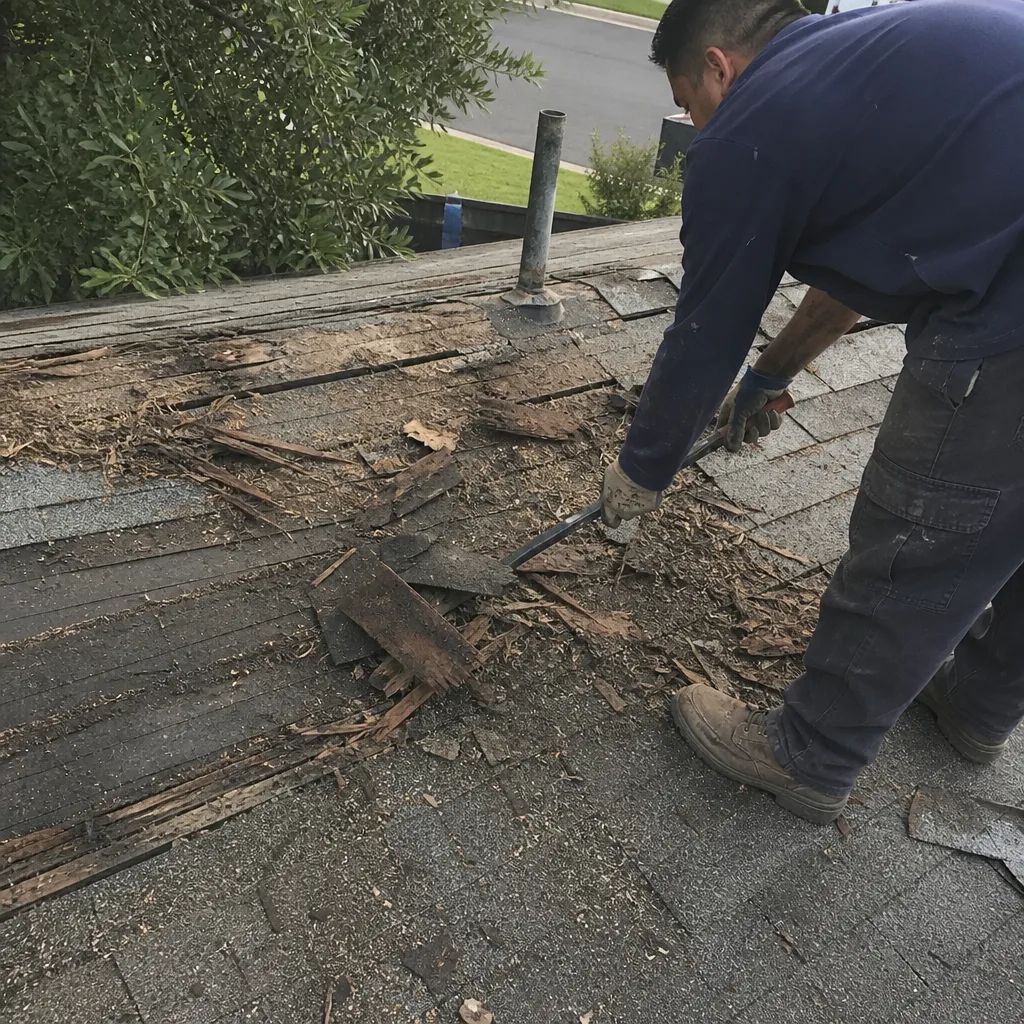 Before
 After
 Before
 After
Pricing for Roof Repair in Highland, CA
Here’s what you’ll typically pay in Highland:
- Vent boot replacement: $250 – $450
- Shingle replacement (a few damaged shingles): $350 – $700
- Flashing repair at a chimney or wall: $450 – $900
- Valley repair: $600 – $1,200
- Flat roof patch (residential or commercial): $800 – $2,500
- Post-wind repair including ridge cap and starter strip: $1,000 – $2,800
What moves the price is access, the type of material being matched, and whether the decking beneath is still sound. On a tight Highland lot, we may need to bring materials through a side gate or stage them on a shared driveway, which adds a little labor time. The estimate you get is the price you pay. No surprise add-ons. Call (866) 942-4187 to schedule a free, written estimate.
We Also Serve Cities Near Highland
Our Roof Repair in Highland coverage extends naturally into neighboring communities. We regularly take calls from San Bernardino, Muscoy, Redlands, and Loma Linda. If you’re in one of those cities and need a repair, the same crew and the same pricing apply.
Serving Highland, CA — Our Local Coverage Area
We’re based in the Highland area and know this community well. Use the map below to see our service coverage — if you’re nearby, we can almost certainly help.
FAQs About Roof Repair in Highland
A tight lot adds labor time, not material cost. When we can’t park a truck with the materials directly below the repair area, we hand-carry shingles or use a ladder hoist from a shared driveway or front walkway. That’s an hour or two of extra labor on most Highland jobs. We factor it into the estimate up front and tell you why.
Minor repairs like shingle replacement, vent boot swaps, and flashing fixes generally don’t need a permit. A repair that involves the roof structure, large sections of decking, or a full re-sheath does. Highland’s building department reviews based on the scope, and because lots are dense, they may require a site note about staging and neighbor access on larger jobs. We handle the paperwork. Call (866) 942-4187 if you’re not sure whether your repair qualifies.
A party wall is a shared wall between two attached structures, like a duplex or a zero-lot-line home. Highland has enough of these that flashing at the shared wall is a regular repair call. We always notify the neighbor when work touches the shared wall line, and we protect the adjacent property while we work. The repair itself is the same flashing-to-spec process we use on any roof-to-wall juncture.
We prioritize Highland calls in the 48 hours after a high-wind event, because insurance claims move faster when damage is documented early. Most wind-related repairs are scheduled within the same week of your call. The week after a major Santa Ana, response is slower because demand spikes across the entire corridor. If you see lifted shingles or ridge cap debris, call (866) 942-4187 right away and we’ll get you on the board.
In most cases, yes. We stock common architectural shingle colors from Owens Corning, IKO, and Atlas, and we can match the dimension and style of what’s already up there. If your shingle is discontinued or the roof is too weathered to blend well, we’ll tell you before you pay. A patch that matches but settles differently than the aged field will be visible, and you should make that decision with your eyes open. Call (866) 942-4187 and we can check your shingle color against what’s available in our stock.
Working on Tight Highland Lots: What It Actually Means for Your Repair
Highland’s tract homes from the 1960s through the 1990s were built side-by-side on lots that leave maybe five feet between walls. That changes how a roof repair gets handled. On a standard suburban lot, a crew can back the truck in and hand materials up from the driveway. On a lot off Wabash Avenue or east of the 210 where houses share a property line, we’re often working from one neighbor’s side yard with permission, or staging rolled materials on the front walkway.
This is where the cost of a Highland repair differs from a Redlands or Loma Linda repair. We plan access before we quote. If we need to use a ladder hoist from the front curb because the side gate is too narrow for a bundle of shingles, that adds labor. We don’t surprise you with that charge on the invoice; it’s in the estimate.
After a Santa Ana wind event, we repaired a roof on a cul-de-sac near the Highland foothills where a 60-mph gust had lifted ridge cap shingles and torn starter strip along the windward eave. Our crew replaced the damaged architectural shingles, re-seated the ridge vent, and documented the ice and water shield at the valleys for the homeowner’s insurance claim, finishing in one day without blocking the shared driveway. That’s the standard for how we operate in Highland: the repair is clean, the noise is kept to working hours, and the neighbor’s day isn’t interrupted.
Wind, Insurance, and the Highland Roof You Don’t See
Highland’s location at the mouth of the Cajon Pass means wind damage isn’t random here. The neighborhoods closest to the pass and the foothill canyons get hit predictably, and the pattern is almost always the same: missing or curled shingles on the windward slope, granular loss on the sun-baked south-facing planes, and ridge cap that’s been lifted or cracked.
For insurance claims, that pattern matters. If you’re filing after a Santa Ana event, the adjuster wants documentation that the damaged materials were installed to the proper wind rating. We document what we find, photograph what we repair, and give you a written note on what was replaced and how it was fastened. For Highland roofs on the exposed side of the wind corridor, we recommend architectural shingles rated for 130 mph wind and installed with the correct nail pattern. That’s not an upgrade we upsell on every roof in the Inland Empire. In this city, it’s the difference between a roof that survives the next wind event and one that doesn’t.
Written by Kurt Hensley, Owner at Orange County Roofing Co, serving Highland and the Inland Empire since the company’s founding.
If your roof is leaking or the wind took something with it, don’t wait for the next rain. Call (866) 942-4187 for a free, written estimate. We’ll tell you what’s wrong, what it costs, and what can wait. No pressure. Just a straight answer.