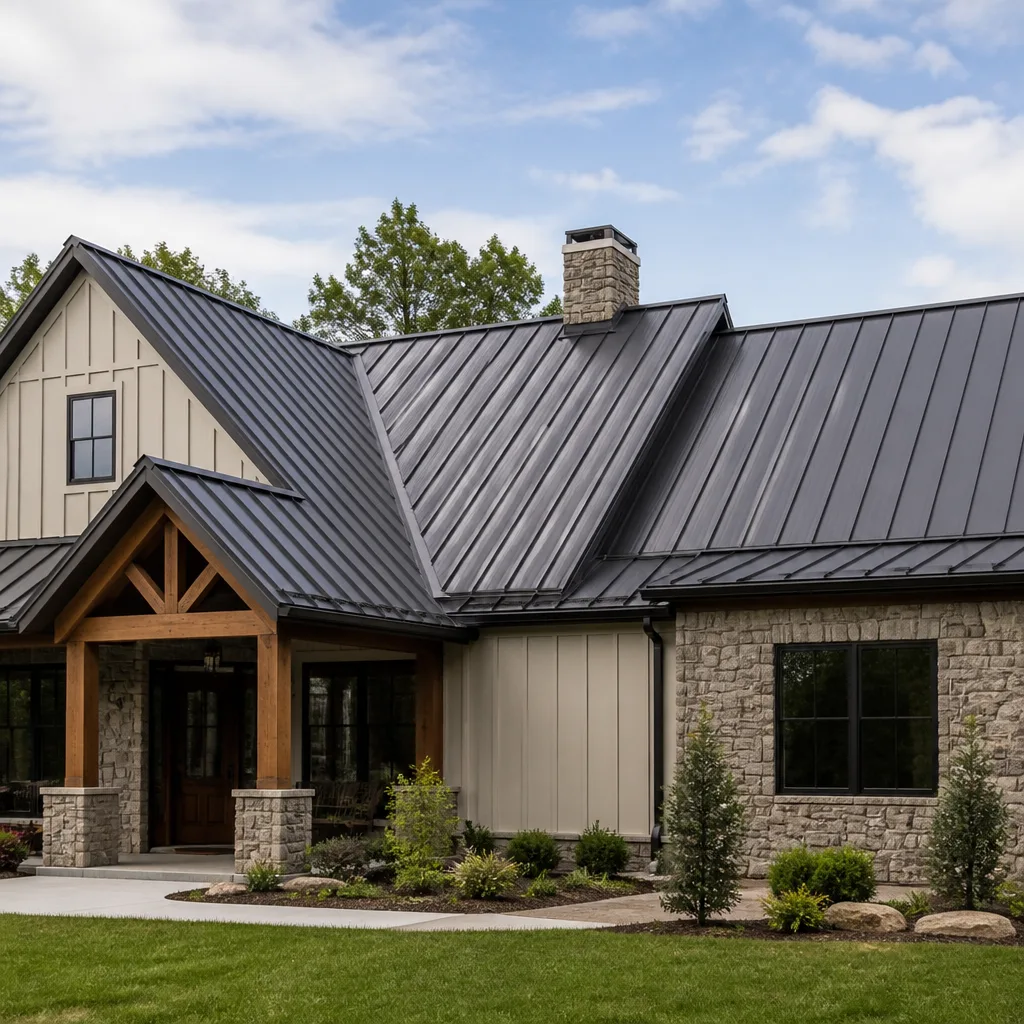
 Metal roofing
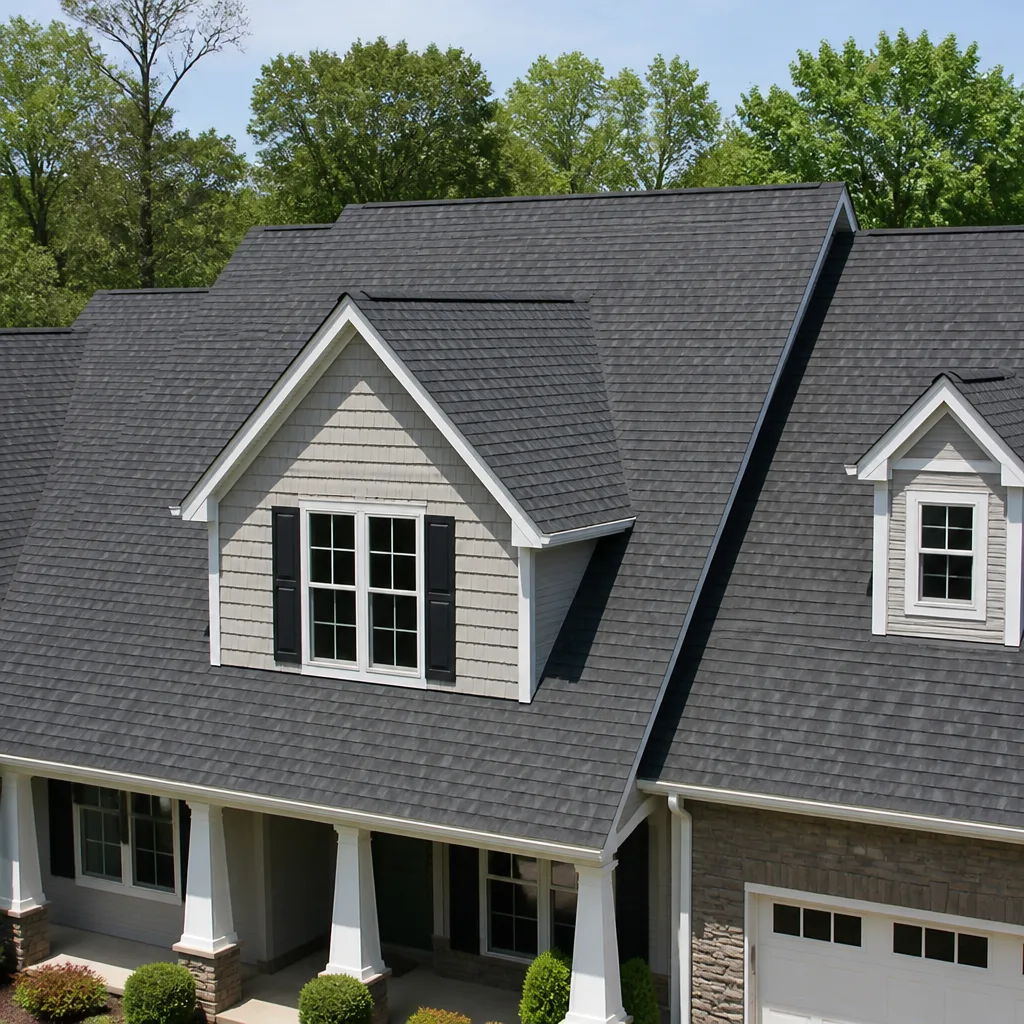 Architectural shingles
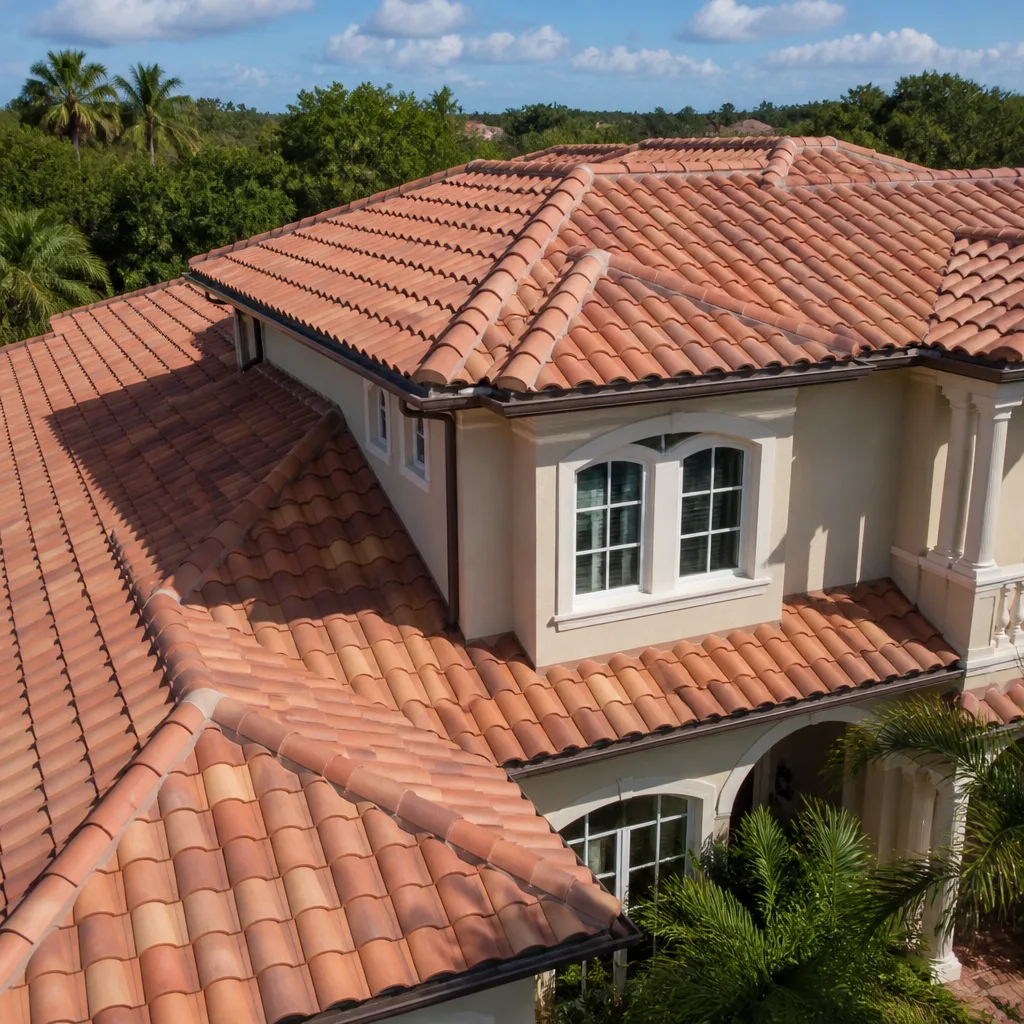 Tile roofing
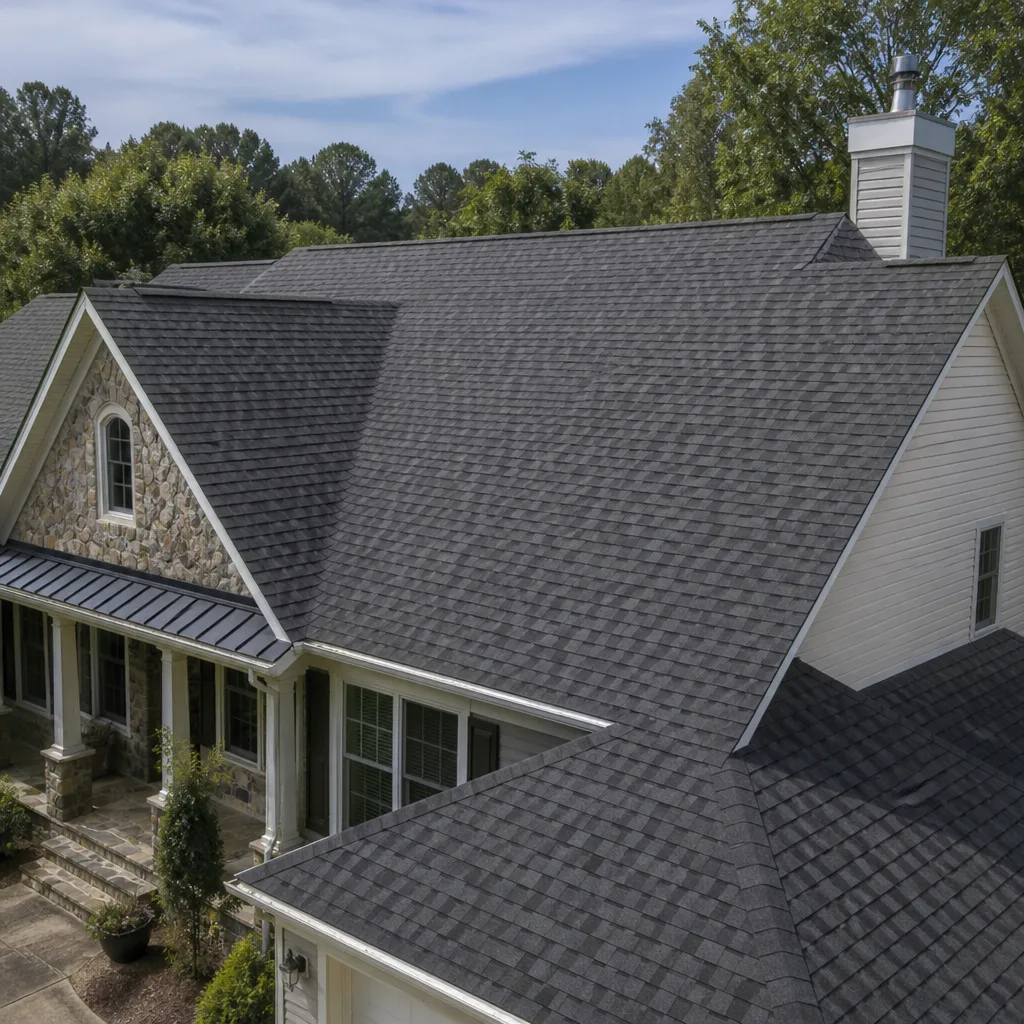 GAF
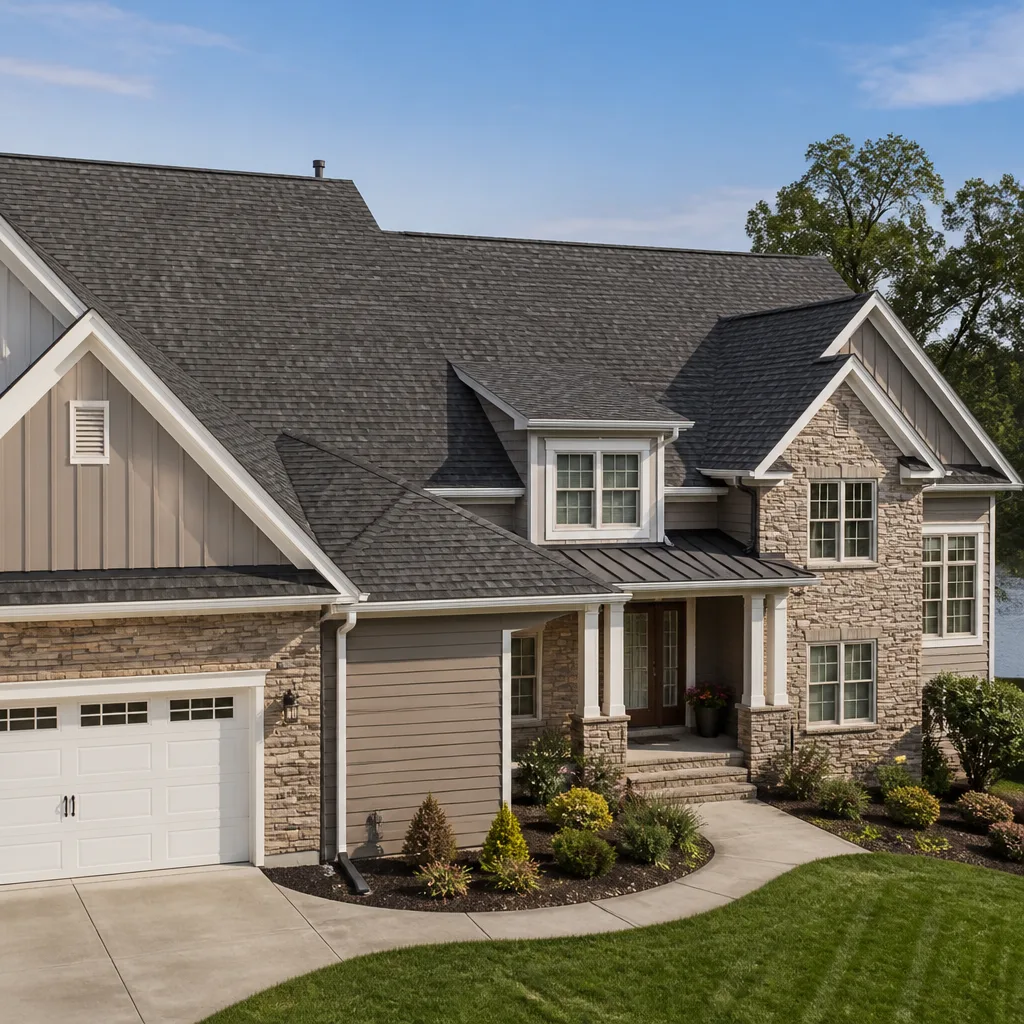 Owens Corning
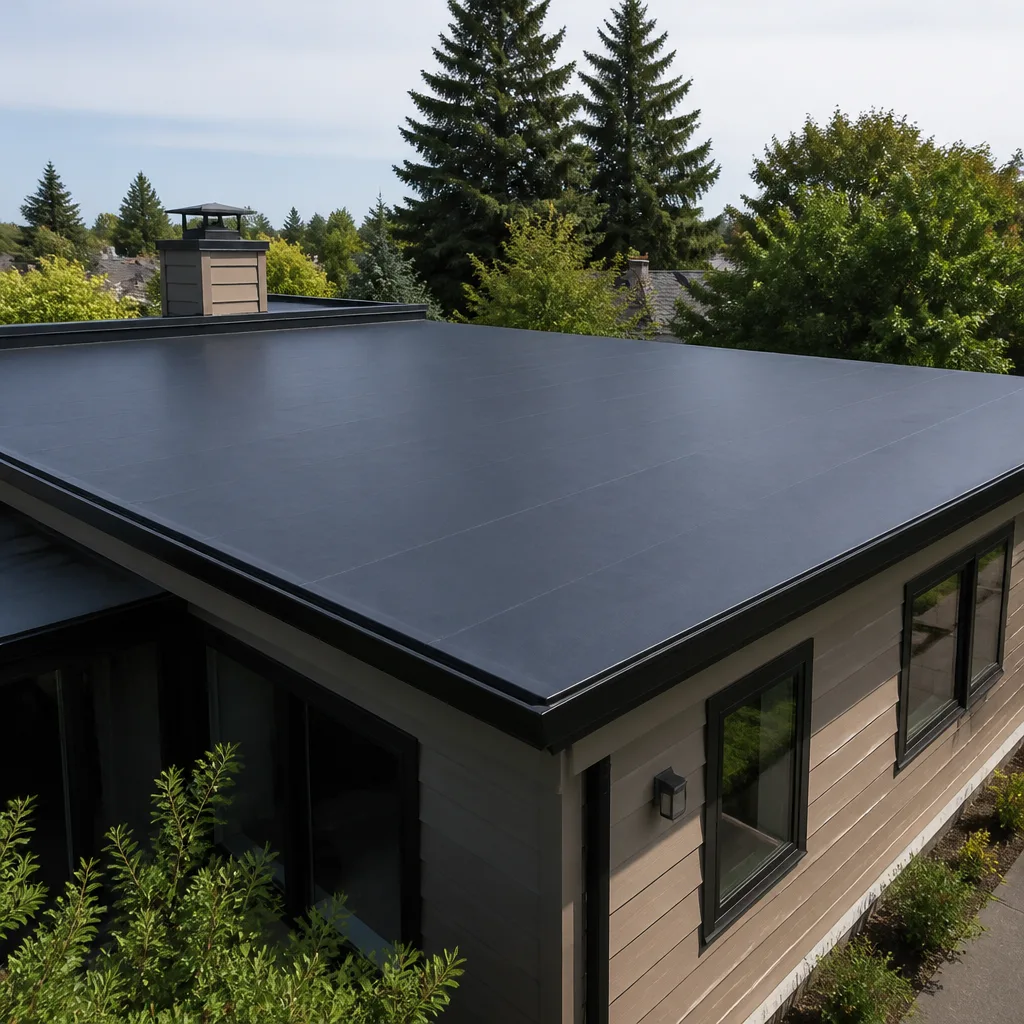 Flat & low-slope
Free roof inspection with deck photos before we talk money - GAF and Owens Corning certified installation
Fast, Reliable Roof Repair Across Culver City
Roof repair in Culver City usually runs between $450 and $1,800 depending on what failed first, and on the west side of town that’s often the metal, not the shingle. Culver City sits close enough to Santa Monica Bay that salt-laden marine air eats galvanized flashing, drip edge and fastener heads years before the roof surface itself gives out. If you live in 90230 or 90232 and you’re seeing a ceiling stain after the first real winter rain, the odds are good that a corroded valley or rusted nail head is the culprit. We repair it the same way we’d want it done on our own roof: the right metal spec for coastal air, proper underlayment where the old stuff is missing, and no upsell to a full replacement you don’t need. Call (866) 942-4187 and we’ll send someone out to look at it, usually within a day or two, and give you a straight answer.
- Key Takeaways
- Salt air near Santa Monica Bay corrodes flashing, drip edge and fasteners before shingles wear out.
- Many pre-war Culver City tile roofs sit over skip-sheathing with no underlayment, so a single slipped tile leaks straight into the attic.
- Coastal-spec repair (stainless flashing, hot-dip hardware) costs more up front but lasts decades longer than the galvanized inland spec.
- Free estimates, written line-item quotes, and no change orders once we agree on the scope.
Why Orange County Roofing Co Is Culver City’s Preferred Roof Repair Company
Culver City roofing work has a rhythm to it that only comes from doing it repeatedly. We know which blocks close to Ballona Creek get the worst of the morning marine layer, and we know that the 1940s bungalows near Carlson Park hide more dry-rot under original tile than any newer tract home in 90233. Kurt Hensley built this company on the idea that homeowners deserve a straight explanation of what’s failing and what it costs to fix, not a pitch for a full replacement because the contractor doesn’t want to do a small repair. That’s why we offer inspection as a standalone service: we’ll tell you exactly what your roof needs, nothing more.
We carry seven major brands, GAF, CertainTeed, Owens Corning, IKO, Atlas, Tamko, and Boral, so when we recommend a repair material we’re matching it to your roof and your budget, not to whichever brand gives us the best margin. Culver City customers get the same written line-item quote we’d give in Century City or Venice. Free estimates, no pressure, and a workmanship warranty on every repair we complete. Roof Repair is a core service for us, not a sideline, and we treat it that way.
And yes, we know the streets. Fox Hills, Blair Hills, McManus, the older pockets off Overland Avenue where the street trees keep roofs in shade longer than they should be. Response time to Culver City from our Corona yard is short enough that we can usually have eyes on your roof within 24 to 48 hours of your call. For a leak that’s actively dripping into the house, we move faster.
Styles & brands we work with
Storm Damage Roof Repair in Culver City
Storm Damage Roof Repair in Culver City usually follows the first heavy winter rain system that rolls in off the Pacific, the kind that drops more water in three days than the roofs here see all summer. What the rain exposes is almost always the same thing: undersized or clogged roof drainage, corroded metal flashing, or a slipped tile over skip-sheathing. The wind-driven rain that hits the west-facing slopes near Ballona Creek gets pushed up under shingles and tile in ways a mild summer drizzle never does. If you see water stains on a ceiling after a big storm, don’t wait. Call us at (866) 942-4187.
Storm repair work in Culver City typically runs $350 to $1,200 for straightforward fixes like resetting slipped tile, replacing a failed valley flashing, patching a torn section of roof, or securing loose shingles. The cost climbs when we find what the water found first: dry-rot in the decking, failed underlayment, or fascia boards that have been quietly soaking for years. Our estimate always separates the visible repair from the hidden damage we uncover, so you know precisely what you’re paying for and why.
Leak Repair After Winter Rain
Leak repair on a Culver City roof often starts as a small stain and ends as a decking replacement. We start by tracing the water path, not just the stain, because water can travel along a rafter for six feet before it shows up on your ceiling. Then we open the affected area, dry it out, repair the decking, and re-flash every penetration with coastal-spec metal.
Flashing and Fascia Rebuild
Flashing and fascia on the western edge of Culver City take a beating from salt air. We replace galvanized drip edge, valley metal and pipe boots with stainless or hot-dip galvanized steel, and we seal every joint. That single spec change is the difference between a repair that lasts five years and one that lasts twenty.
Metal Roof Repair in Culver City
Metal Roof Repair in Culver City is less about the metal panels themselves and more about the hardware, sealants and flashing that hold them in place. The marine layer that settles over Culver City most summer mornings pushes a constant low-grade moisture and salt load onto exposed metal surfaces. Fasteners corrode, sealant beads dry and crack, and where two metal surfaces meet, you get a slow galvanic rot that eventually opens a pinhole leak. Metal itself is a durable surface; it’s the stuff holding it down that fails here. Call (866) 942-4187 for a proper assessment.
Metal roof repair in Culver City generally runs $400 to $2,000 depending on whether we’re replacing a run of fasteners and resealing seams, or cutting out and replacing an entire corroded panel section with matched metal. The higher end usually includes pulling off and rebuilding a rusted transition detail or replacing the closure strips at the ridge and eave. If the original metal is still structurally sound, we don’t recommend tearing it off. We repair it with materials that match the original coastal spec, not the cheaper inland one.
Fastener and Seam Re-Seal
On exposed roofs near the Baldwin Hills and the west-facing slopes, we routinely replace corroded fasteners with hot-dip galvanized or stainless hardware, then re-seal every overlapping seam with a marine-grade sealant. It’s not glamorous work, but it’s what stops the leak.
Panel Replacement and Flashing Repair
When a section of metal panel has rusted through, we cut out the damaged panel, inspect the substrate for rot or moisture damage, then install a new panel with the right gauge and finish for coastal exposure. All penetrations get re-flashed with stainless or hot-dip hardware before we leave.
Trusted Brands We Service in Culver City
We install and repair roofs from GAF, CertainTeed, Owens Corning, IKO, Atlas, Tamko, and Boral. That means when you call us for a repair, we’re not locked into whatever one brand the company’s contract pushes. If your Culver City roof has Atlas shingles, we’ll match Atlas. If it’s an older Boral tile roof, we work with Boral product. Tamko and GAF come up often too. We keep common repair materials in stock, and for color-matched shingle work in Culver City, our proximity means we can usually get the right bundle from the supply yard quickly so you’re not staring at a mismatched patch. From a single damaged shingle to a full tear-off and replacement, one call covers it.
See the difference
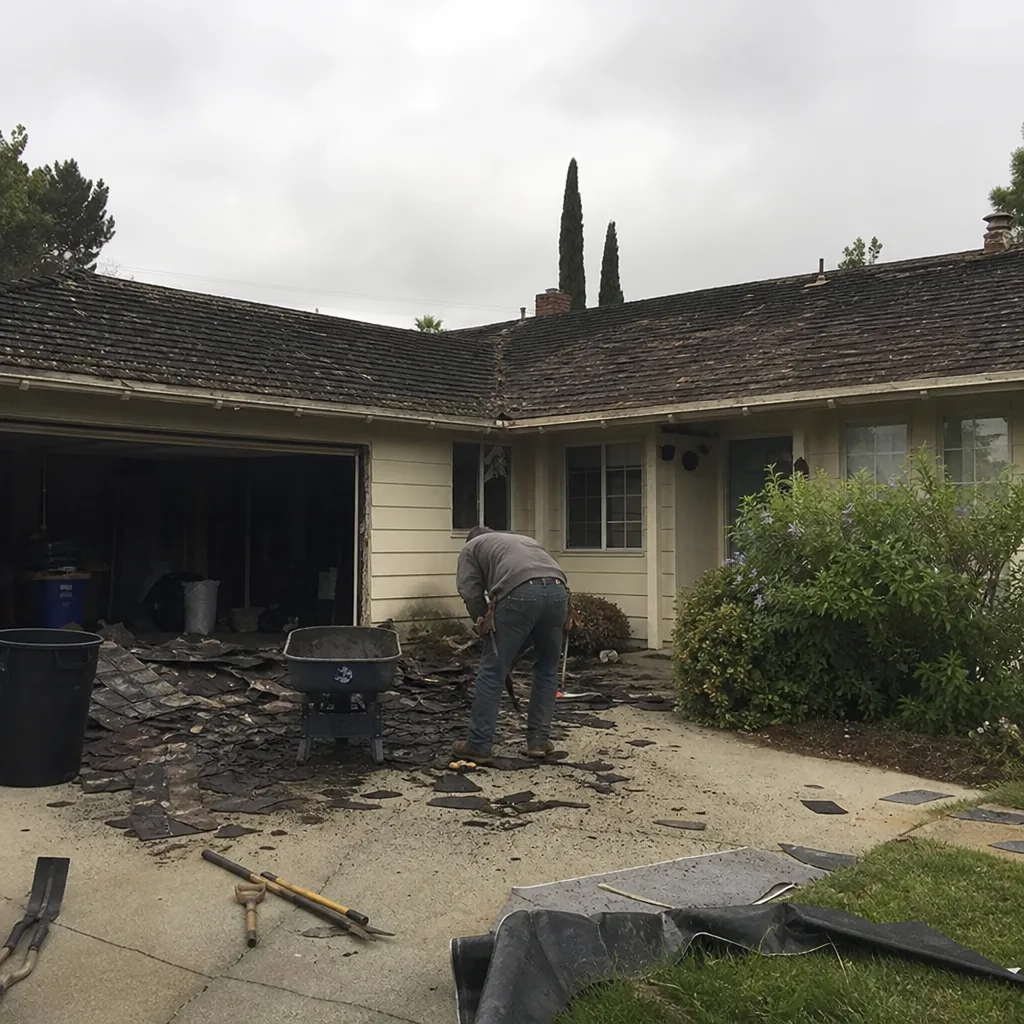 Before
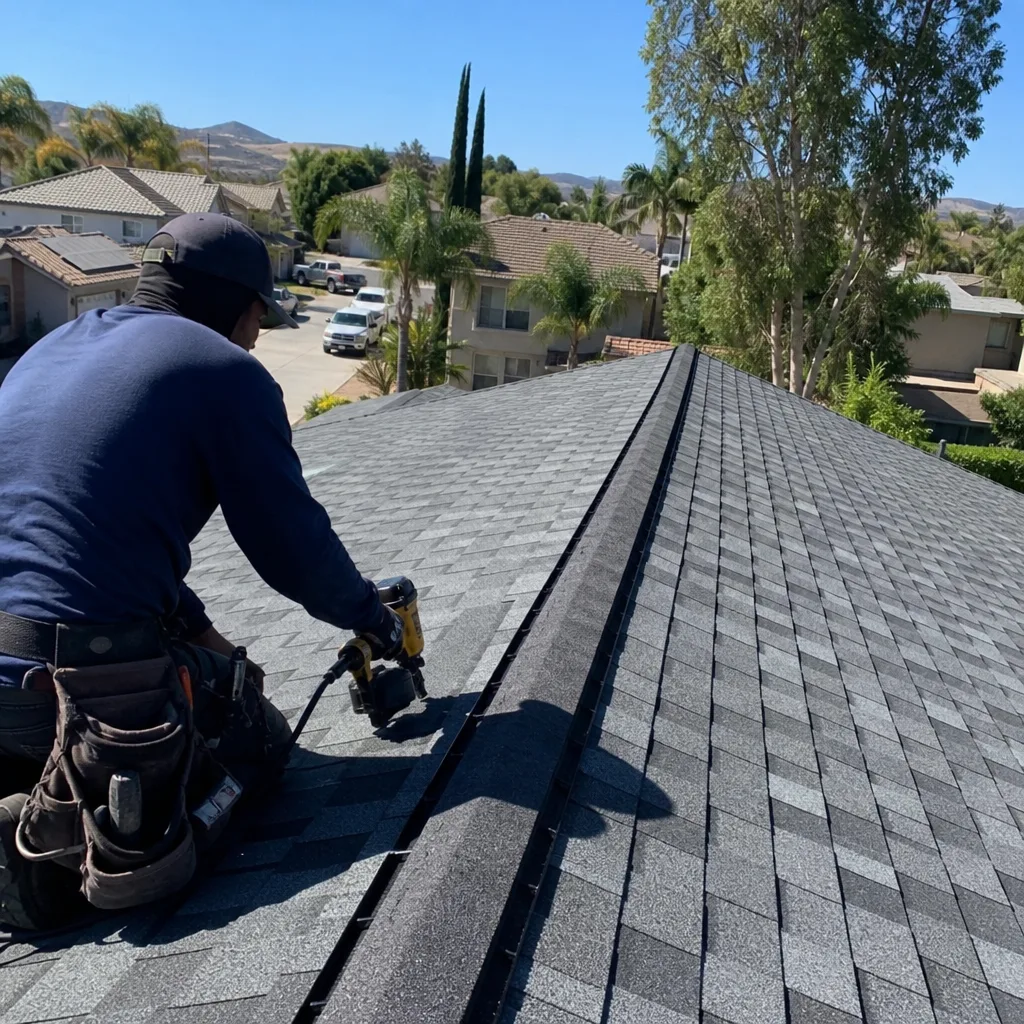 After
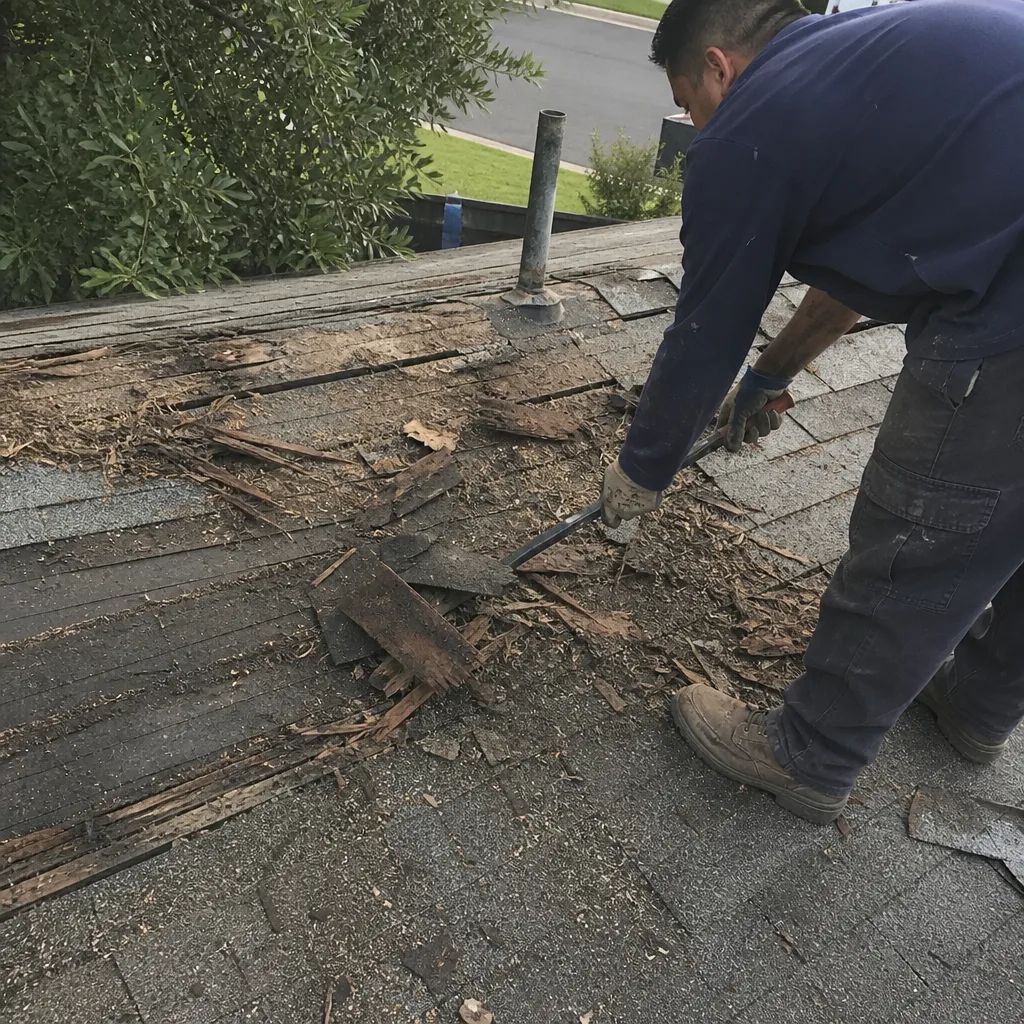 Before
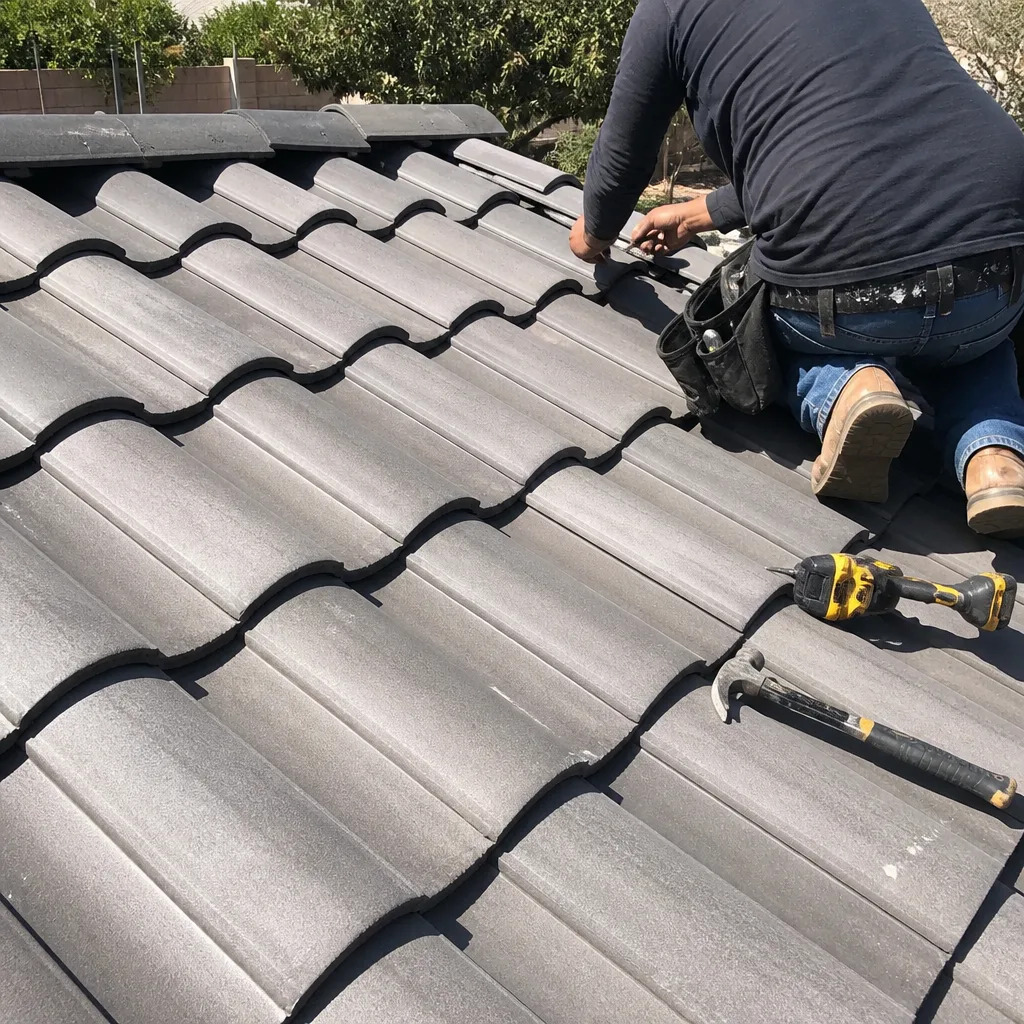 After
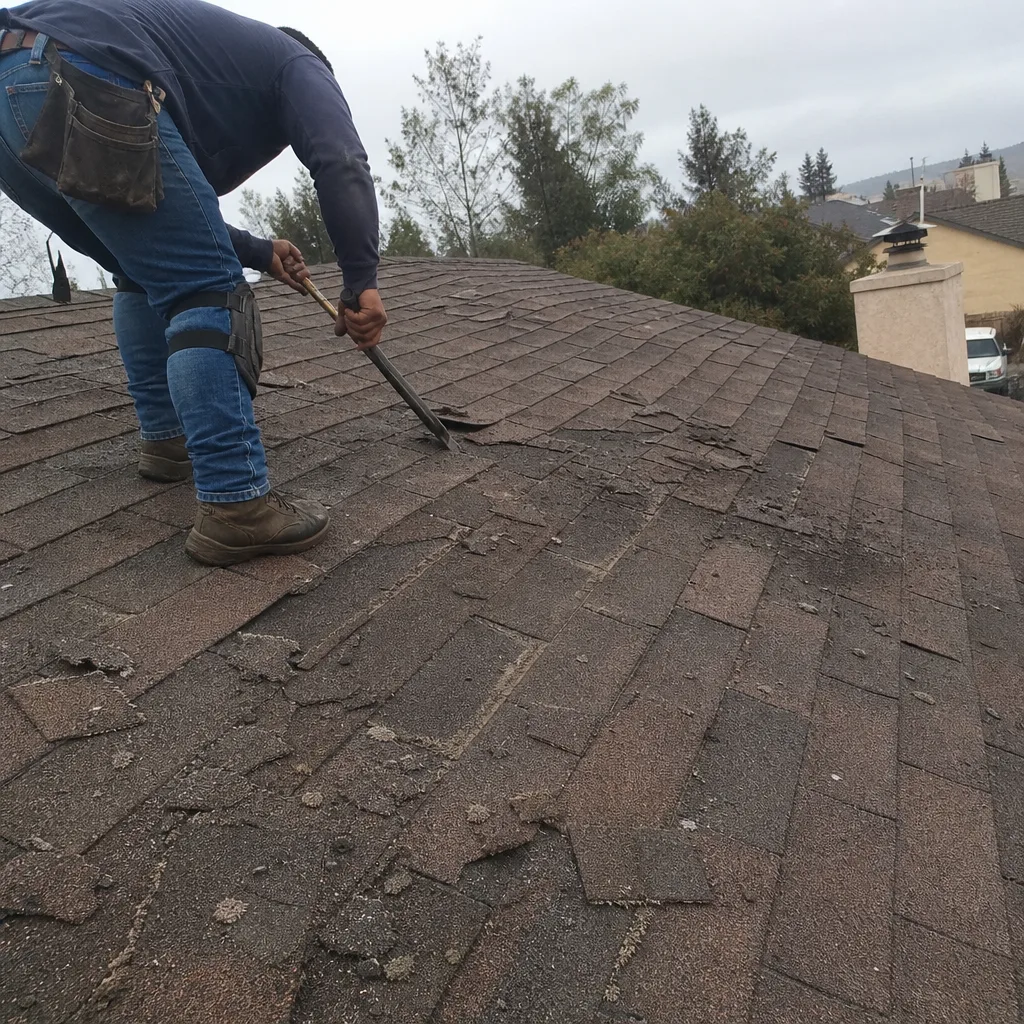 Before
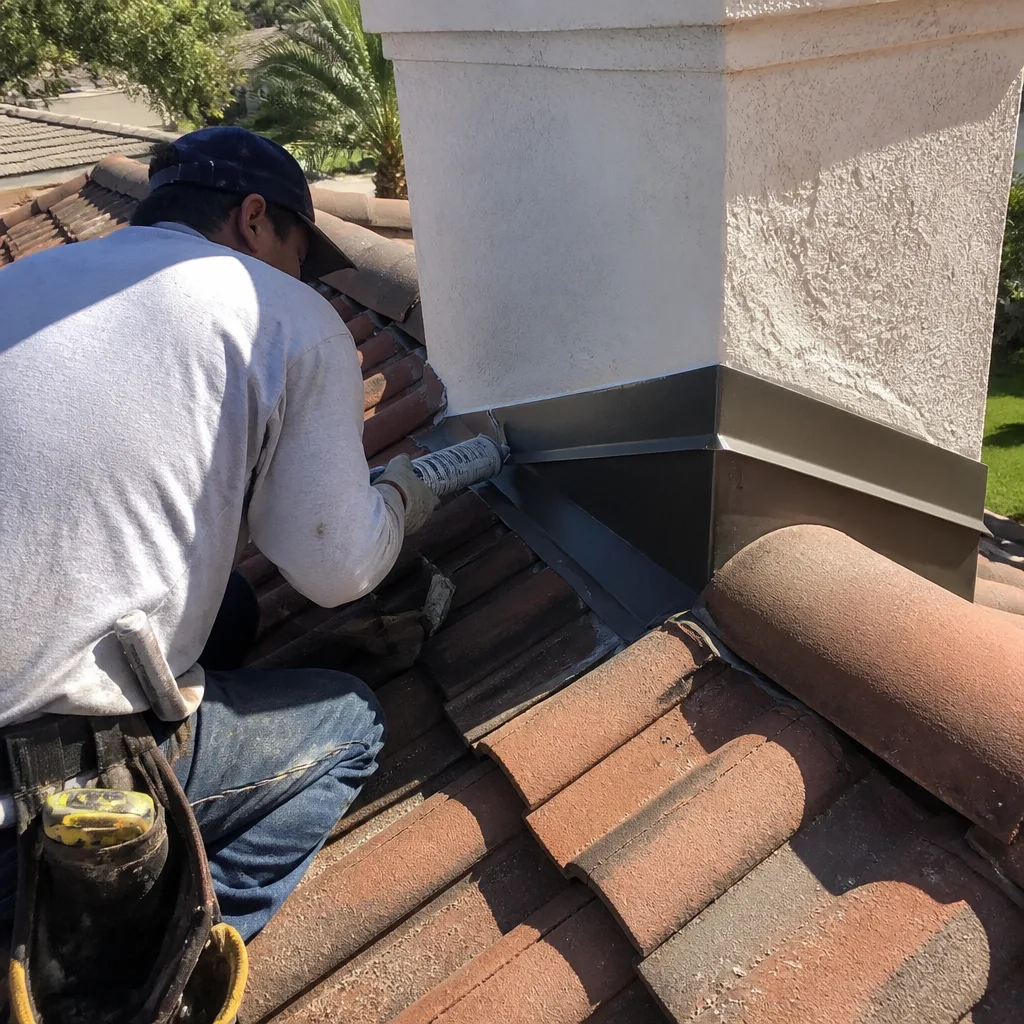 After
Common Roof Repair Problems We See in Culver City Homes
- Corroded drip edge and valley flashing: The salt-laden marine air along the Ballona Creek corridor and west-side streets eats galvanized metal in a decade or less. On a Culver City roof, the flashing spec is usually the deciding cost line, not the shingle.
- Slipped clay or concrete tile over skip-sheathing: Original 1920s and 1940s tile roofs often have no underlayment between the tile and the attic. A single cracked or slipped tile during a winter storm sends water straight through to the decking.
- Moss and algae on north-facing slopes: The persistent summer marine layer keeps north-facing planes damp long after the rest of the roof dries. Moss traps water and accelerates the breakdown of asphalt shingles and coatings.
- Clogged or undersized drainage: Many older Culver City homes have original gutters and downspouts that were sized for a different era. The rare heavy winter rain overwhelms them, and the overflow rots soffits, fascia and rafter tails at the eave.
Pricing for Roof Repair in Culver City, CA
Here are honest ranges for common repairs on Culver City homes:
- Shingle replacement (small section): $350 to $700
- Leak repair with decking patch: $500 to $1,200
- Flashing replacement (valley, drip edge, pipe boot): $400 to $900 per section
- Flat roof patch (torch-down or membrane): $450 to $1,000
- Vent boot replacement: $250 to $500
- Valley repair with new underlayment: $600 to $1,400
- Tile reset (single tile or small run): $200 to $600
- Full decking replacement (per 4×8 sheet): $75 to $120 per sheet, plus labor
What pushes a Culver City roof repair to the top of those ranges is almost always hidden damage under the surface: dry-rot in the decking, missing underlayment, or flooded insulation in a flat roof. The marine air also means we specify stainless or hot-dip hardware whenever we touch flashing, and that coastal spec adds roughly 15% to 25% to the metal line item compared to the inland galvanized version. It’s worth it; the cheap spec fails within a decade in this air. Call (866) 942-4187 for a free estimate and a written quote before you commit to anything.
We Also Serve Cities Near Culver City
Our Roof Repair in Culver City work regularly takes us down into Ladera Heights, over to Century City, west toward Venice, and north to Beverly Hills. We know the housing stock and the local inspectors in each area, and we quote each job based on the actual roof and the actual metal spec, not the ZIP code. If you’re close to Culver City but not quite in it, call us at (866) 942-4187 and ask. We’ll tell you straight.
Serving Culver City, CA — Our Local Coverage Area
We’re based in the Culver City area and know this community well. Use the map below to see our service coverage — if you’re nearby, we can almost certainly help.
FAQs About Roof Repair in Culver City
Because the metal spec is different. Culver City’s salt-laden marine air corrodes standard galvanized drip edge, valley flashing and fastener heads years before they’d fail inland, so a proper repair here uses stainless steel or hot-dip galvanized hardware and marine-grade sealants. That adds roughly 15% to 25% to the metal and flashing line items compared to the inland-spec version of the same job. The shingle or tile itself costs the same; it’s the hardware and flashing that drive the difference. Over a decade, the coastal spec is cheaper because it doesn’t fail and require a second repair. Call (866) 942-4187 and we’ll show you both numbers side by side.
Yes, and specifically on pre-war Culver City homes, the answer is often yes. Original clay and concrete tile roofs from the 1920s through the 1940s were typically installed over skip-sheathing, which means gaps between the wood boards and no underlayment at all. A tile can look perfectly intact from the street while a cracked or slipped tile out of view is letting every winter rain straight into the attic. We’ve pulled tile off Carlson Park bungalows that looked fine from the curb and found decades of hidden dry-rot in the decking underneath. An inspection tells you what’s actually happening up there. Call (866) 942-4187 to schedule one.
On the west-side blocks of Culver City, the metal almost always fails first. The salt-laden onshore marine air from Santa Monica Bay settles on exposed flashing, drip edge, pipe boots and nail heads and corrodes them through in a decade or less, while the field shingle still has years of life left. The leak you see at the ceiling is rarely a worn-out shingle. It’s a rusted-through valley flashing or a corroded pipe boot. That’s why our repair estimates always itemize the metal spec separately: you can replace the shingle, but if the flashing underneath is shot, the leak comes back. Call (866) 942-4187 for an exact diagnosis.
Line by line, and specifically on the metal. Ask each contractor what flashing material they’re specifying: standard galvanized, hot-dip galvanized, or stainless steel. Ask what fastener they’ll use. Ask whether they’re replacing the underlayment under any tile or shingle they reset, or just slapping the surface material back on and calling it done. Ask what sealant they’ll use on any metal-to-metal joint. A lower bid that specifies standard galvanized flashing will cost you more within a decade in Culver City’s salt air. Our quotes are written and line-itemized, so you can compare apples to apples. Call (866) 942-4187 and we’ll walk you through it.
Yes. Culver City’s summer marine layer sits on north-facing roof planes longer than any other exposure, and that constant damp is a perfect environment for moss and algae. Moss holds water against the shingle surface, accelerates UV and moisture breakdown, and eventually lifts the shingle edges enough for wind-driven rain to get underneath. We see it on older homes in Blair Hills and the shaded streets off Overland Avenue. The fix is mechanical removal, a moss-preventive treatment, and sometimes improved ventilation so the roof deck can dry out. Call (866) 942-4187 for an assessment.
If you’re in Culver City and you suspect a roof leak, don’t wait for the next winter storm to confirm it. Call (866) 942-4187 today for a free estimate. We’ll inspect the roof, show you what’s actually failing, and give you a written line-item quote with the coastal-spec hardware priced in. No pressure, no upsell, just a straight answer from a team that knows Culver City roofs.
Written by Kurt Hensley, Owner at Orange County Roofing Co, serving Culver City and the surrounding Westside since our founding. Kurt has spent his career matching the right material to the right roof, and he’s the first to tell you that in coastal air, the metal spec matters more than the shingle.